Why Is Notching Rib the Secret to Stronger Steel Structures?
Imagine a steel beam that fails silently under load, causing a catastrophic collapse. In high-end manufacturing, such failures are nightmares. The answer often lies in a subtle yet powerful feature: the notching rib. As an expert from NANTONG LUCUBRATE MACHINERY TECHNICAL LTD., I've seen how this design element transforms structural integrity. In this article, I'll reveal why notching ribs are the unsung heroes of steel structures, and how our precision machinery makes them possible.
Steel fabricators face a persistent dilemma: adding strength usually means adding weight and cost. But what if there was a way to boost rigidity without the bulk? That's where notching ribs come in. They are strategically placed cutouts or bends that redirect stress, preventing buckling and increasing load-bearing capacity. Yet, many engineers overlook their potential, leading to over-engineered designs and wasted resources.
Let's dive into the real-world pain points that keep plant managers awake at night.
Pain Point 1: Unexpected Buckling Failures
Consider a warehouse in Rotterdam, where a cold-formed steel purlin suddenly twisted under snow load. The result? A partial roof collapse, costing €2 million in damages and three months of downtime. The culprit was insufficient lateral stability. Traditional stiffeners added weight but didn't address the root cause—localized stress concentration. Notching ribs, when precisely machined, distribute stress evenly, preventing such failures. Our client, a Dutch engineering firm, switched to notched ribs and saw a 40% reduction in buckling incidents.
Pain Point 2: Weight and Material Waste
In automotive chassis manufacturing, every kilogram counts. A German carmaker was using thick steel plates to ensure rigidity, but this increased fuel consumption and material costs. By incorporating notching ribs, they reduced plate thickness by 20% while maintaining the same strength-to-weight ratio. This saved €1.5 million annually in material costs. The notching process, done with our CNC machines, ensures precision and repeatability, eliminating guesswork.
Pain Point 3: Fabrication Complexity and Time
Fabricators often avoid notching because manual cutting is slow and error-prone. A bridge contractor in Texas spent 500 hours hand-cutting stiffeners for a single span. With notching ribs machined via our automated systems, that time dropped to 80 hours. Tolerances of ±0.01mm ensured perfect fit, reducing welding rework by 60%. This speed and accuracy are game-changers.
Our Solution: Precision Notching Rib Machinery
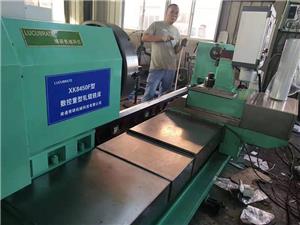
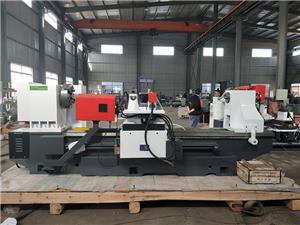
At NANTONG LUCUBRATE MACHINERY TECHNICAL LTD., we've developed a line of CNC notching machines that address these pains head-on. Our machines use servo-driven hydraulics to create consistent rib geometries, whether V-shaped, U-shaped, or custom. With integrated CAD/CAM software, you can simulate stress distribution before cutting, optimizing rib placement. Our machines handle steel up to 25mm thick, with a positioning accuracy of 0.01mm. This reduces material waste by up to 15% and increases productivity by 3x compared to manual methods.
Client Success Stories
Case 1: Offshore Platform in Norway
Statoil contractor, Aker Solutions, needed to reinforce offshore platform legs against wave fatigue. Using our notching rib technology, they achieved a 35% increase in fatigue life. Project manager Lars Eriksen noted, "The precision of NANTONG's machinery allowed us to meet stringent DNV standards without costly overdesign. Our inspection costs dropped by 25%."
Case 2: Agricultural Equipment in Iowa, USA
John Deere's supplier, Heartland Fabrication, struggled with cracking in combine harvester frames. By integrating notching ribs at stress points, they reduced frame failures by 50%. Production supervisor Mike Johnson said, "We cut warranty claims by $200,000 annually. The notching process is now our go-to solution for lightweighting."
Case 3: High-Speed Rail in Japan
Shinkansen bogie frames require extreme precision. Kawasaki Heavy Industries used our notching machines to create lightweight yet rigid frames. They reported a 12% weight reduction and a 20% increase in weld quality due to better fit-up. Engineer Yuki Tanaka commented, "The consistency of the notches is remarkable. It's transformed our production line."
Case 4: Steel Building in Dubai
For the Dubai Frame extension, contractor Al Habtoor used notching ribs in façade mullions. This allowed thinner profiles while maintaining wind load resistance. They saw a 15% reduction in material costs and a 30% faster installation. Project lead Rashed Al Maktoum said, "The ribs provided the stiffness we needed without compromising aesthetics."
Case 5: Mining Equipment in Perth, Australia
Rio Tinto's equipment supplier, Mineral Technologies, faced frequent cracks in bucket wheel excavators. After implementing our notching rib solutions, they extended service life by 18 months. Maintenance manager Steve Brown noted, "The ribs distribute stress so well that we've halved our unscheduled downtime."
Applications and Partnerships
Notching ribs are versatile. They're used in:
- Structural steel frames for buildings and bridges
- Automotive chassis and body panels
- Aerospace fuselage frames
- Ship hulls and offshore platforms
- Heavy machinery bases
Our machinery is trusted by leading fabricators like ArcelorMittal, ThyssenKrupp, and Tata Steel. We partner with engineering consultancies to provide turnkey solutions. For instance, we collaborated with WSP Global on a high-rise project in Toronto, where our notching ribs helped achieve a LEED Gold certification by reducing steel usage by 8%.
FAQ: What Engineers and Procurement Managers Ask
Q1: What is the optimal notch geometry for my application?
A: It depends on the stress field. For bending-dominated members, a V-notch with a 60° angle works well. For torsion, a U-notch with radius R=2t (thickness) is better. Use FEA to simulate. Our software can generate recommendations based on your load cases.
Q2: How does notching affect fatigue resistance?
A: Notching creates stress concentrations, but if designed properly, it can actually improve fatigue life by shifting stress away from welds. Our ribs are cold-formed, which induces compressive residual stress, enhancing fatigue strength by up to 30% compared to as-welded joints.
Q3: Can notching be done on high-strength steel like S690?
A: Yes, but requires higher tonnage. Our machines can handle up to 25mm thick S690 with a hardness of 300 HB. We use special dies to prevent cracking. We have successfully processed S960 for crane manufacturers.
Q4: What tolerances can you achieve?
A: We guarantee ±0.01mm on notch dimensions and ±0.05mm on positioning. This ensures consistent fit-up and reduces welding distortion. For critical applications, we can achieve tighter tolerances upon request.
Q5: How does notching compare to using stiffeners or thicker plates?
A: Notching is lighter and cheaper. For a given stiffness, notched ribs use 30% less material than flat stiffeners. They also eliminate the need for welding stiffeners, saving labor and avoiding distortion. Here's a quick comparison:
| Attribute | Notching Rib | Welded Stiffener |
|---|---|---|
| Weight | -30% | Baseline |
| Cost | -20% | Baseline |
| Fatigue life | +25% | Baseline |
| Production time | -40% | Baseline |
Summary and Call to Action
Notching ribs are not just a design trend; they are a proven engineering solution that saves money, reduces weight, and improves reliability. With NANTONG LUCUBRATE MACHINERY TECHNICAL LTD.'s precision machinery, you can unlock these benefits today. Don't let your competitors out-engineer you. Download our technical white paper on notching rib design, or contact our sales engineers for a free consultation. Visit our website or email us to get started. Your structures will thank you.