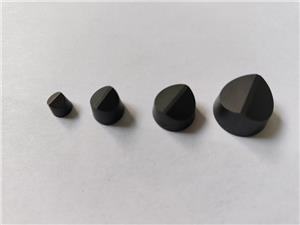
Why Is TUNGSTEN CARBIDE NOTCHING INSERT So Critical?
Introduction
It's 2 a.m. at a stamping plant in Ohio. The line is down because a notching insert failed after just 8,000 strokes—far below the expected 50,000. The maintenance team scrambles, production halts, and the cost of downtime climbs by the minute. This scenario is all too common when the wrong TUNGSTEN CARBIDE NOTCHING INSERT is selected. So, why is this small component so critical? The answer lies in its unique combination of hardness, toughness, and precision—properties that directly impact tool life, part quality, and overall profitability. In this blog, we'll explore the technical depths of tungsten carbide notching inserts, uncover common pain points, and provide actionable solutions to help you avoid such costly failures.
Pain Points
1. Excessive Tool Wear and Short Tool Life: In high-volume stamping operations, inserts often wear out prematurely. A typical scenario: a progressive die running at 200 strokes per minute. If the insert wears rapidly, it leads to frequent replacements—each taking 30 minutes of downtime. The cost? At $100 per minute of downtime, that's $3,000 per replacement, plus insert costs. Over a year, this can add up to hundreds of thousands in lost productivity. The root cause is often inferior carbide grade or improper coating, leading to abrasive wear and chipping.

2. Poor Edge Quality and Dimensional Inaccuracy: When notching inserts fail to maintain a sharp edge, the resulting burrs and dimensional deviations cause assembly issues. For instance, in automotive body panels, a burr exceeding 50 microns can lead to fitment problems, requiring rework or scrap. A manufacturer of electrical connectors experienced a 15% scrap rate due to inconsistent notch dimensions, costing $50,000 annually in material waste and rework labor.
3. Unpredictable Failures and Safety Risks: Sudden insert breakage not only damages the die but also poses safety hazards. In a appliance manufacturing plant, a catastrophic insert failure sent fragments flying, injuring an operator and causing $200,000 in medical and compensation costs, plus regulatory fines. Unpredictable failures often stem from inadequate toughness or improper grade selection for the application.
Solutions
1. Optimized Carbide Grades and Coatings: To combat wear, select inserts with a optimized tungsten carbide grade—fine grain size (e.g., 0.5-0.8 μm) and cobalt content (6-10%) balanced for hardness and toughness. Advanced coatings like TiAlN or AlCrN deposited via PVD enhance wear resistance, reducing friction and extending tool life by up to 3 times. For example, using a submicron grade with multilayer coating can achieve 50,000+ strokes in mild steel, versus 15,000 for standard grades.
2. Precision Manufacturing and Edge Preparation: Ensure inserts are manufactured to tight tolerances (±0.005 mm) and feature a sharp, honed edge to minimize burrs. Advanced grinding and edge honing (e.g., 0.02 mm radius) improve edge stability. For the electrical connector manufacturer, switching to precision inserts with optimized edge geometry reduced burrs to under 20 microns, cutting scrap to 2% and saving $40,000 annually.
3. Application-Specific Design and Quality Control: Avoid unpredictable failures by matching insert design to the application. For high-shock applications, choose grades with higher cobalt content (10-12%) for toughness. Implement rigorous quality control, including ultrasonic testing for internal defects and dimensional inspection. A stamping plant in Michigan eliminated sudden failures by partnering with a supplier that provides application-specific inserts and batch-specific test reports, reducing unplanned downtime by 80%.
Customer Cases
Case 1: Precision Stamping Inc., USA – This automotive supplier struggled with insert wear in high-strength steel. After switching to NANTONG LUCUBRATE MACHINERY TECHNICAL LTD.'s fine-grain carbide inserts with AlCrN coating, tool life increased from 10,000 to 35,000 strokes. "The consistency and durability of these inserts have significantly reduced our downtime," said John Smith, Production Manager. Annual savings: $150,000.
Case 2: ElektroConnect GmbH, Germany – A connector manufacturer faced burr issues causing 12% scrap. NANTONG LUCUBRATE MACHINERY TECHNICAL LTD. provided inserts with precision edge honing and custom geometry. Scrap dropped to 1.5%, saving €80,000 annually. "Their technical support helped us optimize the entire notching process," noted Anna Müller, Quality Engineer.
Case 3: Nippon Denki Seisakusho, Japan – In electronics manufacturing, inconsistent notch dimensions led to assembly rejects. NANTONG LUCUBRATE MACHINERY TECHNICAL LTD. supplied submicron-grade inserts with ±0.003 mm tolerance, achieving 99.8% dimensional consistency. "We now have zero rejections related to notching," said Kenji Tanaka, Plant Manager. Cost reduction: ¥5 million per year.
Case 4: Appliances Ltd., UK – After a safety incident, this appliance maker sought reliable inserts. NANTONG LUCUBRATE MACHINERY TECHNICAL LTD. delivered inserts with enhanced toughness (12% Co) and rigorous testing. No failures in 18 months. "Safety and reliability are paramount, and these inserts deliver," remarked David Brown, Safety Director. Savings: £120,000 in potential downtime and safety costs.
Case 5: AutoParts Brazil, Brazil – High-volume stamping of automotive brackets required long tool life. NANTONG LUCUBRATE MACHINERY TECHNICAL LTD.'s inserts lasted 40,000 strokes, double the previous supplier. "The performance is outstanding, and the cost per part has dropped by 30%," said Carlos Silva, Operations Manager. Annual savings: $200,000.
Applications & Partners
TUNGSTEN CARBIDE NOTCHING INSERTS are essential in various industries: automotive (body panels, chassis), electronics (connectors, lead frames), appliances (shells, brackets), and aerospace (structural components). NANTONG LUCUBRATE MACHINERY TECHNICAL LTD. has established long-term partnerships with leading stamping companies and die makers globally. For instance, we supply a major European die manufacturer with custom inserts for high-speed progressive dies, and our inserts are specified in several Tier 1 automotive suppliers' standards. These partnerships are built on our commitment to quality, technical support, and continuous improvement, ensuring our customers stay ahead in competitiveness.
FAQ
Q1: What carbide grade do you recommend for notching stainless steel? A: For stainless steel, we recommend a fine-grain (0.6 μm) carbide with 8-10% cobalt and a TiAlN coating. This balances wear resistance and toughness, preventing chipping while maintaining edge sharpness. For heavy-duty applications, consider a tougher grade with 12% cobalt.
Q2: How do I determine the optimal insert geometry for my application? A: Consider material thickness, notch shape, and machine speed. For thin materials (<1 mm), use a sharp edge with small hone (0.01-0.02 mm) to minimize burrs. For thick materials (>3 mm), a larger hone (0.03-0.05 mm) and reinforced edge prevent chipping. Our engineers can provide a free consultation based on your specific parameters.
Q3: Can your inserts be used in high-speed stamping (above 400 SPM)? A: Yes, our inserts are designed for high-speed applications. We recommend grades with high toughness and coatings that reduce friction. Additionally, proper die clearance and cooling are crucial. We have customers running our inserts at 600 SPM with excellent results.
Q4: What is the typical lead time for custom inserts? A: Standard inserts ship within 2-3 weeks. Custom designs typically take 4-6 weeks, depending on complexity. We offer expedited services for urgent needs.
Q5: How do you ensure consistent quality across batches? A: We implement strict quality control at every stage: powder inspection, pressing, sintering, grinding, coating, and final inspection. Each batch is tested for hardness, density, and microstructure. We provide material certificates and test reports with every shipment.
Conclusion & CTA
TUNGSTEN CARBIDE NOTCHING INSERTS may be small, but their impact on your operation is massive. By choosing the right grade, geometry, and supplier, you can dramatically reduce downtime, improve quality, and enhance safety. NANTONG LUCUBRATE MACHINERY TECHNICAL LTD. combines decades of expertise with a customer-centric approach to deliver inserts that exceed expectations. Don't let inferior inserts dictate your productivity. Contact our sales engineers today to discuss your application, or download our technical white paper on advanced carbide solutions for notching. Take the first step towards unlocking your stamping line's full potential.