Why Is Turning Toolholder Selection So Critical?
Imagine this: It's 2 a.m. on a Friday, and your CNC turning center has just scrapped its third consecutive batch of aerospace components. The finish is out of tolerance, the insert life has plummeted, and the operator is frantically swapping toolholders, hoping one will hold. The culprit? A turning toolholder that seemed "good enough" on paper but is failing in the cut. If you've ever faced this scenario, you know that turning toolholder selection is not a trivial detail—it's a critical decision that impacts every aspect of your machining operation.
In this blog, we'll answer the question posed in the title: Turning toolholder selection is critical because it directly influences rigidity, repeatability, chip evacuation, and tool life, which in turn affect part quality, cycle time, and overall manufacturing cost. We'll explore the technical reasons behind this, share real-world pain points and solutions, and provide actionable insights from the experts at NANTONG LUCUBRATE MACHINERY TECHNICAL LTD. Whether you're a seasoned machinist or a procurement manager, this guide will help you make informed decisions about turning toolholder investments.
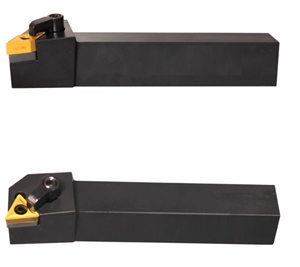
Pain Point 1: Chatter and Poor Surface Finish
Chatter is the bane of any turning operation. It manifests as vibration between the tool and workpiece, leading to poor surface finish, excessive noise, and accelerated tool wear. In high-precision industries like aerospace or medical, chatter can render a part scrap in seconds. The root cause often lies in the turning toolholder's rigidity—or lack thereof. A toolholder with insufficient stiffness, poor damping characteristics, or inadequate clamping force will amplify vibrations, especially in long overhang applications.
Consider a job shop machining Inconel 718 shafts. They use a standard toolholder with a 4:1 overhang ratio. Chatter marks appear, and the surface roughness averages Ra 3.2 µm, far above the required Ra 1.6 µm. Each scrapped part costs $500 in material and labor, and the shop loses 20% of its throughput due to slower speeds and additional finishing passes. Over a year, this adds up to tens of thousands of dollars in lost revenue.
The solution is a turning toolholder designed for high rigidity and damping. Features like a solid carbide shank, tuned mass damper, or a reinforced clamping mechanism can significantly reduce vibrations. For example, NANTONG LUCUBRATE MACHINERY TECHNICAL LTD. offers toolholders with a unique hybrid damping system that combines a carbide core with a viscoelastic layer, effectively absorbing vibrations across a wide frequency range. In the Inconel case, switching to such a toolholder allowed the shop to achieve Ra 1.2 µm, increase cutting speed by 30%, and eliminate scrapped parts.
Pain Point 2: Inconsistent Tool Life and Unpredictable Costs
Tool life variability is a silent killer of profitability. When inserts wear out prematurely or unpredictably, you're forced to either slow down production or risk sudden failures that damage the workpiece and machine. The turning toolholder plays a pivotal role here: it must provide stable clamping, precise insert positioning, and efficient heat dissipation. A poorly designed toolholder can cause micro-movements of the insert, leading to uneven wear and catastrophic failure.
Take the case of a automotive parts manufacturer producing millions of transmission shafts annually. They were using a low-cost toolholder that promised quick ROI. However, insert life varied from 200 to 800 pieces per edge, causing frequent line stoppages and unpredictable tooling costs. The production manager estimated that each unexpected tool change cost $200 in downtime, and the variability added 15% to their tooling budget.
By transitioning to a precision-engineered turning toolholder from NANTONG LUCUBRATE MACHINERY TECHNICAL LTD., which features a proprietary locking mechanism that ensures repeatable insert indexing within 5 µm, the manufacturer achieved consistent tool life of 900 pieces per edge, with a standard deviation of just 20 pieces. This predictability allowed them to schedule tool changes during planned maintenance, reducing downtime by 80% and cutting tooling costs by 12%.
Pain Point 3: Chip Control and Operator Safety
Chip evacuation might seem mundane, but poor chip control can lead to tangled nests, scrapped parts, and even operator injuries. The turning toolholder's geometry, coolant delivery, and chip breaker design are critical. In deep-hole turning or when machining gummy materials like aluminum, chips can pack into the toolholder pocket, causing insert breakage and requiring manual intervention.
A medical device manufacturer machining titanium bone screws faced this issue daily. Chips would wrap around the toolholder, requiring the operator to stop the machine every 10 parts to clear the mess. This not only reduced productivity by 25% but also posed a safety risk from sharp chips. The shop tried various insert geometries with limited success.
The solution came from a turning toolholder with an optimized coolant channel design that directs high-pressure coolant precisely at the chip-tool interface, ensuring efficient chip evacuation. NANTONG LUCUBRATE MACHINERY TECHNICAL LTD. worked with the manufacturer to select a toolholder with a through-tool coolant capability and a polished chip pocket to reduce friction. As a result, chip nesting was eliminated, productivity increased by 20%, and the operator no longer needed to intervene manually.
Real-World Success Stories
Our customers across the globe have experienced transformative results by choosing the right turning toolholder. Here are a few examples:
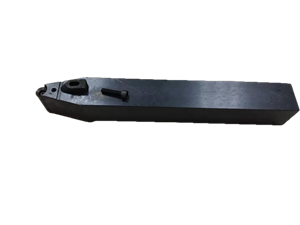
Case 1: Precision Aerospace in Seattle, USA
John Matthews, a manufacturing engineer at AeroTech Components, struggled with chatter when turning long slender shafts. After switching to NANTONG LUCUBRATE MACHINERY TECHNICAL LTD.'s anti-vibration toolholder, surface finish improved from Ra 2.5 µm to Ra 0.8 µm, and cycle time dropped by 18%. John remarked, "The damping technology is a game-changer. We now machine parts that we previously had to outsource."
Case 2: Automotive Supplier in Stuttgart, Germany
Dieter Schmidt, procurement manager at AutoParts GmbH, was frustrated with inconsistent tool life. Using our precision toolholders, insert life variability decreased by 70%, and tooling costs fell by 15%. Dieter said, "The repeatability is outstanding. Our operators no longer worry about tool changes mid-cycle."
Case 3: Medical Manufacturer in Osaka, Japan
Yuki Tanaka, production supervisor at MedTech Devices, faced chip control issues with titanium. Our toolholder with advanced coolant channels eliminated chip nesting, boosting productivity by 22%. Yuki commented, "The improvement in chip evacuation is remarkable. We've reduced downtime and improved safety."
Case 4: General Machining in Melbourne, Australia
Sarah Thompson, owner of Thompson Machining, needed a versatile toolholder for mixed materials. Our multi-purpose toolholder reduced setup time by 30% and improved surface finish across all materials. Sarah said, "It's the most reliable toolholder we've ever used. The support from NANTONG LUCUBRATE MACHINERY TECHNICAL LTD. was exceptional."
Applications and Partnerships
Turning toolholders from NANTONG LUCUBRATE MACHINERY TECHNICAL LTD. are trusted in a wide range of applications, including:
- Aerospace: machining turbine components, landing gear parts, and structural fittings.
- Automotive: producing engine shafts, transmission gears, and brake components.
- Medical: manufacturing bone screws, implants, and surgical instruments.
- Energy: turning oil and gas drill bits, valve bodies, and pump shafts.
We are proud to partner with leading distributors and OEMs worldwide. For instance, our collaboration with a major European machine tool builder has led to the integration of our toolholders into their turnkey solutions, ensuring optimal performance from the start.
Frequently Asked Questions
Q1: How do I choose the right toolholder for my application?
A: Consider factors like workpiece material, overhang ratio, required rigidity, and coolant delivery. Our engineers can provide a tailored recommendation based on your specific operation.
Q2: What is the typical lead time for custom toolholders?
A: Standard toolholders ship within 2-3 weeks. Custom designs may take 6-8 weeks, depending on complexity.
Q3: Can your toolholders be used with high-pressure coolant systems?
A: Yes, our toolholders are designed to withstand pressures up to 200 bar, with optimized internal channels for efficient coolant delivery.
Q4: How do you ensure repeatability in insert indexing?
A: We use precision-ground locating surfaces and a proprietary locking mechanism that minimizes variation to within 5 µm.
Q5: Do you offer technical support for toolholder selection?
A: Absolutely. Our team of application engineers provides free consultations to help you optimize your turning processes.
Conclusion
Selecting the right turning toolholder is not just about buying a piece of hardware—it's about investing in productivity, quality, and safety. The pain points we discussed—chatter, inconsistent tool life, and chip control—are real and costly, but they are solvable with the right technology and expertise. At NANTONG LUCUBRATE MACHINERY TECHNICAL LTD., we are committed to helping you overcome these challenges with innovative toolholding solutions.
Ready to take your turning operations to the next level? Contact our sales engineers today to request a copy of our comprehensive technical white paper on toolholder selection, or to discuss your specific application. Let us help you turn challenges into opportunities.