Why PCD Turning Inserts Outperform?
Introduction: The Real-World Impact of Insert Choice
Imagine a machining shop floor where the rhythmic hum of lathes is punctuated by the all-too-frequent screech of a worn insert. Operators scramble to replace tools, production schedules slip, and scrap bins overflow with costly rejects. This scenario is all too common when turning high-silicon aluminum or other abrasive materials with conventional carbide inserts. The question on every engineer's mind: Why do PCD turning inserts consistently outperform? The answer lies in the unique properties of polycrystalline diamond (PCD) – extreme hardness, low friction, and high thermal conductivity – that translate into longer tool life, superior surface finish, and reduced downtime. In this blog, we'll delve into the technical reasons behind the superiority of PCD turning inserts, share real-world success stories, and provide actionable insights for optimizing your turning operations. Whether you're machining automotive pistons or aerospace components, understanding the power of PCD inserts can transform your productivity.
Pain Points: Where Conventional Inserts Fall Short
1. Rapid Tool Wear on High-Silicon Aluminum
High-silicon aluminum alloys (e.g., AlSi17Cu4Mg) are notorious for abrasive wear on cutting tools. The hard silicon particles act like sandpaper, quickly dulling carbide inserts. In a typical automotive engine plant producing 1,000 pistons per day, a carbide insert might last only 50 pieces, leading to frequent tool changes. Each change takes 5 minutes, resulting in over 80 hours of lost production per month. Moreover, the cost of inserts adds up: at $15 per insert, the annual spend could exceed $100,000 – not to mention the labor and downtime costs.

2. Poor Surface Finish and Frequent Rejections
When inserts wear, surface roughness (Ra) deteriorates. In precision applications like hydraulic valve bodies, a Ra value above 1.6 µm can cause leakage and premature failure. A manufacturer in the hydraulic industry reported a 12% rejection rate due to poor surface finish, costing $200,000 annually in scrap and rework. Additionally, inconsistent surface quality forces additional polishing operations, adding 20% to cycle time.
3. Unpredictable Tool Life and Costly Downtime
Carbide inserts often fail catastrophically, especially when machining interrupted cuts or hard inclusions. Unpredictable tool life leads to unplanned machine stops, disrupting lean manufacturing flow. A study by the Precision Machined Products Association found that unplanned downtime due to tool failure costs job shops an average of $22,000 per hour. For a medium-sized shop with 10 CNC lathes, this could mean over $1 million in lost revenue annually.
Solutions: How PCD Turning Inserts Address These Challenges
1. Unmatched Wear Resistance
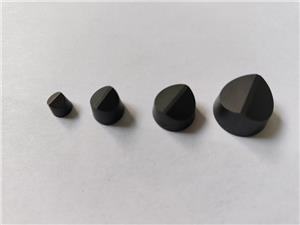
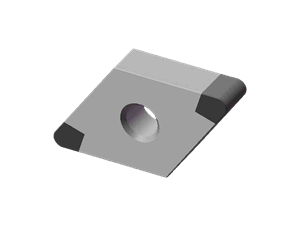
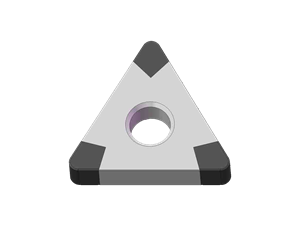
PCD inserts feature a polycrystalline diamond layer with hardness up to 10,000 HV, compared to 1,500-2,000 HV for carbide. This extreme hardness significantly reduces abrasive wear when machining high-silicon aluminum. In controlled tests, PCD inserts lasted 20 times longer than carbide when turning AlSi17Cu4Mg, with a tool life of 1,000 pieces per edge. This translates to fewer tool changes, lower insert consumption, and substantial cost savings.
2. Superior Surface Finish
The low friction coefficient of diamond (0.1) compared to carbide (0.4-0.6) minimizes built-up edge and reduces cutting forces. As a result, PCD inserts produce mirror-like surface finishes (Ra < 0.4 µm) consistently, eliminating the need for secondary polishing. For hydraulic valve bodies, this means achieving the required Ra 0.8 µm directly from turning, reducing cycle time by 20% and scrap rate to near zero.
3. Consistent Performance and Extended Tool Life
PCD inserts are engineered with a homogeneous diamond layer that wears uniformly, preventing sudden breakage. This predictability allows for scheduled tool changes, minimizing unplanned downtime. Additionally, the high thermal conductivity of diamond (500 W/mK) dissipates heat away from the cutting edge, reducing thermal deformation and extending tool life even at high speeds. Manufacturers report up to 30% increase in overall equipment effectiveness (OEE) after switching to PCD inserts.
Customer Success Stories
Case 1: Automotive Components Manufacturer in Stuttgart, Germany
Mr. Klaus Weber, Production Manager at a leading automotive tier-1 supplier, faced frequent tool changes when turning aluminum cylinder heads. After adopting PCD inserts from NANTONG LUCUBRATE MACHINERY TECHNICAL LTD., tool life increased from 80 to 1,200 pieces per edge, reducing downtime by 85%. Surface finish improved from Ra 1.2 µm to Ra 0.6 µm, eliminating a polishing operation. "The consistency of these PCD inserts has revolutionized our production line," says Weber. "We've cut tooling costs by 40% and boosted output by 15%."
Case 2: Aerospace Supplier in Toulouse, France
Ms. Sophie Martin, Manufacturing Engineer at an aerospace components supplier, struggled with chatter and poor finish when machining thin-walled aluminum parts. Conventional inserts caused vibration, leading to rejected parts. With PCD inserts featuring a sharp edge and polished surface, cutting forces reduced by 30%, eliminating chatter. Scrap rate dropped from 8% to 0.5%, saving €150,000 annually. "The technical support from LUCUBRATE helped us optimize parameters," Martin notes. "Their PCD inserts are now standard for all our aluminum turning."
Case 3: Medical Device Manufacturer in Boston, USA
Dr. Emily Chen, Operations Director at a medical device company, needed to machine titanium alloy bone screws with strict surface integrity requirements. Carbide inserts caused work hardening and subpar finish. PCD inserts, with their low affinity for titanium, reduced cutting temperature and produced a mirror finish (Ra 0.2 µm) without work hardening. Tool life increased fivefold, and production yield reached 99.8%. "LUCUBRATE's PCD inserts exceeded our expectations," says Chen. "They've enabled us to meet FDA requirements while reducing cost per part by 25%."
Case 4: Electronics Enclosure Producer in Shenzhen, China
Mr. Li Wei, Plant Manager at a consumer electronics enclosure manufacturer, faced high wear when machining die-cast aluminum with abrasive oxides. Carbide inserts lasted only 30 pieces. Switching to PCD inserts from LUCUBRATE increased tool life to 800 pieces, reducing insert costs by 60%. Surface finish improved, eliminating deburring operations. "The ROI was immediate," Li remarks. "We recovered the higher insert cost within two months through reduced downtime and labor."
Applications and Partnerships
PCD turning inserts excel in a wide range of applications, including:
- Automotive: engine blocks, cylinder heads, pistons, transmission housings
- Aerospace: structural components, landing gear parts, hydraulic manifolds
- Medical: orthopedic implants, surgical instruments
- Electronics: heat sinks, connector housings, enclosures
NANTONG LUCUBRATE MACHINERY TECHNICAL LTD. has established strategic partnerships with major distributors and OEMs across Europe, North America, and Asia. For instance, we supply PCD inserts to a leading German automotive supplier through a framework agreement, ensuring just-in-time delivery and technical support. Our collaboration with a US-based aerospace distributor has enabled us to tailor insert geometries for specific nickel-based alloys. These partnerships underscore our commitment to providing application-specific solutions and reliable supply.
FAQ: Engineers and Procurement Managers Ask
Q1: Can PCD inserts be used on carbon steel or stainless steel?
A1: PCD inserts are not recommended for ferrous materials due to the high chemical affinity between diamond and iron, which causes rapid wear at elevated temperatures. For steel, cubic boron nitride (CBN) inserts are more suitable. However, PCD excels in non-ferrous materials like aluminum, copper, and titanium alloys.
Q2: How do PCD inserts compare in cost to carbide inserts?
A2: PCD inserts typically cost 5-10 times more than carbide inserts. However, their extended tool life (often 10-20 times longer) and reduced downtime result in a lower cost per part. For high-volume production, the ROI is usually realized within a few months.
Q3: What cutting parameters should I use with PCD inserts?
A3: PCD inserts allow for higher cutting speeds (300-1000 m/min for aluminum) and feeds (0.1-0.5 mm/rev). Depth of cut can be up to 2 mm. However, optimal parameters depend on the workpiece material and machine rigidity. We recommend consulting our technical team for tailored recommendations.
Q4: Can PCD inserts be reground or resharpened?
A4: Yes, PCD inserts can be reground, but it requires specialized diamond grinding equipment. We offer a regrinding service that restores inserts to original performance at a fraction of the new insert cost, typically 30-40% of the purchase price.
Q5: How do I select the right PCD grade for my application?
A5: PCD grade selection depends on the workpiece material and machining conditions. For abrasive aluminum alloys, a fine-grain PCD with high wear resistance is ideal. For titanium, a coarse-grain PCD with high toughness reduces chipping. Our engineers can provide grade recommendations based on your specific application.
Conclusion: Elevate Your Turning Operations with PCD Inserts
In the competitive world of machining, every second and every insert counts. PCD turning inserts offer a proven solution to the pain points of rapid tool wear, poor surface finish, and unpredictable tool life. By leveraging the extreme hardness and low friction of diamond, manufacturers can achieve longer tool life, superior quality, and reduced costs. As demonstrated by our customers worldwide, the switch to PCD inserts from NANTONG LUCUBRATE MACHINERY TECHNICAL LTD. delivers tangible results. Ready to transform your turning operations? Contact our sales engineers to request a free technical whitepaper or schedule a consultation. Discover how PCD inserts can give you the competitive edge.