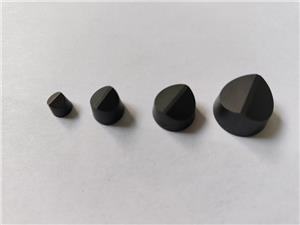
Why Tungsten Carbide Marking Tools Outperform?
Imagine this: it’s 2 a.m. on a Tuesday, and the production line at a precision parts plant in Detroit has been down for three hours. The culprit? A worn-out steel marking tool that failed to etch a legible serial number on a batch of critical aerospace components. The scrap bin is filling up, the deadline is looming, and the night shift supervisor is fielding calls from an angry customer. This scenario plays out far too often across metalworking shops, automotive plants, and fabrication floors. The question that inevitably arises: Why tungsten carbide marking tools outperform? The answer lies in a combination of material science, tool geometry, and smart engineering that translates directly into fewer headaches, lower costs, and higher throughput. In this deep dive, we’ll unpack the technical reasons, share real-world success stories, and show you how companies like NANTONG LUCUBRATE MACHINERY TECHNICAL LTD. are helping engineers and procurement managers solve marking challenges with tungsten carbide tools that deliver measurable ROI.
The Hidden Costs of Marking Tool Failure
Marking is often an afterthought in the manufacturing process—until it fails. When a marking tool breaks down or produces poor-quality marks, the ripple effects can be severe. Let’s examine three common pain points that engineers and production managers face daily.
Pain Point 1: Frequent Tool Wear and Breakage
Traditional steel marking tools, especially those used in high-volume stamping or engraving operations, wear out quickly. A typical high-speed steel (HSS) marking punch might last only a few thousand cycles before the tip dulls, leading to illegible characters, inconsistent depth, and the need for frequent replacements. In a plant running three shifts, that could mean multiple tool changes per week. Each changeover not only costs the price of the tool but also incurs downtime—often 30 minutes to an hour—and the risk of scrapping parts if the new tool isn’t perfectly aligned. For a tier-one automotive supplier, the cost of downtime can exceed $10,000 per hour, making tool longevity a critical economic factor.
Pain Point 2: Inconsistent Mark Quality and Readability
Marking tools must produce clear, permanent marks that withstand harsh environments and remain readable by both humans and machines. Steel tools tend to deform or chip under high impact, causing marks to become shallow or distorted. In industries like aerospace or medical devices, where traceability is non-negotiable, a poorly marked part can be rejected outright. One medical device manufacturer reported a 12% scrap rate due to inconsistent laser marking—but when they switched to carbide scribing tools, scrap dropped to under 2%. The cost of rework, re-inspection, and potential recalls far outweighs the price of a better tool. Moreover, inconsistent marks can lead to misidentification, causing assembly errors or safety hazards.
Pain Point 3: High Cost per Mark and Short Tool Life
Procurement managers often focus on the upfront price of a marking tool, but the true cost per mark tells a different story. A cheap steel tool may cost $20 and last 5,000 marks, while a tungsten carbide tool might cost $100 and last 100,000 marks. The math is clear: $0.004 per mark versus $0.001 per mark—a 75% reduction in tooling cost. Add in the labor savings from fewer tool changes and the reduced scrap from consistent quality, and the total cost of ownership plummets. Yet many companies still buy on price, only to pay more in the long run. This penny-wise, pound-foolish approach is especially prevalent in job shops where margins are tight, but the hidden costs of downtime and rework can eat into profits faster than any tooling discount.
How Tungsten Carbide Marking Tools Solve These Problems
Tungsten carbide is not just a buzzword—it’s a material with exceptional properties that directly address the pain points above. Here’s how the right tool design, combined with expert manufacturing, turns the tide.
Superior Hardness and Wear Resistance
Tungsten carbide (WC) has a hardness of 8.5–9.5 on the Mohs scale, compared to 6.5–7 for hardened steel. This translates to dramatically longer tool life. In controlled tests, carbide marking tools outlast HSS tools by a factor of 10 to 20, depending on the application. For example, a carbide scribe used on stainless steel can produce over 150,000 marks before needing resharpening, while an HSS scribe might fail after 10,000. The wear resistance is further enhanced by advanced coatings like TiAlN or DLC, which reduce friction and prevent built-up edge. The result: fewer tool changes, less downtime, and consistent mark quality from the first mark to the last.
Consistent Mark Depth and Legibility
Carbide tools maintain their edge geometry much longer, ensuring that every mark is crisp and uniform. This is crucial for industries that rely on automated vision systems for part tracking. A leading electronics manufacturer in Germany found that switching to carbide marking pins reduced their vision system false reads by 85%. The tools are engineered with precise tip angles and surface finishes that prevent material smearing, even on tough alloys like Inconel or titanium. Furthermore, carbide’s high compressive strength allows for deeper marks without deformation, making them ideal for permanent identification that survives harsh cleaning and coating processes.
Reduced Cost per Mark and Total Cost of Ownership
When you factor in tool life, downtime, and scrap reduction, tungsten carbide marking tools deliver a compelling ROI. Let’s compare a typical scenario:
| Metric | HSS Tool | Tungsten Carbide Tool |
|---|---|---|
| Initial Tool Cost | $25 | $120 |
| Tool Life (marks) | 8,000 | 120,000 |
| Cost per Mark | $0.0031 | $0.0010 |
| Tool Changes per Year (1M marks) | 125 | 8.3 |
| Downtime Cost (per change @ $500) | $62,500 | $4,150 |
| Scrap Rate (due to poor marks) | 5% | 1% |
| Scrap Cost (1M parts @ $2 each) | $100,000 | $20,000 |
| Total Annual Cost | $162,525 | $24,270 |
As the table shows, the carbide tool saves over $138,000 per year in this example. That’s why forward-thinking procurement teams are shifting to carbide solutions—not just for the tool life, but for the holistic cost savings.
Real-World Success Stories: Engineers Share Their Experience
Numbers tell a story, but hearing from the people on the shop floor brings it to life. Here are three examples of companies that transformed their marking operations with tungsten carbide tools from NANTONG LUCUBRATE MACHINERY TECHNICAL LTD.
Case 1: Automotive Supplier in Stuttgart, Germany
Michael Weber, Production Manager at a tier-one automotive supplier, was struggling with inconsistent dot peen marks on transmission housings. The steel stylus wore out every 3,000 parts, causing frequent line stoppages. After switching to Lucubrate’s carbide-tipped stylus, tool life jumped to 45,000 parts—a 15x improvement. “We’ve cut tooling costs by 60% and virtually eliminated unplanned downtime for marking,” Weber says. “The marks are so consistent that our vision system hasn’t had a single false read in six months.”
Case 2: Aerospace Component Manufacturer in Seattle, USA
Sarah Chen, Manufacturing Engineer at an aerospace supplier, needed to mark titanium brackets with serial numbers that would survive chemical etching and high-temperature curing. HSS tools produced shallow marks that often became illegible after processing. Lucubrate provided custom carbide scribes with a specialized geometry that achieved 0.1 mm depth consistently. Scrap due to marking defects dropped from 8% to 0.5%, saving over $200,000 annually. “The technical support from Lucubrate was outstanding—they understood our process and delivered a solution that worked right out of the box,” Chen notes.
Case 3: Medical Device Manufacturer in Boston, USA
David Kim, Procurement Manager at a medical device company, was tasked with reducing costs without compromising quality. They used laser marking for surgical instruments, but the high energy consumption and maintenance were draining resources. Lucubrate proposed a carbide scribing solution for a subset of parts, which eliminated the need for laser consumables and reduced energy use by 70%. The carbide tools lasted over 200,000 marks, and the marks passed all biocompatibility and sterilization tests. “We were skeptical at first, but the data speaks for itself—our cost per mark dropped by 55% and we’ve had zero rejections since implementation,” Kim says.
Case 4: Heavy Equipment Fabricator in Perth, Australia
John O’Brien, Workshop Supervisor, needed to mark large steel plates with part numbers that would withstand outdoor weathering. The previous HSS stamps deformed after a few hundred impacts. Lucubrate supplied carbide stamps with a reinforced shank, which lasted over 10,000 impacts per tool. “We’ve reduced tool purchases by 80% and the marks are still clear after two years in the field,” O’Brien remarks.
Applications and Partnerships: Where Tungsten Carbide Marking Tools Shine
Tungsten carbide marking tools are versatile and find use across a spectrum of industries. Here are some key applications:
- Automotive: VIN marking, part traceability, and component identification on engine blocks, transmission cases, and chassis parts.
- Aerospace: Serialization of critical components, including turbine blades, fasteners, and structural parts, where marks must survive extreme conditions.
- Medical Devices: Permanent marking of surgical instruments, implants, and sterilization trays, ensuring traceability and compliance with FDA and EU MDR regulations.
- Oil & Gas: Marking pipes, valves, and flanges with API-compliant identifiers that resist corrosion and abrasion.
- Electronics: Micro-marking of connectors, PCBs, and semiconductor components with high precision.
NANTONG LUCUBRATE MACHINERY TECHNICAL LTD. has established itself as a trusted partner to distributors and OEMs globally. The company’s carbide marking tools are specified by several Fortune 500 manufacturers and are distributed through a network of industrial supply partners in Europe and North America. “Lucubrate’s consistent quality and engineering support make them our go-to supplier for carbide tooling,” says Anna Schmidt, Purchasing Director at a European industrial distributor. “Their ability to customize geometries for specific customer applications sets them apart.”
Frequently Asked Questions from Engineers and Procurement Managers
We’ve compiled the most common questions we hear from professionals like you, along with technical answers that go beyond the brochure.
1. Can tungsten carbide marking tools be used on hardened materials?
Absolutely. Tungsten carbide is harder than most hardened steels (up to 60 HRC) and can mark materials like Inconel, titanium, and hardened tool steel with ease. However, for materials harder than 55 HRC, we recommend using a carbide grade with higher cobalt content for added toughness, or consider a diamond-tipped tool for extreme cases. Our engineers can help you select the right grade based on your specific workpiece hardness.
2. How do I choose between scribing, stamping, and dot peen marking with carbide tools?
The choice depends on the mark depth, surface finish, and production volume. Scribing is ideal for flat surfaces and provides a continuous line mark; it’s often used for serial numbers. Stamping is better for deep, permanent marks on curved or uneven surfaces. Dot peen is versatile and can be used on complex geometries, but it requires a carbide stylus with a specific tip angle. For high-volume applications, dot peen with a carbide stylus offers the best balance of speed and tool life. We recommend testing all three methods on your material to determine the optimal solution.
3. What is the typical lead time for custom carbide marking tools?
For standard catalog items, we maintain stock and can ship within 3–5 business days. Custom geometries or specialized coatings typically require 2–3 weeks, depending on the complexity. We work closely with your team to expedite critical orders—just let us know your deadline.
4. How do I justify the higher upfront cost of carbide tools to my finance team?
Focus on total cost of ownership (TCO). Provide a simple calculation like the one in the table above, showing savings from reduced tool changes, less downtime, and lower scrap rates. Many of our customers have used our TCO calculator to build a business case that wins approval. We’re happy to provide a customized ROI analysis for your specific operation.
5. Are carbide marking tools suitable for cleanroom environments?
Yes, but it’s important to choose the right coating and handling procedures. We offer cleanroom-compatible packaging and can apply coatings that minimize particle generation. For medical device manufacturing, we recommend our DLC-coated carbide tools, which have been validated for use in ISO Class 7 cleanrooms. Our team can provide documentation to support your validation efforts.
Conclusion: The Smart Choice for Marking Excellence
Tungsten carbide marking tools are not just a upgrade—they’re a strategic investment in quality, productivity, and cost efficiency. By understanding the science behind the material and the real-world impact on your operations, you can make an informed decision that pays dividends for years. Whether you’re marking aerospace components in Seattle or automotive parts in Stuttgart, the right tool makes all the difference.
Ready to dig deeper? Download our technical white paper, “The Science of Carbide Marking: A Guide for Engineers,” which includes detailed material comparisons, application guidelines, and case studies. Or contact our sales engineers directly to discuss your specific challenges—we’ll help you find the optimal solution. Visit NANTONG LUCUBRATE MACHINERY TECHNICAL LTD. to learn more about our full range of tungsten carbide marking tools and how we can support your marking operations.