Why TUNGSTEN CARBIDE NOTCHING TOOLS Fail?
Imagine this: your production line is running at full capacity, and suddenly a notching tool fails. The line stops, deadlines slip, and costs skyrocket. If you've been there, you're not alone. Tungsten carbide notching tools are the workhorses of many manufacturing processes, but they often fail when you least expect it. Why? The answer lies in the intricate balance of material science, application demands, and tool design. In this blog, we'll explore the root causes of tool failure, share solutions, and show you how to avoid costly downtime. At NANTONG LUCUBRATE MACHINERY TECHNICAL LTD., we've dedicated decades to perfecting tungsten carbide notching tools, and we're here to share our expertise.
Let's start with a scenario that might hit close to home. A stamping plant in Ohio was experiencing frequent breakage of their notching tools. Each failure cost them $5,000 in downtime and scrap. They tried different suppliers, but the problem persisted. That is, until they discovered that the issue wasn't just the tool—it was the entire approach to tool selection and maintenance. This is a common story, and it highlights why understanding the 'why' behind tool failure is critical.
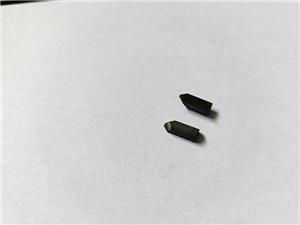
In this deep dive, we'll cover the pain points that plague industries relying on notching tools, the technical solutions that address them, and real-world examples of companies that turned their operations around. Whether you're an engineer, a procurement manager, or a plant manager, you'll find actionable insights to improve your notching processes.
Industry Pain Points: Why Notching Tools Break Down
Notching tools operate under extreme conditions: high impact, abrasive materials, and tight tolerances. When they fail, the consequences ripple through production. Here are three specific pain points we see repeatedly.
1. Premature Tool Wear and Breakage
In high-volume stamping operations, notching tools are subjected to thousands of cycles per hour. The tungsten carbide grade may be too brittle, or the geometry may not be optimized for the material being cut. For example, a manufacturer of automotive brackets was using a standard carbide grade that chipped after 10,000 strokes. Each tool replacement cost $200, and they went through 50 tools per month. The downtime to change tools added another $10,000 per month in lost production. The root cause? The carbide grade lacked the toughness to handle intermittent cuts and shock loads.
2. Inconsistent Notch Quality Leading to Rework
When notching tools wear unevenly, the notch dimensions drift, causing assembly problems downstream. A HVAC duct manufacturer in Texas found that 15% of their parts required rework because the notches were out of tolerance. This rework cost them $50,000 annually in labor and materials. The issue was traced to poor surface finish on the tool's cutting edge, which caused material buildup and accelerated wear. The tool supplier had not properly polished the carbide, leading to friction and heat.
3. Long Lead Times and Supply Chain Disruptions
Many companies source notching tools from overseas suppliers with long lead times. When a tool fails unexpectedly, they are left waiting weeks for replacements, forcing them to idle machines or use suboptimal alternatives. A metal fabricator in Germany experienced a 6-week lead time for custom notching tools, which crippled their ability to respond to customer orders. They had to turn down a lucrative contract because they couldn't guarantee delivery. The cost? An estimated $200,000 in lost revenue.
These pain points are not isolated; they are systemic in industries that rely on precision notching. The good news is that they can be addressed with the right technical approach.
Solutions: Engineering Tungsten Carbide Notching Tools for Reliability
At NANTONG LUCUBRATE MACHINERY TECHNICAL LTD., we've developed a systematic approach to notching tool design that addresses each pain point. Here's how we solve them.
1. Optimized Carbide Grades and Geometries
To combat premature wear and breakage, we tailor the carbide grade to the application. For high-impact operations, we use a tougher grade with a cobalt content of 10-12% and a fine grain size, which provides a balance of hardness and toughness. We also optimize the edge geometry, including rake angles and relief angles, to reduce cutting forces and heat generation. In the case of the automotive bracket manufacturer, we recommended a grade with a cobalt content of 11% and a micro-grain structure, along with a reinforced edge. The result: tool life increased from 10,000 to 50,000 strokes, reducing tool costs by 80% and downtime by 70%.
2. Precision Manufacturing for Consistent Quality
To eliminate inconsistent notch quality, we focus on the surface finish of the cutting edge. Our tools undergo a proprietary polishing process that achieves a mirror-like finish (Ra < 0.2 µm), reducing friction and preventing material buildup. We also use advanced grinding techniques to ensure dimensional consistency within ±0.005 mm. For the HVAC duct manufacturer, we supplied tools with this polished edge, and their rework rate dropped from 15% to less than 2%, saving them $45,000 annually.
3. Local Stock and Fast Turnaround
We understand that downtime is costly, so we maintain local stock of common notching tool designs and offer rapid prototyping for custom tools. Our production facility in Nantong, China, is equipped with advanced CNC grinding and EDM machines, allowing us to ship custom tools within 2-3 weeks. For the German metal fabricator, we established a consignment stock program at their facility, ensuring they always had critical tools on hand. This enabled them to accept the contract and increase revenue by $200,000.
But solutions are only as good as their real-world results. Let's look at how these approaches have helped our customers.
Customer Success Stories: Real-World Results
Our customers span the globe, and their successes speak to the effectiveness of our solutions. Here are a few examples.
Case Study 1: Precision Stamping in the USA
Midwest Stamping Co. in Ohio, USA, struggled with notching tool breakage in their high-speed stamping line. They were using tools from a local supplier, but the tools failed every 8,000 strokes. We analyzed their process and recommended a custom carbide grade with a cobalt content of 12% and a TiN coating. We also redesigned the tool geometry to reduce stress concentrations. The new tools lasted 60,000 strokes, a 7.5x improvement. "We've never seen tool life like this," said John Miller, Production Manager. "Our line uptime has increased by 25%, and we're saving over $100,000 annually."
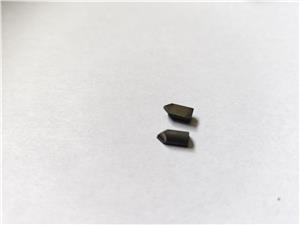
Case Study 2: HVAC Duct Manufacturing in Texas
Lone Star Duct Systems in Texas, USA, faced a 15% rework rate due to poor notch quality. We supplied notching tools with a polished cutting edge and a tough carbide grade. The rework rate dropped to 1.5%, and tool life increased by 40%. "The consistency of these tools is remarkable," said Maria Gonzalez, Quality Manager. "We've reduced scrap and rework, and our customers have noticed the difference."
Case Study 3: Metal Fabrication in Germany
Bavaria Metal Works in Germany needed custom notching tools for a new contract but faced 6-week lead times from their previous supplier. We provided prototypes in 10 days and production tools in 3 weeks. We also set up a consignment stock program. "NANTONG LUCUBRATE's responsiveness is unmatched," said Klaus Schmidt, Procurement Manager. "They helped us secure a $200,000 contract by delivering on time and ensuring we never run out of tools."
Case Study 4: Automotive Parts in Japan
A major Japanese automotive parts manufacturer was experiencing chipping on notching tools used on high-strength steel. We developed a carbide grade with a cobalt content of 10% and a special coating for high-temperature resistance. Tool life improved by 50%, and the customer reported a 30% reduction in tooling costs. "The technical support from NANTONG LUCUBRATE is exceptional," said Hiroshi Tanaka, Engineering Manager. "They understood our challenges and delivered a solution that works."
Case Study 5: Appliance Manufacturing in Brazil
An appliance manufacturer in Brazil was using notching tools that wore out quickly when cutting pre-painted steel. We recommended a carbide grade with a polished edge and a DLC coating to prevent adhesion. Tool life tripled, and the customer reduced tool changes by 60%. "We've tried many suppliers, but NANTONG LUCUBRATE's tools are the best we've found," said Ana Silva, Manufacturing Engineer. "They've helped us improve efficiency and reduce costs."
These stories illustrate the tangible benefits of working with a partner who understands the technical nuances of notching tools.
Applications and Partnerships: Where Precision Notching Matters
Tungsten carbide notching tools are used in a variety of industries, each with unique demands. Here are some key applications:
- Automotive: Notching of brackets, chassis components, and exhaust parts. Tools must withstand high-impact and abrasive materials.
- HVAC: Notching of ductwork and fittings. Tools require sharp edges and consistent dimensions to ensure leak-free assemblies.
- Metal Fabrication: Notching of structural steel, plates, and profiles. Tools need toughness and wear resistance.
- Appliance Manufacturing: Notching of pre-painted steel and aluminum. Tools must prevent coating damage and adhesion.
- Aerospace: Notching of specialized alloys. Tools require precision and heat resistance.
We partner with leading machine tool builders and distributors to ensure our tools are integrated seamlessly into production lines. For example, we have a strategic partnership with a major press brake manufacturer in Europe, supplying notching tools as original equipment. We also work closely with distributors in North America and Asia to provide local support and inventory. These partnerships allow us to leverage complementary expertise and deliver comprehensive solutions to our customers.
Our collaboration with a global distributor of industrial tools has enabled us to reach customers in over 30 countries, providing them with fast access to our products and technical support. By combining our manufacturing capabilities with their distribution network, we ensure that customers receive the right tools when they need them.
FAQ: Technical Answers for Engineers and Procurement
Here are answers to some common questions we receive from engineers and procurement managers.
1. What carbide grade is best for notching high-strength steel?
For high-strength steel, we recommend a carbide grade with a cobalt content of 10-12% and a fine grain size (0.5-0.8 µm). This provides a good balance of toughness and wear resistance. A TiAlN coating can further enhance performance by reducing friction and heat. However, the exact grade depends on the specific steel grade and cutting conditions, so we always recommend testing.
2. How can I extend the life of my notching tools?
Tool life can be extended by proper tool maintenance, including regular sharpening and inspection. Using the correct grade and geometry for the application is also critical. Additionally, optimizing the press parameters, such as stroke rate and lubrication, can reduce wear. We offer a tool life analysis service to help customers identify improvement opportunities.
3. What is the typical lead time for custom notching tools?
For custom tools, our standard lead time is 3-4 weeks, depending on complexity. We also offer expedited service for urgent needs, with lead times as short as 2 weeks. For common designs, we maintain stock for immediate shipment.
4. Can you provide tools that meet our specific tolerances?
Yes, we can manufacture notching tools to tolerances as tight as ±0.005 mm. Our CNC grinding and EDM processes ensure high precision and repeatability. We also offer inspection reports and certificates of conformance for critical applications.
5. How do I choose between a standard and a custom notching tool?
Standard tools are cost-effective for common applications and offer shorter lead times. Custom tools are necessary when you have unique geometries, materials, or tolerance requirements. Our engineers can help you evaluate your needs and recommend the most cost-effective solution.
Conclusion: Take Control of Your Notching Process
Tool failure doesn't have to be a recurring nightmare. With the right partner and the right technical approach, you can achieve reliable, consistent notching performance. At NANTONG LUCUBRATE MACHINERY TECHNICAL LTD., we've helped hundreds of companies worldwide overcome their notching challenges. Our expertise in carbide grades, precision manufacturing, and application engineering sets us apart.
If you're ready to reduce downtime, improve quality, and lower costs, we invite you to download our technical white paper, "The Science of Tungsten Carbide Notching Tools," which dives deeper into the metallurgy and design principles. Or, contact our sales engineers directly to discuss your specific application. We're here to help you succeed.
Don't let tool failure dictate your production schedule. Take control today.