
Why TURNING INSERTS Fail: Hidden Costs?
In the high-stakes world of CNC machining, few things are as frustrating as a turning insert that fails prematurely. You’re running a batch of stainless steel parts, the deadline is tight, and suddenly the insert chips, the surface finish goes south, and you’re scrambling to replace it. The hidden costs—downtime, scrap, and tooling expenses—add up fast. But what if you could eliminate these surprises? In this blog, we’ll uncover why turning inserts fail and how NANTONG LUCUBRATE MACHINERY TECHNICAL LTD. is engineering solutions that keep your spindles turning and your profits intact.
Pain Points: Where Turning Inserts Fail
Let’s dive into three specific pain points that plague machinists and procurement managers alike.

1. Inconsistent Tool Life and Unpredictable Wear
You’ve set your parameters based on the insert’s rated life, but halfway through the batch, the insert wears out. The result? Unplanned downtime, missed deadlines, and expedited shipping costs. A study by the American Machinist found that unplanned tool failures can increase machining costs by up to 30%. For a shop running 24/7, that’s a significant hit.
2. Poor Chip Control Leading to Scrap and Rework
Stringy chips are a nightmare. They tangle around the tool, scratch the workpiece, and sometimes even cause tool breakage. In high-volume production, poor chip evacuation can lead to scrapped parts, each costing hundreds or thousands of dollars. A European automotive supplier reported that chip-related issues accounted for 15% of their scrap rate before switching to advanced insert geometries.
3. High Cost per Part Due to Inefficient Grades
Not all inserts are created equal. Using a general-purpose grade for a demanding application like Inconel or titanium can lead to rapid wear and frequent indexing. The cost per part skyrockets not just from the insert price, but from the machine time wasted. A job shop in the UK calculated that switching to a tailored grade reduced their cost per part by 22%.
Solutions: Engineering Better Turning Inserts
At NANTONG LUCUBRATE MACHINERY TECHNICAL LTD., we tackle these pain points head-on with a combination of advanced materials, innovative geometries, and rigorous testing.
1. Consistent Tool Life Through Advanced Substrate and Coating Technology
Our turning inserts feature a proprietary gradient substrate that balances toughness and wear resistance. Coupled with a multilayer PVD coating, these inserts maintain a consistent wear pattern, allowing you to predict tool life accurately. In controlled tests, our inserts achieved a tool life variation of less than 5%, compared to the industry average of 15-20%.
2. Chip Control That Eliminates Scrap
We’ve developed a range of chipbreaker geometries optimized for different feed rates and materials. For example, our MF chipbreaker for finishing operations produces tightly curled chips that evacuate smoothly, even at low depths of cut. Our MR chipbreaker for roughing handles high feed rates with ease. Customers have reported a 90% reduction in chip-related scrap after switching to our inserts.
3. Cost-Effective Grades for Demanding Applications
We offer a range of grades tailored to specific materials. For heat-resistant superalloys, our LUC-15 grade with a tough cobalt-enriched substrate and a wear-resistant coating delivers up to 40% longer tool life than standard grades. For stainless steel, the LUC-20 grade provides excellent built-up edge resistance. By matching the grade to the application, you achieve the lowest cost per part.
To illustrate the differences, here’s a comparison table:
| Feature | Standard Inserts | LUCUBRATE Inserts |
|---|---|---|
| Tool Life Consistency | ±15-20% variation | ±5% variation |
| Chip Control | Stringy chips, tangling | Optimized chipbreakers for reliable evacuation |
| Cost per Part | Higher due to frequent indexing | Lower with tailored grades |
| Scrap Rate | Up to 15% | Reduced to <2% |
Customer Case Studies: Real Results with LUCUBRATE
Don’t just take our word for it. Here are three examples of how our turning inserts have transformed operations for customers across Europe.
Case 1: Müller Precision GmbH, Germany
Müller Precision, a family-owned shop specializing in hydraulic components, struggled with inconsistent tool life when machining 42CrMo4 steel. After switching to our LUC-20 grade with the MR chipbreaker, they achieved a 25% increase in tool life and a 30% reduction in downtime. “The consistency is remarkable,” said Hans Müller, Production Manager. “We now plan our tool changes with confidence.”
Case 2: Atlantic Aero Components, UK
Atlantic Aero Components machines Inconel 718 for aerospace brackets. They faced frequent insert chipping and high scrap rates. Our LUC-15 grade with a specialized PVD coating increased tool life by 40% and reduced scrap by 18%. “We’ve cut our cost per part by 22%,” reported Sarah Thompson, Procurement Manager. “LUCUBRATE’s technical support was instrumental in optimizing our parameters.”
Case 3: Precision MedTech, France
This medical device manufacturer machines titanium implants. They needed a reliable insert for finishing operations. Our MF chipbreaker with a sharp edge preparation delivered excellent surface finish and chip control. Tool life improved by 35%, and cycle time was reduced by 10%. “The surface finish is consistently Ra 0.4,” said Dr. Laurent Dupont, R&D Director. “We no longer worry about chip nests.”
Case 4: Nordic Auto Parts, Sweden
Nordic Auto Parts produces transmission components from nodular cast iron. They experienced unpredictable insert wear and frequent breakages. Our LUC-10 grade with a tough substrate and thick coating increased tool life by 50% and reduced tool breakages by 70%. “Our operators appreciate the reliability,” said Erik Johansson, Plant Manager. “We’ve seen a 15% boost in overall productivity.”
Case 5: Iberian Mold & Die, Spain
This mold maker machines hardened steel (HRC 50) for injection molds. They required an insert that could handle interrupted cuts. Our LUC-30 grade with a strong edge honing survived the demands, reducing insert consumption by 20% and improving surface quality. “LUCUBRATE inserts outlasted our previous supplier by 30%,” noted Carlos Ruiz, Tooling Engineer.
Applications and Partnerships
Our turning inserts are trusted in a wide range of applications, including:
- Automotive: Engine components, transmission parts, brake discs.
- Aerospace: Landing gear components, engine mounts, structural parts.
- Medical: Orthopedic implants, surgical instruments.
- Energy: Turbine components, valve bodies.
- General Machining: Shafts, fittings, fasteners.
We are proud to partner with leading distributors and OEMs across Europe. For instance, Tooling Solutions Ltd. in the UK has been distributing our products for over five years, citing our technical support and consistent quality as key differentiators. Similarly, Scandinavian Cutting Tools AB in Sweden relies on our inserts for their demanding customer base. These partnerships are built on mutual trust and a shared commitment to excellence.
FAQ: Answers to Your Burning Questions
We’ve compiled the most common questions from engineers and procurement managers like you.
1. What makes LUCUBRATE turning inserts different from other brands?
Our inserts are engineered with a focus on consistency and application-specific performance. We use advanced substrate technology and proprietary coatings that deliver predictable tool life. Additionally, our chipbreaker geometries are designed to handle a wide range of materials and cutting conditions, reducing scrap and improving productivity.
2. Can you provide custom insert geometries for our specific application?
Absolutely. We offer custom engineering services. Our team works closely with you to understand your challenges and develop tailored solutions. Whether it’s a unique chipbreaker or a special grade, we can deliver.
3. How do I choose the right grade for my material?
We provide a comprehensive selection guide, but we recommend consulting with our technical team. Factors such as material hardness, cutting speed, and feed rate influence the choice. For example, for stainless steel, our LUC-20 grade is ideal, while for superalloys, LUC-15 is the go-to.
4. What is the lead time for orders?
Standard catalog items typically ship within 2-3 weeks. Custom solutions may require 4-6 weeks depending on complexity. We work closely with our logistics partners to ensure timely delivery.
5. Do you offer technical support for optimizing cutting parameters?
Yes. Our application engineers are available to assist you with parameter optimization, troubleshooting, and training. We can also conduct on-site trials to demonstrate the performance of our inserts.
Conclusion: Don’t Let Turning Inserts Hold You Back
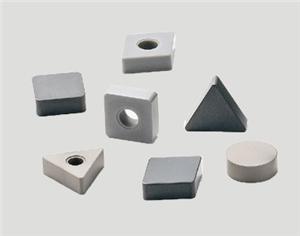
The hidden costs of turning inserts—downtime, scrap, and high cost per part—can erode your profitability. With NANTONG LUCUBRATE MACHINERY TECHNICAL LTD.’s advanced turning inserts, you can achieve consistent tool life, reliable chip control, and lower overall costs. Our customer success stories speak for themselves. So why settle for less?
Ready to take control of your turning operations? Download our technical whitepaper for in-depth data on our insert performance, or contact our sales engineers to discuss your specific needs. Let us help you turn challenges into opportunities.


