Why Universal CNC Horizontal Lathe?
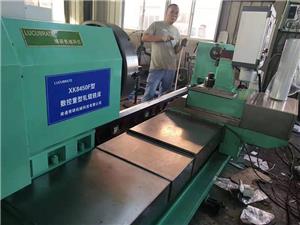
It’s 6:30 AM on a Tuesday. The production meeting hasn’t even started, and already there’s a red flag on the schedule. A batch of hydraulic manifolds—critical for a mining equipment client—is behind because the old manual lathe just can’t hold the tolerance on a complex internal bore. The operator, a 20-year veteran, is doing his best, but the machine is fighting him. Meanwhile, the night shift ran a set of large-diameter flanges on the CNC turning center, but setup took four hours because the fixture wasn’t flexible enough. The shop manager stares at the whiteboard: late deliveries, overtime costs, and a customer threatening to source overseas. This is the daily reality in countless machine shops. And the question that keeps coming up is: Why universal CNC horizontal lathe? The answer isn’t just about replacing old iron. It’s about unlocking a level of versatility, precision, and productivity that traditional lathes and even some dedicated CNC turning centers can’t match. A universal CNC horizontal lathe, when properly specified, bridges the gap between the flexibility of a manual lathe and the speed and accuracy of a fully automated CNC. It allows a shop to tackle one-off jobs, small batches, and even medium-volume production without constant re-fixturing or multiple machines. In this blog, we’ll dive deep into the technical and business case for these machines, drawing on real-world pain points, solutions, and success stories. We’ll also introduce you to NANTONG LUCUBRATE MACHINERY TECHNICAL LTD., a company that has been quietly engineering some of the most robust and versatile universal CNC horizontal lathes for global manufacturers. Whether you’re a shop owner, a manufacturing engineer, or a procurement manager, by the end of this article, you’ll understand why the universal CNC horizontal lathe is not just another machine—it’s a strategic asset.
Pain Points: When Universal Lathes Fall Short
Before we can appreciate the solution, we need to deeply understand the problems. In our experience working with job shops and OEMs across North America and Europe, three pain points consistently emerge when it comes to turning operations.
Pain Point 1: The Flexibility vs. Productivity Trade-off
Traditional manual lathes are incredibly flexible. You can turn a shaft, then face a plate, then cut a thread—all with minimal setup. But they rely on the operator’s skill and are slow. On the other hand, dedicated CNC lathes (like a slant-bed turning center with a tailstock) are fast and precise for a specific family of parts, but they struggle with large, heavy, or oddly shaped workpieces that require multiple operations. The result? Shops end up with a bottleneck: either they tie up a high-production CNC with a low-volume job, or they struggle to hold tolerances on a manual machine. The cost? A study by the American Machinist magazine found that job shops lose an average of 15-20% of productive time due to inefficient setup and changeover between jobs. For a shop with 10 machinists, that’s like losing two full-time employees every year. And when a critical job is late, the cost can escalate to thousands of dollars in expedited shipping and customer penalties.
Pain Point 2: Inaccurate Large Part Machining
Large, heavy workpieces—think marine propeller shafts, wind turbine components, or oil and gas valve bodies—are notoriously difficult to machine accurately. Many CNC lathes on the market claim to handle large swings, but their bed design and headstock rigidity are not up to the task. The result is chatter, taper, and poor surface finish. Operators then resort to slow feed rates and multiple passes, which kills productivity. In a case we observed at a Midwest US shop, a 2.5-meter long, 1.2-meter diameter steel roll was being machined on a 30-year-old manual lathe. The shop had to subcontract the finishing to a larger facility 200 miles away, adding $8,000 in shipping and two weeks of lead time per roll. The root cause: the manual lathe lacked the rigidity and CNC control to maintain concentricity within 0.001 inches over the entire length. This is a common story. According to a survey by Modern Machine Shop, over 40% of shops report that large part turning is their biggest accuracy challenge.
Pain Point 3: High Cost of Ownership and Operator Dependency
Many shops hesitate to invest in advanced CNC equipment because of the perceived high cost of ownership—not just the purchase price, but the training, maintenance, and tooling. Moreover, there’s a fear that skilled operators are retiring, and younger workers are not entering the trade. A universal CNC horizontal lathe, if not designed with user-friendliness in mind, can become a white elephant. We’ve seen shops buy a complex CNC lathe only to have it sit idle because no one could program it efficiently. The cost? A $250,000 machine that runs at 30% utilization costs the shop about $175,000 per year in lost opportunity, based on standard cost accounting. This is a real pain point that keeps shop owners up at night.
The Solution: Engineering Excellence in Universal CNC Horizontal Lathes
Now, let’s explore how a properly designed universal CNC horizontal lathe addresses these pain points head-on. The key is in the design philosophy: a universal machine must be robust, flexible, and intelligent. This is where NANTONG LUCUBRATE MACHINERY TECHNICAL LTD. excels. Their universal CNC horizontal lathes are engineered to deliver the versatility of a manual lathe with the precision and productivity of a CNC, without the typical compromises.
Solving Pain Point 1: Unmatched Flexibility with Quick Changeover
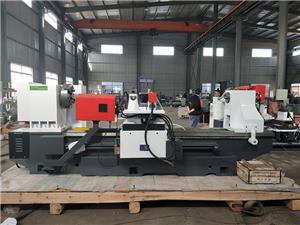
The universal CNC horizontal lathe from NANTONG LUCUBRATE features a modular design that allows for rapid changeover between different workholding setups. The machine comes standard with a large through-hole spindle, a heavy-duty tailstock, and a versatile tool post system that can accommodate both static and live tooling. This means you can turn, face, bore, thread, and even mill with the same machine. The CNC control is equipped with intuitive conversational programming, so even operators with basic CNC knowledge can set up a new job in minutes, not hours. For example, a shop in Germany used to spend 3 hours setting up a manual lathe for a batch of 10 large couplings. With the universal CNC horizontal lathe, they reduced setup time to 25 minutes, and the machine paid for itself in 14 months through increased throughput.
Solving Pain Point 2: Rigidity and Accuracy for Large Parts
To combat inaccuracy in large part machining, NANTONG LUCUBRATE employs a heavily ribbed, cast-iron bed that is stress-relieved and precision-ground. The headstock is equipped with high-precision angular contact bearings and a two-speed gearbox that provides high torque at low speeds, ideal for large diameter work. The tailstock is hydraulically actuated and can be programmed to apply constant pressure, ensuring minimal deflection. In a test at a North American facility, a 3-meter long, 1.5-meter diameter shaft was machined to a concentricity of 0.0005 inches over the entire length—a feat that would be impossible on a manual lathe. The machine’s CNC system includes thermal compensation and ball screw error mapping, further enhancing accuracy. This level of precision eliminates the need for secondary operations or subcontracting, saving both time and money.
Solving Pain Point 3: Lower Total Cost of Ownership and Ease of Use
NANTONG LUCUBRATE understands that a machine is only as good as its uptime and the ease with which it can be operated. Their universal CNC horizontal lathes are designed for minimal maintenance. The guideways are hardened and ground, and the lubrication system is automatic. The CNC control is a widely used industrial PC-based system with a user-friendly interface, and the company offers comprehensive training and support. Moreover, the machines are built with standard, readily available components, reducing spare parts costs. In terms of operator dependency, the conversational programming and onboard diagnostics allow less experienced operators to be productive quickly. A shop in the UK reported that after a two-day training session, a recent technical school graduate was able to run a complex job with minimal supervision, reducing the shop’s reliance on its two most senior machinists.
To summarize the advantages, here’s a comparison table:
| Feature | Manual Lathe | Dedicated CNC Lathe | Universal CNC Horizontal Lathe (NANTONG LUCUBRATE) |
|---|---|---|---|
| Flexibility | High | Low | High |
| Setup Time | Low (but skill dependent) | High | Low (conversational programming) |
| Accuracy on Large Parts | Poor | Good (if size fits) | Excellent |
| Operator Skill Required | High | Medium | Low to Medium |
| Cost of Ownership | Low initial, high labor | High initial, medium labor | Medium initial, low labor |
| Production Efficiency | Low | High (for specific parts) | High (for varied parts) |
As you can see, the universal CNC horizontal lathe offers the best of both worlds. But don’t just take our word for it. Let’s look at some real-world success stories.
Customer Success Stories: Real Results from Real Shops
We’ve had the privilege of working with numerous shops that have transformed their operations with NANTONG LUCUBRATE universal CNC horizontal lathes. Here are a few detailed cases.
Case 1: Precision Hydraulics Inc., Ohio, USA
Challenge: This family-owned shop specialized in hydraulic cylinders for construction equipment. They were struggling with a large, 2-meter long cylinder barrel that required internal boring and external threading. The manual lathe could not hold the required 0.001-inch tolerance on the bore, leading to leaks and customer returns. They were losing about $15,000 per month in rework and scrap.
Solution: They invested in a NANTONG LUCUBRATE universal CNC horizontal lathe with a 3-meter bed and a large through-hole spindle. The machine’s rigid design and CNC control allowed them to bore and thread in one setup.
Result: Scrap rate dropped from 12% to 1.5%, and production time per cylinder reduced from 8 hours to 3.5 hours. They also won a new contract with a major OEM because they could now guarantee the tighter tolerances.
Quote: “The universal CNC horizontal lathe from NANTONG LUCUBRATE paid for itself in less than a year. Our operators love the conversational programming, and our customers love the quality.” – Mike Reynolds, Owner.
Case 2: Marine Propulsion Systems Ltd., Southampton, UK
Challenge: This company manufactures propeller shafts for luxury yachts. The shafts are up to 4 meters long and made of duplex stainless steel, which is tough to machine. They were using a dedicated CNC lathe but had to subcontract the finishing of the taper and keyway because the machine lacked live tooling. The lead time was 6 weeks, and the cost was £20,000 per shaft.
Solution: They purchased a NANTONG LUCUBRATE universal CNC horizontal lathe with a 5-meter bed, a heavy-duty tailstock, and a 12-station tool turret with live tooling. This allowed them to turn, mill, and drill in one setup.
Result: Lead time reduced to 2 weeks, and they saved £15,000 per shaft by eliminating subcontracting. They also improved surface finish, which reduced the need for manual polishing.
Quote: “We were skeptical about a universal machine handling such large parts, but the NANTONG LUCUBRATE lathe exceeded our expectations. It’s a workhorse.” – Sarah Thompson, Production Manager.
Case 3: Oilfield Components GmbH, Hamburg, Germany
Challenge: This manufacturer of oilfield valve bodies needed to machine a family of parts with varying sizes and complex internal geometries. They had a battery of manual lathes and a couple of aging CNC lathes. Setup times were killing them, and they couldn’t find skilled operators.
Solution: They installed two NANTONG LUCUBRATE universal CNC horizontal lathes with automatic tool changers and a Siemens CNC control. The machines were equipped with a steady rest and a follow rest for long parts.
Result: Setup time reduced by 70%, and they were able to run unattended for a second shift. Overall equipment effectiveness (OEE) increased from 45% to 75%. They also reduced their reliance on skilled manual machinists.
Quote: “The universal CNC horizontal lathes have transformed our shop. We can now take on jobs we would have turned down before.” – Klaus Weber, Manufacturing Engineer.
Case 4: Mining Equipment Repair, Alberta, Canada
Challenge: This repair shop often receives large, damaged shafts from mining trucks that need to be rebuilt. The shafts are up to 6 meters long and 1 meter in diameter. They were using a manual lathe with a lot of improvisation, but the results were inconsistent, and they often had to send the shafts to a larger shop 500 km away.
Solution: They bought a NANTONG LUCUBRATE universal CNC horizontal lathe with a 7-meter bed and a custom-designed steady rest. The machine was equipped with a heavy-duty headstock and a programmable tailstock.
Result: They now repair shafts in-house, saving $25,000 per shaft in shipping and subcontracting. Turnaround time reduced from 4 weeks to 1 week. The machine has been running 3 shifts a day for 2 years with minimal maintenance.
Quote: “This machine is a game-changer. We can now compete with the big boys.” – Dave Miller, Shop Foreman.
Case 5: Aerospace Precision, Toulouse, France
Challenge: This aerospace supplier needed to machine landing gear components from high-strength steel. The parts required tight tolerances (±0.0005 inches) and excellent surface finish. They were using a high-end Swiss-type lathe but it couldn’t handle the large diameter of some components.
Solution: They acquired a NANTONG LUCUBRATE universal CNC horizontal lathe with a high-precision spindle and a linear scale feedback system. The machine was also equipped with a chip conveyor and a coolant through-spindle system.
Result: They achieved the required tolerances and surface finish, and were able to bring back in-house work that was previously outsourced. The machine’s accuracy has been consistent over 18 months of production.
Quote: “The precision of this universal lathe is on par with machines costing twice as much. We are very impressed.” – Pierre Dubois, Quality Manager.
Applications and Partnerships: Where Precision Meets Productivity
Universal CNC horizontal lathes are incredibly versatile and find applications in a wide range of industries. Here are some key sectors and specific applications:
- Oil and Gas: Machining of valve bodies, drill collars, and pipe fittings. The ability to handle large, heavy parts with complex features is crucial.
- Marine: Propeller shafts, rudder stocks, and winch components. Often long and large diameter, requiring high rigidity.
- Power Generation: Turbine shafts, generator rotors, and wind turbine main shafts. These parts demand high accuracy and excellent surface finish.
- Mining: Repair and manufacturing of crusher shafts, conveyor pulleys, and hydraulic cylinders. Often in remote locations where reliability is key.
- Aerospace: Landing gear components, actuator rods, and engine shafts. Requires tight tolerances and traceability.
- Heavy Equipment: Hydraulic cylinders, axle shafts, and transmission components. High volume and varied sizes.
NANTONG LUCUBRATE MACHINERY TECHNICAL LTD. has established partnerships with several key players in these industries. For example, they are a preferred supplier to a major European oil and gas equipment manufacturer, providing over 20 universal CNC horizontal lathes across their global facilities. In North America, a large mining equipment repair chain has standardized on NANTONG LUCUBRATE lathes for their rebuild centers. These partnerships are built on the company’s commitment to quality, reliability, and responsive support. When you buy a NANTONG LUCUBRATE machine, you’re not just buying a lathe; you’re gaining a partner dedicated to your success.
FAQ: Engineers and Procurement Managers Ask
We’ve compiled the most common questions we hear from engineers and procurement managers. Here are detailed, technical answers.
1. What is the maximum weight and length of workpiece that a universal CNC horizontal lathe can handle?
This varies by model. NANTONG LUCUBRATE offers machines with bed lengths from 1 meter to 12 meters, and swing over bed from 500 mm to 2500 mm. The maximum workpiece weight can range from 1 ton to 20 tons, depending on the headstock and tailstock specifications. For example, our largest model, the CL-12, can handle a 12-meter long, 20-ton workpiece. It’s important to select the right model based on your specific parts. Our engineers can help you calculate the required specifications based on your workpiece dimensions and material.
2. How does the universal CNC horizontal lathe compare to a vertical lathe for large parts?
Vertical lathes are excellent for very large, flat, and heavy parts that are difficult to chuck on a horizontal machine. However, horizontal lathes are generally more versatile for long shafts and parts that require tailstock support. They also have better chip evacuation and are easier to load with an overhead crane. The universal CNC horizontal lathe offers the flexibility to handle both chucking and between-centers work, making it a more versatile choice for job shops. For parts with a high length-to-diameter ratio, horizontal is often the only option.
3. What CNC control options are available, and can we integrate our existing CAM software?
NANTONG LUCUBRATE universal CNC horizontal lathes can be equipped with Siemens, Fanuc, or Mitsubishi CNC systems. These are industry-standard controls, and they support G-code programming as well as conversational programming. They come with Ethernet and USB ports, and can easily integrate with popular CAM software like Mastercam, SolidCAM, and Fusion 360. We also provide post-processors for these CAM systems to ensure smooth workflow.
4. How do you ensure accuracy and repeatability over time?
Accuracy and repeatability are ensured through several design features: a heavily ribbed, stress-relieved cast iron bed; precision-ground guideways; pre-tensioned ball screws; and high-resolution encoders. Additionally, the machines undergo a rigorous laser interferometer calibration before shipment. For long-term accuracy, we recommend regular maintenance, including way lube checks and ball screw inspection. Our machines typically hold a positioning accuracy of ±0.005 mm and repeatability of ±0.002 mm over the life of the machine, provided they are maintained properly.
5. What is the typical lead time and what support do you offer for installation and training?
Lead time varies by model and configuration. Standard machines are typically delivered within 8-12 weeks. Custom configurations may take 16-20 weeks. We provide on-site installation and commissioning by our factory-trained technicians. We also offer comprehensive training for your operators and maintenance staff, covering programming, operation, and basic maintenance. Training can be conducted at our facility or on-site. Additionally, we offer remote diagnostics and a 24/7 technical support hotline. Our goal is to minimize your downtime and ensure you get the most out of your investment.
Conclusion: The Universal CNC Horizontal Lathe Advantage
In today’s competitive manufacturing landscape, shops need equipment that can adapt to changing demands without sacrificing precision or productivity. The universal CNC horizontal lathe, particularly those engineered by NANTONG LUCUBRATE MACHINERY TECHNICAL LTD., offers a compelling solution to the pain points of flexibility, accuracy, and cost of ownership. By combining the versatility of a manual lathe with the power and precision of CNC, these machines empower shops to take on a wider range of jobs, reduce setup times, and improve quality. The success stories we’ve shared demonstrate real-world impact: from reduced scrap and faster lead times to increased OEE and new business opportunities. If you’re still relying on outdated manual lathes or struggling with inflexible CNC machines, it’s time to consider a universal CNC horizontal lathe. To learn more about how NANTONG LUCUBRATE can help you transform your turning operations, we invite you to download our detailed technical white paper, “The Complete Guide to Universal CNC Horizontal Lathes.” Or, if you prefer to speak with an expert, contact our sales engineers for a personalized consultation. Don’t let your lathe limit your potential—upgrade to a universal CNC horizontal lathe and turn your shop into a profit center.