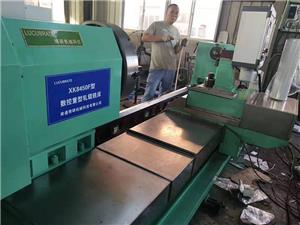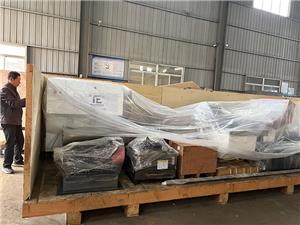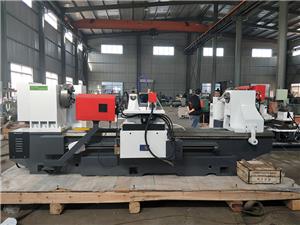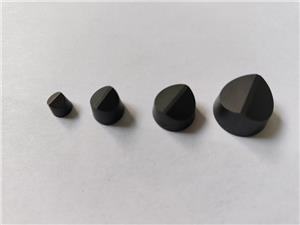
Why Universal CNC Horizontal Lathes Dominate?
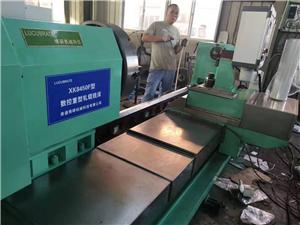
Imagine walking into a job shop where the air is thick with the smell of cutting fluid and the sound of turning metal. You see a seasoned machinist hunched over a manual lathe, dialing in a complex part. He's been at it for hours, and the scrap bin is filling up. Meanwhile, across the aisle, a younger operator is running a universal CNC horizontal lathe, effortlessly switching between jobs with a few taps on a touchscreen. The contrast is stark. Why does the universal CNC horizontal lathe dominate modern machining? The answer lies in its ability to blend versatility, precision, and ease of use—transforming bottlenecks into streamlined workflows. In this blog, we'll dive deep into the technical reasons why this machine has become the backbone of countless workshops, and how companies like NANTONG LUCUBRATE MACHINERY TECHNICAL LTD. are pushing the boundaries.
Pain Points: Where Traditional Lathes Fall Short
1. Setup Time and Flexibility
In today's high-mix, low-volume production environment, changeover time can make or break a shop's profitability. Traditional lathes, whether manual or older CNC models, often require hours to switch from one job to another. Tooling changes, fixture adjustments, and reprogramming eat into valuable spindle time. The impact? A shop might lose 20-30% of productive hours each week. For a small job shop, that's tens of thousands of dollars in lost revenue annually. Worse, it limits the ability to take on urgent, high-margin jobs because the setup overhead makes them unprofitable.

2. Accuracy and Repeatability
Manual lathes rely heavily on operator skill, but even the best machinist can't hold tolerances better than ±0.001 inches consistently. Older CNC lathes may have thermal drift and wear that cause parts to creep out of tolerance over a long run. The consequences are costly: scrapped parts, rework, and missed delivery deadlines. In industries like aerospace or medical, where tolerances can be as tight as ±0.0002 inches, an inaccurate lathe is simply unacceptable. The cost of scrap alone can be staggering—a single titanium aerospace component can be worth thousands of dollars.
3. Operator Skill and Labor Shortages
The manufacturing sector is facing a critical skills gap. Experienced machinists are retiring, and younger workers are not entering the field in sufficient numbers. Manual lathes require years of training to master, and even then, productivity varies. Older CNC lathes with cryptic programming interfaces add to the learning curve. The result? Shops struggle to find qualified operators, leading to underutilized machines and increased labor costs. According to a 2023 report by Deloitte, the U.S. manufacturing industry could have 2.1 million unfilled jobs by 2030, with the skills gap costing the economy $1 trillion. A machine that is easy to learn and operate is no longer a luxury—it's a necessity.
Solutions: How Universal CNC Horizontal Lathes Deliver
1. Quick-Change Tooling and Modular Design
Universal CNC horizontal lathes are engineered for rapid changeovers. They feature quick-change tooling systems, such as VDI or BMT turrets, that allow operators to swap tools in seconds. Modular workholding, including quick-change chucks and collets, further reduces setup time. Some models, like those from NANTONG LUCUBRATE MACHINERY TECHNICAL LTD., incorporate a tool presetter that measures tools offline, so the machine is ready to run as soon as the program is loaded. The result? Setup times can be cut by up to 50%, enabling shops to take on more jobs and increase throughput.
2. Thermal Compensation and Rigid Construction
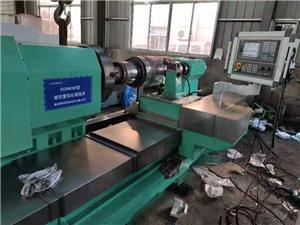
Accuracy is built into the DNA of a universal CNC horizontal lathe. Manufacturers use rigid cast iron beds, hardened and ground guideways, and preloaded ball screws to minimize deflection and vibration. Advanced thermal compensation systems monitor temperature changes in real-time and adjust tool offsets accordingly, ensuring consistent accuracy throughout the day. For example, NANTONG LUCUBRATE's lathes employ a combination of finite element analysis (FEA) optimized structures and spindle cooling to maintain thermal stability. This allows them to hold tolerances of ±0.0005 inches or better, even in prolonged production runs.
3. Intuitive CNC and Automation
Modern universal CNC horizontal lathes come with user-friendly CNC controls, such as Siemens Sinumerik or Fanuc, with graphical interfaces and conversational programming. This reduces the learning curve, allowing less-experienced operators to become productive quickly. Automation features like automatic tool changers, bar feeders, and part catchers further reduce manual intervention. Some models offer live tooling and Y-axis capability, enabling milling, drilling, and tapping in a single setup—turning the lathe into a versatile machining center. This not only saves time but also reduces the number of machines needed, freeing up floor space and capital.
Customer Success Stories
1. Precision Parts Inc., USA
Based in Houston, Texas, Precision Parts Inc. specializes in oil and gas components. They were struggling with a manual lathe that required constant operator attention and produced high scrap rates. After investing in a universal CNC horizontal lathe from NANTONG LUCUBRATE, they reduced setup time by 40% and improved part accuracy to ±0.0008 inches. Scrap rates dropped from 8% to 1.5%, saving over $200,000 annually. "The machine paid for itself in less than a year," says shop owner Mike Reynolds. "Our operators love the intuitive control, and we can now take on jobs we previously had to turn down."
2. Müller Maschinenbau, Germany
This family-owned business in Stuttgart produces precision components for the automotive industry. They needed a lathe that could handle both small batches and high-volume runs with minimal changeover. The universal CNC horizontal lathe they purchased from NANTONG LUCUBRATE featured a 12-station turret and a bar feeder, allowing unattended operation. Setup time was reduced by 50%, and overall equipment effectiveness (OEE) increased from 65% to 85%. "The thermal stability is impressive," notes production manager Klaus Müller. "We run the machine 24/7, and it holds tolerance day in and day out."
3. Nordic Oilfield Services, Norway
Operating in the harsh North Sea environment, Nordic Oilfield Services requires robust machines that can handle tough materials like Inconel and duplex stainless steel. Their old lathes were constantly breaking down, causing costly downtime. They turned to NANTONG LUCUBRATE for a universal CNC horizontal lathe with a heavy-duty spindle and box ways. The machine's rigidity and reliability have been a game-changer. Downtime decreased by 70%, and throughput increased by 30%. "We've been running the lathe for three years with minimal maintenance," says maintenance supervisor Erik Johansen. "It's a workhorse."
4. Precision Engineering Ltd., UK
This subcontractor in Birmingham serves the aerospace and medical sectors. They needed a lathe that could achieve sub-micron accuracy and handle complex geometries. The universal CNC horizontal lathe from NANTONG LUCUBRATE, equipped with a C-axis and live tooling, allowed them to machine complex parts in one setup. Cycle times were reduced by 25%, and they achieved a 99.8% first-pass yield. "The machine's accuracy and repeatability are outstanding," says quality manager Sarah Thompson. "It's helped us win several new contracts."
Applications and Partnerships
Universal CNC horizontal lathes are incredibly versatile, finding applications in industries such as automotive, aerospace, oil and gas, medical, and general machining. They are ideal for producing shafts, bushings, flanges, valves, and connectors. NANTONG LUCUBRATE MACHINERY TECHNICAL LTD. has established partnerships with key suppliers and distributors worldwide. For instance, they collaborate with a leading German linear guide manufacturer to ensure precision and longevity. Their lathes are used by major Tier 1 automotive suppliers and are specified by procurement teams at several Fortune 500 companies. By choosing a partner like NANTONG LUCUBRATE, businesses gain access to a network of technical support and spare parts, ensuring maximum uptime.
FAQ: Engineers and Procurement Managers Ask
Q: What is the typical lead time for a universal CNC horizontal lathe?
A: Lead times vary based on configuration and options. Standard models typically ship within 8-12 weeks, while customized solutions may take 16-20 weeks. NANTONG LUCUBRATE works closely with customers to expedite orders when possible.
Q: How does the lathe handle thermal deformation during long production runs?
A: Our lathes incorporate thermal compensation systems that monitor temperature sensors placed on critical components like the spindle and ballscrews. The CNC automatically adjusts tool offsets in real-time, maintaining accuracy. Additionally, the use of symmetric headstock design and cooling systems minimizes heat generation.
Q: Can the lathe be integrated with automation for unattended operation?
A: Absolutely. Our universal CNC horizontal lathes are designed with automation in mind. They can be equipped with bar feeders, gantry loaders, and robot interfaces. The CNC supports standard automation protocols like Profibus and Ethernet/IP, allowing seamless integration with third-party automation.
Q: What kind of training and support do you provide?
A: We offer comprehensive training programs, both on-site and at our facility. This includes programming, operation, and maintenance. Our technical support team is available 24/7 via phone or remote diagnostics. We also provide detailed documentation and video tutorials.
Q: How do you ensure spare parts availability?
A: We maintain a global network of spare parts warehouses. Critical components are stocked locally in key regions, ensuring rapid delivery. Our distributors also carry common wear parts. We guarantee spare parts availability for at least 10 years after machine delivery.
Conclusion and Call to Action
The universal CNC horizontal lathe has earned its place as a dominant force in modern machining by addressing the core pain points of setup time, accuracy, and operator skill. With tangible benefits like reduced scrap, increased throughput, and ease of use, it's no wonder that shops worldwide are making the switch. NANTONG LUCUBRATE MACHINERY TECHNICAL LTD. stands at the forefront, delivering machines that combine robust construction with advanced technology. To learn more about how a universal CNC horizontal lathe can transform your operations, download our technical white paper or contact our sales engineers for a personalized consultation. Don't let outdated equipment hold you back—embrace the future of machining today.