
Why Universal CNC Horizontal Lathes Still Matter?
In the bustling world of manufacturing, where every second counts and precision is paramount, the universal CNC horizontal lathe often stands as the unsung hero. Imagine a job shop floor where a machinist is juggling multiple tasks: turning a large shaft for a mining equipment repair, then switching to a batch of precision connectors for an aerospace client. The versatility required is immense. This is where the universal CNC horizontal lathe shines. But why, in an era of specialized multi-axis machining centers, does this classic machine tool remain indispensable? The answer lies in its unique blend of flexibility, power, and cost-effectiveness, making it a cornerstone for countless operations. In this blog, we'll delve into the reasons why universal CNC horizontal lathes are still a vital asset, addressing common pain points, offering solutions, and sharing success stories from the field.
Pain Point 1: The Challenge of Versatility vs. Productivity

Many manufacturers struggle with the trade-off between versatility and productivity. Job shops often face a wide variety of parts, from small batches to large one-offs, each requiring different setups. Traditional manual lathes are flexible but slow, while specialized CNC machines are fast but limited in scope. The consequence? Increased lead times, higher labor costs, and missed deadlines. For example, a shop in the Midwest might spend hours changing over a machine for a new job, only to find that the setup is not optimized for the next order, leading to a 30% drop in throughput and a 20% increase in scrap rate. The cost impact is significant: lost revenue and unhappy customers.
Solution: The Universal CNC Horizontal Lathe Advantage
Universal CNC horizontal lathes are designed to bridge this gap. With features like a versatile headstock, a wide range of spindle speeds, and the ability to accommodate various tooling systems, these machines offer quick changeovers and high productivity. For instance, a lathe equipped with a multi-tasking turret and live tooling can perform milling and drilling operations in a single setup, reducing cycle times by up to 40%. The integration of advanced CNC controls allows for storing multiple programs, enabling rapid switching between jobs. This flexibility ensures that shops can handle diverse workloads without compromising on speed or quality.
Pain Point 2: Precision and Repeatability in Large Part Machining
Machining large, heavy parts such as turbine shafts or marine propeller hubs demands exceptional precision and repeatability. Any deviation can lead to costly rework or catastrophic failure in the field. A common scenario: a manufacturer of oil and gas components struggles with maintaining concentricity within 0.01mm on a 2-meter long shaft. Traditional lathes may suffer from deflection and thermal distortion, resulting in inconsistent quality and a rejection rate of 15%. The downstream costs include remachining, delayed shipments, and damaged reputation.
Solution: Robust Construction and Advanced Control
Universal CNC horizontal lathes from reputable manufacturers like NANTONG LUCUBRATE MACHINERY TECHNICAL LTD. are built with heavy-duty beds, rigid headstocks, and precision-ground guideways to minimize deflection. Features such as thermal compensation and live tooling with high-resolution feedback ensure consistent accuracy. For example, a lathe with a 45-degree slant bed and a high-torque spindle can maintain tolerances within 0.005mm over long production runs. The use of advanced CNC systems with interpolation and error compensation further enhances repeatability. This level of precision reduces scrap rates to below 2%, saving thousands in material and labor costs.
Pain Point 3: Integration with Modern Automation and IoT
As factories move towards Industry 4.0, the need for machines that can integrate with automation systems and provide real-time data is critical. Many older lathes lack connectivity, leading to data silos and inefficiencies. A plant manager might find that without OEE (Overall Equipment Effectiveness) monitoring, machine downtime goes unnoticed, resulting in 10-15% lost productivity. Additionally, the inability to interface with robots for loading/unloading limits the machine's utilization to a single shift, whereas lights-out manufacturing could double output.
Solution: Smart CNC Lathes with IoT-Ready Features
Modern universal CNC horizontal lathes are equipped with Ethernet ports, MTConnect compatibility, and sensors for condition monitoring. This allows seamless integration with MES (Manufacturing Execution Systems) and robotic cells. For instance, a lathe with a bar feeder and a robot interface can run unattended, increasing spindle utilization from 40% to 80%. Real-time data on tool wear, spindle load, and temperature enables predictive maintenance, reducing unplanned downtime by up to 50%. NANTONG LUCUBRATE MACHINERY TECHNICAL LTD. offers lathes with these smart features, ensuring that manufacturers stay competitive in a connected world.
Customer Success Stories
1. Precision Engineering in Germany: Schmidt Maschinenbau GmbH, a family-owned business in Stuttgart, faced challenges machining large hydraulic cylinders with tight deadlines. After investing in a universal CNC horizontal lathe from NANTONG LUCUBRATE, they reduced setup times by 35% and increased throughput by 25%. "The versatility of the lathe allows us to switch between jobs quickly, and the precision is outstanding," said Hans Schmidt, Production Manager.
2. Aerospace Components in Canada: AeroTech Components in Montreal needed to machine critical flight-control parts with complex geometries. Their existing lathes couldn't maintain the required tolerances. With a LUCUBRATE universal CNC lathe equipped with live tooling, they achieved a 40% reduction in cycle times and a scrap rate drop from 12% to 3%. "The machine's rigidity and accuracy have been a game-changer for our aerospace contracts," remarked Marie Leclerc, Quality Assurance Lead.
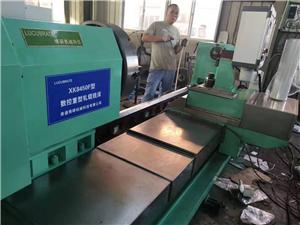
3. Oil and Gas in Texas: Lone Star Machining in Houston struggled with machining long drill collars. The deflection on their old lathe caused frequent rework. After switching to a LUCUBRATE lathe with a steady rest and thermal compensation, they improved concentricity by 50% and cut rework costs by $200,000 annually. "We now confidently take on jobs we used to avoid," said Jim Rodriguez, Owner.
4. Automotive in Japan: Sakura Auto Parts in Nagoya needed to increase production of transmission shafts. They integrated a LUCUBRATE lathe with a robotic loader, achieving lights-out operation during night shifts. Output increased by 60% without additional labor. "The reliability and automation compatibility of the lathe have significantly boosted our competitiveness," noted Kenji Tanaka, Plant Manager.
Applications and Partnerships
Universal CNC horizontal lathes are widely used in industries such as aerospace, oil and gas, automotive, and general machining. They are ideal for producing shafts, gears, flanges, and other rotational parts. NANTONG LUCUBRATE MACHINERY TECHNICAL LTD. has established strong partnerships with distributors and OEMs across Europe and North America. For example, they supply lathes to a major German machine tool dealer who integrates them into turnkey production lines for automotive suppliers. These partnerships are built on a shared commitment to quality and innovation, ensuring that end-users receive top-tier solutions and support.
FAQ
Q1: What are the key factors to consider when selecting a universal CNC horizontal lathe for mixed-batch production?
A1: Focus on spindle power and speed range, turret configuration (live tooling capability), control system flexibility (memory for multiple programs), and quick-change tooling systems. Also consider the machine's rigidity for heavy cuts and its ability to integrate with automation.
Q2: How does thermal compensation work in CNC lathes, and why is it important?
A2: Thermal compensation uses sensors to monitor temperature changes in critical areas like the spindle and ballscrews. The CNC adjusts tool offsets in real-time to counteract thermal expansion, maintaining precision over long runs. This is crucial for large parts where even micron-level deviations cause scrap.
Q3: Can a universal CNC horizontal lathe be retrofitted with IoT sensors for predictive maintenance?
A3: Yes, many modern lathes come IoT-ready with built-in sensors and Ethernet ports. For older models, retrofit kits are available to add vibration, temperature, and power monitoring. Data can be sent to cloud platforms for analysis, enabling predictive maintenance and reducing downtime.
Q4: What is the typical lead time for a custom-configured universal CNC lathe from NANTONG LUCUBRATE?
A4: Lead times vary based on specifications and options, but typically range from 12 to 16 weeks for standard models with custom tooling. Complex automation integrations may extend to 20 weeks. The company provides detailed project timelines during the quotation process.
Q5: How do universal CNC horizontal lathes compare to vertical lathes for large part machining?
A5: Horizontal lathes are generally better for long, slender parts due to gravity-assisted chip evacuation and easier loading. Vertical lathes excel for large-diameter, short parts. Universal horizontal lathes offer more versatility for a mix of part sizes and shapes, especially with steady rests and tailstocks.
Conclusion and Call to Action
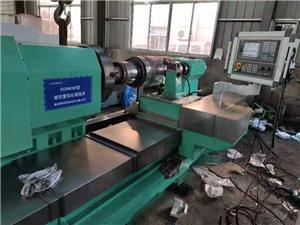
Universal CNC horizontal lathes remain a vital investment for manufacturers seeking versatility, precision, and integration with modern automation. By addressing pain points such as setup inefficiency, precision challenges, and connectivity gaps, these machines empower shops to boost productivity and stay competitive. As demonstrated by our customer stories, the right lathe can transform operations. To learn more about how NANTONG LUCUBRATE MACHINERY TECHNICAL LTD.'s universal CNC horizontal lathes can benefit your business, contact our sales engineers for a consultation or request our detailed technical white paper on advanced lathe technologies.



