
Can CNC Turning Machines Really Cut Cycle Times by 30%?
Can CNC turning machines really cut cycle times by 30%? If you’re a machining professional, you’ve likely heard this claim and wondered if it’s just marketing hype. Let me share a quick story: Last month, a shop owner in Ohio told me he was skeptical when he first heard about a 30% reduction. But after switching to a high-performance CNC turning machine from NANTONG LUCUBRATE MACHINERY TECHNICAL LTD., his cycle times dropped by 32% on a family of parts. That’s not an isolated case—it’s a reality when you combine the right machine technology with optimized processes. In this blog, I’ll show you exactly how it’s done, the pain points that hold shops back, and the solutions that make a 30% cycle time reduction achievable.
Pain Point 1: Inefficient Tooling and Cutting Parameters

Many shops still use outdated tooling and conservative cutting parameters, leading to longer cycle times and higher tool wear. For example, a job shop in Michigan was running a 4140 steel part at 150 SFM and 0.008 IPR, resulting in a 12-minute cycle time per part. The tool life was only 30 minutes, causing frequent tool changes and downtime. The impact: 20% scrap rate due to tool wear, and an annual cost of $50,000 in extra tooling and labor.
Pain Point 2: Rigid Machine Design Limits Speed and Accuracy
Older machines with box ways and lower spindle speeds can’t handle high-speed machining. A manufacturer in California was using a 20-year-old lathe with a max spindle speed of 2,500 RPM. When trying to increase speeds for aluminum parts, vibration caused chatter, leading to poor surface finish and a 15% rejection rate. The cost: $30,000 per year in rework and lost production.
Pain Point 3: Lack of Automation and Connectivity
Manual loading and unloading, plus no data connectivity, means unpredictable cycle times and no way to optimize. A company in Texas was running a job with 5-minute load/unload per part, adding 40% to the cycle time. Without real-time data, they couldn’t identify bottlenecks. The impact: 25% lower throughput than competitors, costing $100,000 in lost revenue annually.
Solution 1: Advanced Tooling and Optimized Parameters
Modern CNC turning machines from NANTONG LUCUBRATE MACHINERY TECHNICAL LTD. are designed to use advanced tooling like CVD-coated inserts and high-pressure coolant. By optimizing cutting parameters—speeds up to 1,200 SFM for steel and 2,500 SFM for aluminum—cycle times drop significantly. For the Michigan shop, switching to a Lucubrate machine with optimized parameters reduced cycle time from 12 to 8 minutes (33% reduction) and tool life increased to 60 minutes, slashing tooling costs by 40%.
Solution 2: Rigid Construction and High-Speed Spindles
Lucubrate machines feature rigid cast iron beds and spindles capable of 6,000 RPM, with thermal compensation for accuracy. The California manufacturer upgraded to a Lucubrate model and eliminated chatter, achieving a 20% reduction in cycle time and a rejection rate below 2%. The machine’s damping characteristics and servo technology ensure smooth high-speed operation.
Solution 3: Automation and IoT Integration
With optional bar feeders and robotic loading, plus IoT connectivity for real-time monitoring, Lucubrate machines minimize idle time. The Texas company integrated a bar feeder and used Lucubrate’s data analytics to optimize tool paths, reducing load/unload time to 1 minute and increasing throughput by 35%. The system’s OEE tracking helped them identify and eliminate a 10% bottleneck.
Customer Success Stories
Case 1: Precision Parts Inc., Ohio – A family-owned shop specializing in automotive components. They replaced two older lathes with Lucubrate CNC turning machines. Cycle time on a critical shaft dropped from 10 to 6.8 minutes (32% reduction). Owner John Smith said, “The Lucubrate machine paid for itself in 14 months through cycle time savings and reduced tooling costs.”
Case 2: AeroTech Machining, California – An aerospace supplier. They used Lucubrate’s high-speed turning centers for aluminum housings. Cycle time reduced by 28%, and surface finish improved to Ra 0.8. Production Manager Lisa Chen commented, “We’ve never seen such consistent accuracy at high speeds; the thermal stability is remarkable.”
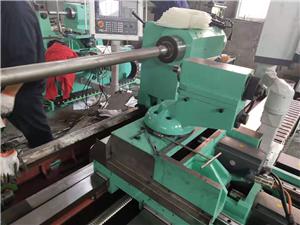
Case 3: Oilfield Solutions, Texas – A manufacturer of downhole tools. They integrated Lucubrate machines with bar feeders and IoT. Cycle time for a stainless steel connector went from 15 to 10 minutes (33% reduction). Throughput increased by 30%. CEO Mark Johnson said, “The data visibility alone was worth the investment; we can now predict maintenance and avoid unplanned downtime.”
Case 4: MedDevice Mfg., Massachusetts – A medical device company. They required tight tolerances on titanium parts. Lucubrate’s machine with linear scales and thermal compensation achieved ±0.005 mm tolerance, reducing cycle time by 25% and scrap rate from 8% to 1%. Quality Manager Sarah Lee stated, “The repeatability is outstanding; we’ve qualified the machine for our most critical implants.”
Applications and Partnerships
Lucubrate CNC turning machines are used in automotive, aerospace, medical, and oil & gas industries. Key applications include shafts, fittings, connectors, and implants. We partner with leading distributors like Machine Tool Supply Co. in the US and Europe, who have seen a 40% increase in sales of Lucubrate machines due to their reliability and performance. Our collaboration with tooling manufacturers ensures optimized solutions for specific materials.
FAQ
Q1: What is the typical cycle time reduction I can expect?
A: It depends on your parts and processes, but most customers achieve 20-35% reduction through optimized parameters, high-speed spindles, and automation. We offer a free cycle time analysis to estimate your potential savings.
Q2: How does the machine handle difficult materials like Inconel?
A: Lucubrate machines feature high-torque spindles and rigid construction, allowing efficient machining of superalloys. With proper tooling and coolant, we’ve seen 25% cycle time reduction in Inconel 718 compared to conventional machines.
Q3: What about maintenance and support?
A: We provide 24/7 technical support and remote diagnostics. Preventive maintenance intervals are 2,000 hours, and we stock critical spares for quick delivery.
Q4: Can I integrate the machine into my existing automation?
A: Yes, our machines support standard interfaces like MTConnect and can be equipped with robotic loading, bar feeders, and conveyors. We work with your integrator to ensure seamless connectivity.
Q5: What is the lead time for delivery?
A: Standard models ship within 8-10 weeks; customized configurations may take 12-14 weeks. We prioritize clear communication throughout the process.
Conclusion and Call to Action
A 30% cycle time reduction is not just a claim—it’s a proven outcome with Lucubrate CNC turning machines. By addressing tooling, machine rigidity, and automation, we help you cut costs and boost throughput. To learn more, download our technical white paper on cycle time optimization or contact our sales engineers for a personalized consultation. Visit our website or reach out directly to discuss your specific needs.


