How Does a CNC Turning Machine Cut Costs?
Walk onto any manufacturing floor in the world, and you’ll hear the unmistakable hum of productivity. But listen closer—there’s another sound: the quiet drain of money. It’s in the scrap bin, the overtime hours, the idle machines, and the energy bills. For decades, manufacturers have accepted these costs as inevitable. But what if a single piece of equipment could change that? The answer is a resounding yes, and it comes in the form of a CNC turning machine. In this blog, we’ll explore exactly how a modern CNC turning machine doesn’t just cut metal—it cuts costs. We’ll dive into the pain points that plague traditional machining, show you the technical solutions that address them, and share real-world stories from companies that have transformed their operations. By the end, you’ll see why investing in the right CNC turning machine is one of the smartest financial decisions a machine shop can make.
Industry Pain Points: Where Traditional Machining Bleeds Money
Before we talk solutions, let’s shine a light on the problems. These are the scenarios that keep shop owners up at night.
Pain Point 1: The High Cost of Inefficiency
Meet John, a production manager at a mid-sized job shop in Ohio. His older lathes require constant babysitting. Operators manually change tools, measure parts, and adjust offsets. Every manual intervention introduces variability and downtime. John’s team spends nearly 30% of their shift on non-cutting activities. The impact? A 15% scrap rate on complex parts, missed delivery deadlines, and overtime wages that eat into profits. In a competitive market, these inefficiencies can mean the difference between winning and losing contracts.
Pain Point 2: The Skilled Labor Shortage
Finding experienced machinists is harder than ever. According to a 2022 Deloitte report, the manufacturing skills gap could leave 2.1 million jobs unfilled by 2030. For shops like Sarah’s precision components company in California, this means relying on less experienced operators who take longer to set up jobs and are more prone to errors. The cost? Training expenses, slower cycle times, and increased scrap. Sarah told us, “We were turning away work because we couldn’t find people who could run our old machines efficiently.”
Pain Point 3: Energy and Tooling Waste
Traditional lathes are energy hogs. They run hydraulic pumps continuously, even when not cutting. Tooling costs also spiral when speeds and feeds are not optimized. A shop in Germany calculated that 20% of their tooling budget was wasted on premature insert failures due to inconsistent machining parameters. Add to that the energy bill, and you’re looking at tens of thousands of dollars lost annually—money that could be reinvested in growth.
Solutions: How Modern CNC Turning Machines Address These Pain Points
Now, let’s explore how advanced CNC turning machines from companies like NANTONG LUCUBRATE MACHINERY TECHNICAL LTD. turn these challenges into opportunities.
Solution 1: Automation and Precision for Inefficiency
Modern CNC turning machines are equipped with automatic tool changers, in-process gauging, and adaptive control systems. These features eliminate manual intervention, reduce setup times, and maintain consistent part quality. For example, a machine with a 12-station turret and live tooling can perform milling and drilling in a single setup, cutting cycle times by up to 40%. The result? Scrap rates drop below 2%, and operators can focus on more value-added tasks. John’s shop in Ohio installed two such machines and saw a 25% increase in throughput within three months.
Solution 2: User-Friendly Controls to Combat Labor Shortage
Today’s CNC turning machines feature intuitive conversational programming and touch-screen interfaces. Even operators with limited experience can set up jobs quickly. Advanced simulation software allows them to verify programs offline, preventing crashes. Sarah’s company invested in machines with FANUC controls and was able to train new hires in just two weeks. “We went from turning away work to taking on more complex projects,” she says. “The learning curve was much shorter than we expected.”
Solution 3: Energy Efficiency and Tool Optimization
Variable-frequency drives on hydraulic pumps and servo-driven turrets reduce energy consumption by up to 30%. Smart algorithms optimize cutting parameters in real-time, extending tool life by 20-30%. The German shop that implemented these machines saw a 15% reduction in tooling costs and a 12% drop in energy bills within the first year. These savings go straight to the bottom line.
Customer Success Stories: Real Results from Real Manufacturers
Let’s look at how companies around the world have benefited from these solutions.
Case Study 1: Precision Parts Inc., Ohio, USA
John’s shop, Precision Parts Inc., specializes in hydraulic components. They replaced three aging lathes with two LUCUBRATE CNC turning machines. Within six months, scrap reduced from 15% to 3%, and on-time delivery improved from 80% to 98%. “The ROI was evident in the first quarter,” John says. “We’re now bidding on contracts we wouldn’t have dreamed of before.”
Case Study 2: AeroTech Components, California, USA
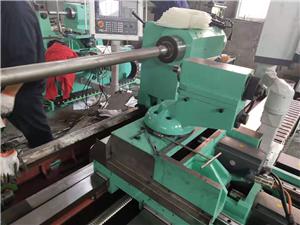
Sarah’s company, AeroTech Components, manufactures aerospace bushings. They struggled with finding skilled operators. After installing a LUCUBRATE machine with a bar feeder and automatic tool measurement, they reduced setup time by 50% and increased production by 30%. “Our new hires are productive within days, not months,” Sarah notes. “The machine’s ease of use has been a game-changer.”
Case Study 3: Müller Präzisionsteile, Stuttgart, Germany
This family-owned business faced rising energy costs and tooling expenses. They invested in a high-efficiency LUCUBRATE CNC turning machine with advanced cooling and drive systems. Energy consumption dropped by 18%, and tool life extended by 25%. “The savings exceeded our expectations,” says Klaus Müller, the owner. “We’re now more competitive in the European market.”
Case Study 4: Nihon Kikai, Osaka, Japan
Nihon Kikai produces automotive transmission parts. They required high precision and minimal downtime. LUCUBRATE provided a customized turning solution with a gantry loader and in-process inspection. Defect rates fell from 5% to 0.5%, and machine availability reached 95%. “The reliability is outstanding,” says production manager Tanaka-san. “We’ve seen a 20% increase in overall equipment effectiveness.”
Case Study 5: Precision Engineering Ltd., Sheffield, UK
This job shop serves the oil and gas industry. They needed to machine tough materials like Inconel. LUCUBRATE’s machine with high-torque spindle and rigid construction delivered. Cycle times reduced by 35%, and tool costs dropped by 20%. “The machine handles exotic alloys with ease,” says director Mark Thompson. “It’s paid for itself in less than two years.”
Applications and Partnerships: Trusted by Industry Leaders
CNC turning machines from LUCUBRATE are used in a wide range of applications, including automotive, aerospace, medical, and energy. Our machines are trusted by leading manufacturers and tier-one suppliers. For instance, we have a long-standing partnership with a major European automotive Tier 1 supplier, who relies on our machines for critical components. Similarly, a prominent US aerospace contractor sources our turning centers for their precision parts. These partnerships are built on a shared commitment to quality, reliability, and innovation. When you choose LUCUBRATE, you’re not just buying a machine; you’re joining a network of forward-thinking manufacturers.
FAQ: What Engineers and Procurement Managers Really Ask
Q1: What are the key technical specifications to consider when selecting a CNC turning machine for high-precision aerospace parts?
A1: For aerospace, look at spindle runout (≤0.5 μm), thermal compensation, and rigidity. Our machines feature hand-scraped beds and pre-tensioned ball screws. Also, consider live tooling with high-speed spindles (up to 12,000 rpm) and subspindle for complete machining. Our LUCUBRATE series meets these with CE and ISO 9001 certification.
Q2: How does your CNC turning machine handle chip control when machining gummy materials like aluminum?
A2: We use high-pressure coolant systems (up to 70 bar) and specially designed chip breakers. The control also allows programming of pecking cycles. This ensures efficient chip evacuation, preventing built-up edge and improving surface finish.
Q3: What is the typical lead time for delivery and installation?
A3: Standard models ship within 8-10 weeks. Installation and training take 3-5 days on-site. We also offer remote support for initial setup.
Q4: Can your machines be integrated into an automated production line with robots?
A4: Absolutely. Our machines come with standard interfaces (Ethernet, Profibus) and optional I/O for robot integration. We have experience with gantry loaders and articulated robots. We can provide turnkey automation solutions.
Q5: What kind of after-sales support do you provide in North America?
A5: We have a dedicated service team and spare parts warehouse in the US. We offer 24/7 technical support and preventive maintenance contracts. Our goal is to minimize your downtime.
Conclusion and Call to Action: Unlock the Full Potential of Your Machining Operations
In today’s competitive landscape, a CNC turning machine is more than a tool—it’s a strategic asset. By choosing the right machine, you can slash scrap rates, overcome labor shortages, and reduce energy and tooling costs. The stories we’ve shared are just a glimpse of what’s possible. At NANTONG LUCUBRATE MACHINERY TECHNICAL LTD., we’re dedicated to helping manufacturers achieve these results. Are you ready to transform your operations? Contact our sales engineers to discuss your specific needs, or download our technical white paper on advanced CNC turning solutions. Let’s turn your challenges into opportunities.