Is CNC Roll Notching & Marking Your Bottleneck?
Walk through any high-mix, low-volume metal fabrication shop and you'll likely spot the same scene: an operator hunched over a manual notching station, calipers in hand, scribbling layout lines with a marker. The scrap bin nearby tells the story—twisted offcuts, mispunched brackets, and parts that failed first-article inspection. If this sounds familiar, you're not alone. The bottleneck isn't your team's skill; it's the process. CNC roll notching and marking machines are engineered to eliminate that bottleneck by combining precision notching and marking in a single, automated pass. But does the technology truly deliver? In short: yes—when specified and integrated correctly. This blog unpacks the technical realities, the ROI drivers, and the pitfalls to avoid, so you can decide if it's time to retire the manual station for good.
Why Traditional Notching and Marking Are Costing You More Than You Think
Let's get specific. The pain points in conventional notching and marking aren't just about speed—they cascade through your entire production chain. Here are three scenarios that resonate with fabricators worldwide.

Pain Point 1: Inconsistent Quality and Rework in High-Mix Runs
When you're producing 200 different bracket variants per week, manual layout and notching invite variability. An operator's marker line might drift 0.5 mm; a notching die might wear unevenly. The result: parts that don't fit, assemblies that require forcing, and rework that eats into margin. In a typical job shop, rework rates of 3–5% are common with manual methods, and each reworked part can cost 2–3 times the original machining time. Add expedited shipping to meet customer deadlines, and the true cost balloons.
Pain Point 2: Skilled Labor Scarcity and Training Overhead
Finding operators who can read complex drawings, calculate bend allowances, and set up a manual notcher is increasingly difficult. Training a new hire to proficiency often takes 6–12 months. During that time, scrap rates spike, and senior operators spend hours mentoring instead of producing. In regions like Western Europe and North America, where skilled machinists are retiring faster than they can be replaced, this knowledge drain is a strategic risk.
Pain Point 3: Throughput Ceiling and Hidden Costs
Manual notching and marking are sequential operations. An operator marks a part, moves it to the notcher, aligns it, notches, then repeats. For a part requiring four notches and six marks, cycle time can easily exceed 5 minutes. At a loaded labor rate of $65/hour, that's over $5 per part just in direct labor—before accounting for machine downtime, fixture setup, and inspection. When order volumes fluctuate, this fixed labor cost becomes a margin killer.
The CNC Roll Notching and Marking Solution: Precision at Production Speed
CNC roll notching and marking machines address these pain points at their root. By integrating servo-driven notching heads with programmable marking units—all controlled via a CNC interface—these machines transform a manual, error-prone sequence into a single, automated workflow.
How It Works: Technical Overview
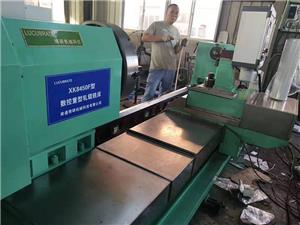
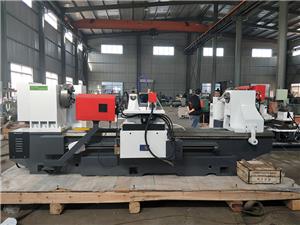
At the heart of the system is a robust frame that supports a rolling notching head and a marking head, both mounted on precision linear guides. The workpiece is fed through servo-driven rollers that clamp and position the material with repeatability of ±0.05 mm. The CNC controller reads a DXF file or direct input coordinates, then executes notching and marking paths without operator intervention. Notching is performed by a hardened tool steel punch and die set, while marking can be done via scribe, inkjet, or dot peen—depending on material and traceability requirements. The rolling action allows continuous processing of coil-fed or pre-cut sheets, making it ideal for high-mix production.
Pain Point 1 Solution: Eliminate Rework with Closed-Loop Accuracy
By removing manual layout, the machine eliminates human variability. Every notch and mark is placed according to the digital program, with position feedback from encoders ensuring that the first part and the thousandth part are identical. In practice, customers report rework rates dropping from 4% to under 0.5%. For a shop producing 10,000 parts per month, that's 350 fewer reworked parts—saving thousands in labor and materials.
Pain Point 2 Solution: Deskill the Operation, Not the Outcome
With CNC roll notching and marking, the operator's role shifts from skilled layout to machine tending. Training time reduces from months to days. The machine's intuitive interface and built-in nesting algorithms mean that even a new hire can load a program and produce compliant parts. This not only mitigates labor scarcity but also frees senior staff for higher-value tasks like programming and quality assurance.
Pain Point 3 Solution: Break the Throughput Ceiling
Cycle times plummet. A part that took 5 minutes manually can often be completed in under 60 seconds—including notching and marking. The rolling feed allows continuous processing, and tool changes are minimized through quick-change systems. The result is a 3–5x increase in throughput without adding floor space or shifts. Moreover, the machine's energy consumption is optimized; servo motors draw power only when moving, unlike hydraulic presses that run continuously.
Comparison: Manual vs. CNC Roll Notching and Marking
| Metric | Manual Notching & Marking | CNC Roll Notching & Marking |
|---|---|---|
| Cycle time per part (4 notches, 6 marks) | 5–7 minutes | 45–90 seconds |
| Rework rate | 3–5% | <0.5% |
| Operator skill required | High (6–12 months training) | Low (1–2 weeks training) |
| Setup time for new part | 15–30 minutes | 2–5 minutes (program recall) |
| Material waste | 2–4% | <1% |
Customer Success Stories: Proven Results Across Regions
Numbers tell the story, but the context matters. Here are four examples of fabricators who transformed their operations with CNC roll notching and marking technology—each supplied by NANTONG LUCUBRATE MACHINERY TECHNICAL LTD.
Case 1: Heinrich Weber GmbH, Germany – Automotive Brackets
Heinrich Weber, a tier-2 automotive supplier in Bavaria, struggled with 6% rework on a family of 120 bracket variants. After installing a LUCUBRATE CNC roll notching and marking machine, rework dropped to 0.3%, and cycle time per part fell from 6.2 to 1.1 minutes. "The machine paid for itself in 14 months through scrap reduction alone," says Production Manager Klaus Richter. "Our operators now focus on quality checks, not layout."
Case 2: Precision Fab Inc., USA – HVAC Components
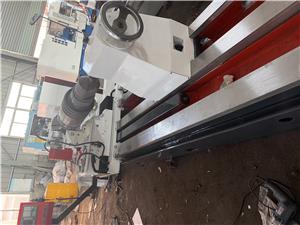
Based in Ohio, Precision Fab produces duct fittings in batches as small as 25 pieces. Manual notching was a bottleneck, limiting output to 800 parts per shift. With the LUCUBRATE system, they now achieve 2,400 parts per shift, and setup time for new profiles is under 3 minutes. "We quote jobs we used to turn down because we couldn't meet the price," notes owner Sarah Jenkins. "The machine gave us a competitive edge."
Case 3: Metalform S.r.l., Italy – Architectural Panels
Metalform, a fabricator of decorative stainless steel panels, needed precise marking for traceability. Manual scribing was inconsistent and slow. The LUCUBRATE machine with dot peen marking reduced marking time by 80% and eliminated marking errors entirely. "Our clients require full traceability on every panel," says Quality Manager Marco Bianchi. "Now we can guarantee it, and we've won contracts that demand it."
Case 4: Nordic Steel AB, Sweden – Heavy Machinery Enclosures
Nordic Steel faced a 12% scrap rate on thick-gauge enclosures due to manual notching errors. After integrating a LUCUBRATE CNC roll notching and marking machine with a coil feed line, scrap fell to 0.8%, and material utilization improved by 7%. "The ROI was undeniable—we recovered the investment in 11 months," says Operations Director Erik Lund. "The machine's reliability is outstanding; we've had zero unplanned downtime in two years."
Applications and Partnerships: Where Precision Is Non-Negotiable
CNC roll notching and marking machines excel in applications where accuracy, speed, and traceability converge. Key sectors include:
- Automotive: Brackets, chassis components, and exhaust parts where dimensional consistency is critical.
- HVAC: Duct fittings, flanges, and hangers requiring high-volume, low-mix production.
- Architectural Metal: Decorative panels, cladding, and railings where marking must be discreet yet permanent.
- Heavy Machinery: Enclosures, guards, and structural parts with thick-gauge materials.
- Electrical Enclosures: Backplates and mounting panels where marking indicates component IDs.
NANTONG LUCUBRATE MACHINERY TECHNICAL LTD. has established partnerships with leading coil processing equipment manufacturers and material suppliers, ensuring seamless integration into existing lines. For example, our machines are compatible with major coil feed systems, allowing fabricators to process material from coil directly—eliminating blanking steps and further reducing cost. These partnerships are not just technical; they are built on shared commitments to quality and uptime, with joint service agreements that guarantee response times under 24 hours in Europe and North America.
FAQ: What Engineers and Procurement Managers Really Ask
1. What materials and thicknesses can the machine handle?
Our standard models handle mild steel, stainless steel, aluminum, and copper from 0.5 mm to 6 mm thickness, depending on tooling. For thicker materials, we offer heavy-duty configurations up to 12 mm. The notching force is monitored in real-time to prevent tool overload, and the marking head can be equipped with scribe, inkjet, or dot peen to suit surface finish requirements.
2. How do you ensure marking legibility after forming and coating?
Marking depth and contrast are programmable. For parts that will be powder-coated, we recommend dot peen marking with a depth of 0.1–0.2 mm, which remains legible after coating. For stainless steel, scribe marking is often preferred. We also offer a vision system option to verify mark quality inline, ensuring 100% traceability.
3. What is the typical maintenance schedule and tool life?
Notching tools are made from hardened tool steel (HRC 60–62) and typically last 50,000–100,000 cycles depending on material. We recommend daily lubrication checks and weekly inspection of tool edges. The machine's servo system requires minimal maintenance—annual calibration of encoders is sufficient. Mean time between failures (MTBF) for the entire system is over 10,000 hours based on field data.
4. Can the machine be integrated with our existing ERP/MES?
Yes. The CNC controller supports OPC UA and Ethernet/IP protocols, allowing direct communication with ERP or MES for order download and production reporting. We also provide a software development kit (SDK) for custom integrations. Several customers have implemented lights-out production by linking the machine to their scheduling system.
5. What is the lead time and what support is available?
Standard lead time is 10–12 weeks from order confirmation, depending on configuration. We provide installation and training at the customer's site, and our global service network ensures spare parts delivery within 48 hours in most regions. For critical applications, we offer remote diagnostics and predictive maintenance packages.
Conclusion: Move from Bottleneck to Breakthrough
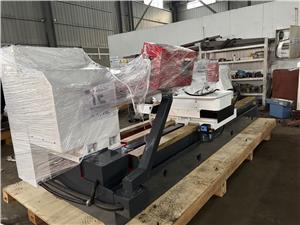
The evidence is clear: manual notching and marking are silent profit drains. CNC roll notching and marking machines from NANTONG LUCUBRATE MACHINERY TECHNICAL LTD. offer a proven path to higher quality, lower costs, and greater agility. Whether you're in automotive, HVAC, or architectural metal, the technology is ready—and the ROI is compelling. Don't let a manual station dictate your production capacity. Download our technical whitepaper for a deeper dive into machine specifications and integration strategies, or contact our sales engineers to discuss your specific application. Your next competitive advantage might be just one notching cycle away.