Is Your CNC Turning Machine Costing You?
Introduction: The Hidden Costs of Your CNC Turning Machine
Picture this: It's 2 a.m., and your production line has screeched to a halt. A critical CNC turning machine has failed, and the night shift supervisor is scrambling to find a maintenance technician. The order due tomorrow—a batch of precision hydraulic fittings for a major client—is now at risk. You're facing overtime costs, expedited shipping fees, and the dreaded call to explain the delay. This scenario is all too familiar for manufacturers who rely on aging or poorly maintained CNC turning machines. But what if that machine isn't just a cost center—it's a profit leak? In this blog, we'll uncover the hidden costs that your CNC turning machine might be silently incurring and how to turn the tide. The answer, in short: by choosing the right machine and partner, you can transform your turning operations from a liability into a competitive advantage. At NANTONG LUCUBRATE MACHINERY TECHNICAL LTD., we've helped hundreds of manufacturers do just that. Let's dive in.
Pain Point 1: Unplanned Downtime Erodes Profitability
Unplanned downtime is the silent killer of manufacturing profitability. When a CNC turning machine goes down unexpectedly, the ripple effects are immediate and costly. Consider a typical job shop with a single high-volume turning center. A spindle bearing failure might take 8–16 hours to repair, but the true cost extends far beyond the maintenance bill. You're looking at lost production time (at perhaps $200–$500 per hour in revenue), overtime wages to catch up, and potential penalties for late delivery. Worse, repeated downtime erodes customer trust and can lead to lost contracts.
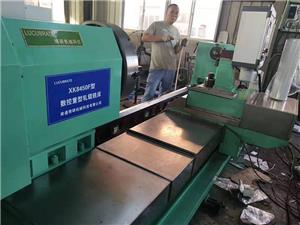
In a study by Aberdeen Group, unplanned downtime costs manufacturers an average of $260,000 per hour. While that figure skews toward large operations, even small shops feel the pinch. The root causes often stem from inadequate preventive maintenance, inferior machine components, or a lack of real-time monitoring. Many older CNC turning machines lack predictive maintenance features, leaving operators reactive rather than proactive. The result? A cycle of firefighting that drains resources and morale.
Pain Point 2: Inconsistent Part Quality Leads to Scrap and Rework
Quality issues are another insidious drain on profitability. When a CNC turning machine produces out-of-tolerance parts, the consequences cascade: scrap costs, rework labor, and potential field failures that damage your reputation. Imagine you're machining aluminum housings for aerospace actuators. A slight deviation in diameter—say, 0.02 mm—might seem trivial, but it can cause assembly interference and lead to a rejected batch. The cost of scrapping 50 parts at $100 each is $5,000, not to mention the delay in shipping and the overtime to re-run the job.
Inconsistent quality often arises from thermal distortion, tool wear, or machine rigidity issues. Older machines with worn guideways or inadequate thermal compensation struggle to hold tight tolerances over long production runs. Operators may compensate by slowing cycle times or adding manual inspections, but these are band-aid solutions that increase cost per part. The real fix lies in a machine designed for thermal stability and repeatability, paired with intelligent controls that adapt to changing conditions.
Pain Point 3: Rising Energy Costs and Operator Shortages
Two more challenges are squeezing manufacturers: energy costs and the skills gap. CNC turning machines are energy-intensive, and with electricity prices volatile, inefficient machines can inflate your utility bills by 20–30%. An older machine with a fixed-speed hydraulic pump might consume 15 kW continuously, while a modern servo-driven system could cut that by half. Over a year, that adds up to thousands of dollars in savings.
Meanwhile, the shortage of skilled machinists is well-documented. The National Association of Manufacturers reports that 2.1 million manufacturing jobs will go unfilled by 2030. Finding operators who can set up and optimize a CNC turning machine is increasingly difficult. This puts pressure on shops to simplify operations, reduce setup time, and implement automation. Machines that are easy to program and operate—with intuitive interfaces and onboard help—can bridge the gap, allowing less-experienced operators to be productive quickly.
Solutions: How NANTONG LUCUBRATE MACHINERY TECHNICAL LTD. Addresses These Challenges
At NANTONG LUCUBRATE MACHINERY TECHNICAL LTD., we've engineered our CNC turning machines to directly combat these pain points. Let's break down the solutions:
Solution for Downtime: Robust Design and Predictive Maintenance
Our machines are built with premium components—such as German-made spindle bearings and Japanese linear guides—that are designed for 24/7 operation. We also integrate IoT-enabled sensors that monitor vibration, temperature, and load in real time. This data feeds into a predictive maintenance dashboard that alerts you before a failure occurs. For example, if spindle vibration exceeds a threshold, you'll know to schedule bearing replacement during planned downtime, avoiding a catastrophic breakdown. Additionally, our modular design allows quick swap-out of critical components, reducing mean time to repair (MTTR) by up to 40%.
Solution for Quality: Thermal Stability and Adaptive Control
To ensure consistent part quality, our CNC turning machines feature a thermally symmetric base casting and active cooling systems that minimize thermal distortion. We also employ adaptive control technology that automatically adjusts feed rates and spindle speeds based on real-time cutting conditions, compensating for tool wear and material variations. This results in CpK values consistently above 1.67 for critical dimensions, reducing scrap and rework. Moreover, our machines come with in-process gauging options that measure parts on the fly, enabling closed-loop compensation.
Solution for Energy and Skills: Energy-Efficient Drives and User-Friendly Interface
Our turning centers use servo-driven hydraulic units and variable-frequency drives that reduce energy consumption by up to 30% compared to traditional fixed-speed systems. The control interface is designed with the operator in mind: a 15-inch touchscreen with intuitive menus, embedded training videos, and step-by-step setup wizards. This reduces training time from weeks to days, allowing you to cross-train operators and alleviate the skills shortage. We also offer automation-ready interfaces for bar feeders and robots, further reducing reliance on manual labor.
Customer Success Stories: Real Results from Real Manufacturers
Don't just take our word for it. Here are a few examples of how our CNC turning machines have transformed operations for customers across the globe.
Case 1: Precision Hydraulics Inc., Houston, USA
Precision Hydraulics Inc., a manufacturer of hydraulic manifolds, was struggling with frequent downtime on their aging turning centers. After installing two of our LUCUBRATE LX-200 models, they experienced a 35% reduction in unplanned downtime and a 20% increase in throughput. "The predictive maintenance feature alone paid for itself in six months," said Plant Manager Mike Reynolds. "We've gone from reactive repairs to planned maintenance, and our on-time delivery rate has jumped to 98%."
Case 2: Autoteile Müller GmbH, Stuttgart, Germany
Autoteile Müller, a Tier 1 automotive supplier, faced stringent quality requirements for transmission components. They were scrapping 5% of parts due to diameter variations. After integrating our LUCUBRATE LX-300 with adaptive control, scrap dropped to 0.8%, saving over €120,000 annually. "The thermal stability is remarkable," noted Quality Manager Sabine Wagner. "We now hold tolerances of ±0.01 mm consistently, even during long runs."
Case 3: AeroComponents Ltd., Sheffield, UK
AeroComponents, a aerospace subcontractor, needed to reduce energy costs and address a shortage of skilled machinists. They purchased three LUCUBRATE LX-250 machines with energy-efficient drives and touchscreen controls. Energy consumption fell by 28%, and training time for new operators was cut from six weeks to two. "The intuitive interface has been a game-changer," said Operations Director James Clark. "We've been able to bring in apprentices and get them productive faster, while our electricity bill has noticeably shrunk."
Case 4: MedTech Precision, Toronto, Canada
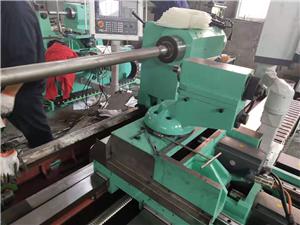
MedTech Precision produces surgical instruments and required a turning machine that could handle small-diameter, high-precision parts. They chose our LUCUBRATE LX-150 with a subspindle and live tooling. The machine's thermal compensation and high-resolution encoders enabled them to achieve surface finishes of Ra 0.4 μm and tolerances of ±0.005 mm. "We've increased our production volume by 30% without adding floor space," said CEO Dr. Emily Chen. "The reliability of the LUCUBRATE machine has allowed us to take on more complex projects."
Applications and Partnerships: Where Our CNC Turning Machines Excel
Our CNC turning machines are deployed in a wide range of industries, each with unique demands:
- Automotive: Transmission shafts, brake components, and engine parts require high volume and repeatability. Our machines with automatic bar feeders and robotic loading excel here.
- Aerospace: Critical flight components demand tight tolerances and traceability. Our machines offer in-process inspection and data logging for full traceability.
- Medical: Surgical instruments and implants require mirror finishes and biocompatible materials. Our high-speed spindles and advanced coolant systems deliver.
- Energy: Valve bodies and fittings for oil and gas need robust machines that handle tough materials. Our heavy-duty castings and high-torque spindles are up to the task.
We're proud to partner with leading distributors and OEMs worldwide. For instance, we supply turning centers to Siemens for their motion control test labs, and our machines are used by Bosch Rexroth in their hydraulic valve production. These partnerships reflect the trust that industry leaders place in our technology.
FAQ: Answers to Your Most Pressing Questions
Q1: What is the typical lead time for a custom CNC turning machine order?
A: Our standard lead time is 12–16 weeks from order confirmation, depending on specifications and options. For urgent needs, we offer expedited delivery (8–10 weeks) for certain models. We also maintain a stock of common configurations for quick shipment.
Q2: How do you ensure repeatability over long production runs?
A: We achieve repeatability through a combination of thermal stability design (symmetric castings, active cooling), high-precision linear guides, and adaptive control that compensates for tool wear. Our machines typically hold ±0.005 mm repeatability, and we validate this with a 72-hour continuous test before shipment.
Q3: Can your machines handle both small-diameter and large-diameter parts?
A: Yes. Our product range includes models with bar capacities from 20 mm to 102 mm, and chuck sizes from 6" to 15". For mixed production, we offer quick-change tooling and flexible workholding to minimize setup time.
Q4: What kind of training and support do you provide?
A: We provide on-site installation and training (typically 3–5 days), plus remote support via our secure portal. Our control interface includes embedded tutorials and troubleshooting guides. We also offer annual service contracts with preventive maintenance visits.
Q5: How do your machines contribute to sustainability goals?
A: Our energy-efficient drives reduce power consumption by up to 30%. We also use recyclable packaging and offer coolant management systems that extend fluid life. Many customers have used our machines to lower their carbon footprint while improving profitability.
Conclusion: Take Control of Your CNC Turning Machine Performance
Your CNC turning machine should be a profit engine, not a cost sink. By addressing downtime, quality, and operational challenges head-on, you can unlock significant savings and gains. At NANTONG LUCUBRATE MACHINERY TECHNICAL LTD., we're committed to helping you achieve that through innovative, reliable turning solutions. Don't let hidden costs erode your bottom line. Contact our sales engineers today to discuss your specific needs, or download our technical whitepaper on "Optimizing CNC Turning Operations for Maximum ROI." Let's turn your challenges into opportunities.