Is Your Tool Grinding Costing Too Much?
Imagine this: It's 2 a.m., and your production line is down because a critical end mill just failed a tolerance check. The operator is scrambling to manually adjust the grinding parameters, but the clock is ticking—and so is the cost. If this scene feels familiar, you're not alone. The truth is, your tool grinding process might be costing you more than you think—in scrap, downtime, and lost productivity. But it doesn't have to be that way. In this blog, we'll uncover the hidden costs of conventional tool grinding and show you how a modern CNC tool grinding machine can turn those losses into profits. Stick with us—we're about to dive deep into the technicalities, share real-world success stories, and answer the questions you've always wanted to ask.
Pain Point 1: Inconsistent Precision Leads to Scrap and Rework
In high-precision industries like aerospace and medical, a tool that's off by a few microns can mean a scrapped workpiece worth thousands of dollars. Manual grinding relies heavily on operator skill, and even the most experienced hands can't maintain micron-level consistency across thousands of tools. The result? Scrap rates can soar to 5-10%, and rework adds hours to delivery schedules. For a shop producing 1,000 tools per month, that's $50,000 down the drain annually—not to mention the reputational damage when a faulty tool causes a customer's assembly line to fail.

Pain Point 2: Unplanned Downtime Erodes Profitability
When a grinding machine goes down, the entire production halts. Manual setups require frequent wheel dressing and compensation adjustments, leading to unpredictable stoppages. A typical job shop might lose 15-20 hours per month to grinding-related downtime. At an hourly rate of $150, that's $3,000 per month—$36,000 per year—lost to idle machines and missed deadlines. And let's not forget the overtime pay when you're rushing to catch up.
Pain Point 3: Over-Reliance on Skilled Operators
Finding and retaining skilled grinding operators is a growing challenge. The average age of a tool grinder is over 50, and fewer young people are entering the trade. When your star operator retires, you lose years of tacit knowledge. Training a new hire takes months, and during that time, productivity and quality suffer. This dependency on human expertise creates a bottleneck that limits your ability to scale.
Solution: How CNC Tool Grinding Machines Address These Pain Points
Modern CNC tool grinding machines are engineered to eliminate these headaches. Here's how:
- Precision: With advanced motion control and in-process measurement, CNC machines hold tolerances of ±0.001 mm or better, consistently. Automatic wheel dressing and compensation ensure that every tool meets spec, reducing scrap to less than 1%.
- Uptime: Predictive maintenance and remote diagnostics minimize unplanned downtime. Automatic tool changers and wheel changers keep the spindle cutting, not waiting. Shops report uptime improvements of 20-30%.
- Operator Independence: Intuitive HMI and canned cycles allow less-skilled operators to produce perfect tools. Knowledge is embedded in the machine's programs, not in one person's head. Training time drops from months to weeks.
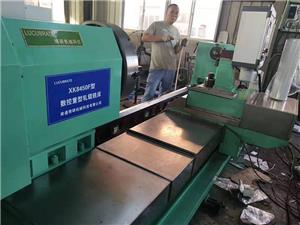
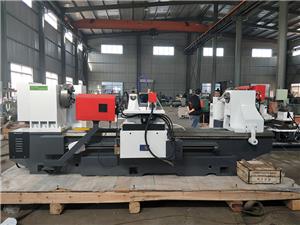
At NANTONG LUCUBRATE MACHINERY TECHNICAL LTD., we've dedicated years to perfecting these solutions. Our CNC tool grinding machines are built with the rigidity and thermal stability needed for round-the-clock precision grinding. But don't just take our word for it—let's look at how others have benefited.
Customer Cases: Real Results from Real Shops
Case 1: Precision Tools Inc., Ohio, USA
This aerospace supplier struggled with a 7% scrap rate on carbide end mills. After installing a LUCUBRATE 5-axis CNC tool grinder, scrap dropped to 0.8%, saving $120,000 annually. "The consistency is remarkable—we no longer worry about operator variance," says Plant Manager Mike Reynolds.
Case 2: Werkzeug Müller GmbH, Germany
A family-owned tool manufacturer faced 18 hours of monthly downtime due to manual wheel changes. The LUCUBRATE machine's automatic wheel changer cut that to 2 hours, boosting capacity by 15%. "We now quote jobs we wouldn't have dared to before," notes Production Head Anna Müller.
Case 3: K&S Engineering, UK
Facing a skills shortage, this job shop needed to train new hires fast. With LUCUBRATE's user-friendly CNC, they reduced training time from 6 months to 6 weeks. "Our new operators are producing good parts on day one," says Director James Clark.
Case 4: Shanghai Precision Tools, China
This high-volume manufacturer needed to improve throughput. LUCUBRATE's high-speed grinding spindle and optimized tool paths increased output by 25%, while maintaining ±0.002 mm tolerance. "We've doubled our export orders since upgrading," remarks CEO Li Wei.
Case 5: ToolCraft Solutions, Ontario, Canada
A medical device tooling supplier required flawless surface finishes. LUCUBRATE's advanced coolant delivery and vibration damping resulted in Ra 0.1 µm finishes, eliminating secondary polishing. "Our customers noticed the difference immediately," says Quality Manager Sarah Thompson.
Applications and Partnerships: Where Precision Matters
CNC tool grinding machines from NANTASCU LUCUBRATE are trusted in demanding sectors:
- Aerospace: Grinding turbine blades, drilling tools, and reamers that meet AS9100 standards.
- Medical: Producing surgical drills, dental burs, and orthopedic tools with mirror finishes.
- Automotive: Manufacturing engine valve seat tools, gear cutters, and broaches for high-volume lines.
- Die & Mold: Sharpening end mills and ball nose cutters for intricate cavity machining.
We're proud to partner with leading distributors and OEMs globally. For instance, our collaboration with a major European tooling consortium has led to co-developed grinding cycles that push the boundaries of productivity. These partnerships ensure our machines evolve with the industry's needs.
FAQ: Engineers and Procurement Managers Ask
Q1: What tolerance can I realistically achieve with your CNC tool grinding machine?
A: Our machines consistently hold ±0.001 mm (0.00004") on diameter and ±0.002 mm on profile, depending on wheel and material. This is verified by in-process gauging and post-process inspection.
Q2: How do you handle thermal stability during long grinding cycles?
A: We employ a granite base, liquid-cooled linear motors, and temperature-controlled coolant to minimize thermal drift. The machine maintains accuracy even after 8 hours of continuous operation.
Q3: Can your machines grind both HSS and carbide with the same setup?
A: Yes, with appropriate wheel selection and coolant. Our control system includes material-specific parameters that automatically adjust feeds and speeds.
Q4: What is the typical lead time for delivery and installation?
A: Standard models ship within 12-16 weeks. Installation and training take about 2 weeks, including application support.
Q5: How do you support remote diagnostics and software updates?
A: All machines are IoT-ready with secure remote access. We provide free software updates for the first 3 years and offer predictive maintenance packages.
Conclusion: Take Control of Your Grinding Process
The hidden costs of manual tool grinding are real—but they're also avoidable. With a CNC tool grinding machine from NANTONG LUCUBRATE MACHINERY TECHNICAL LTD., you can achieve consistent precision, minimize downtime, and reduce reliance on scarce skills. Don't let outdated processes eat into your profits. Download our technical white paper on advanced grinding strategies, or contact our sales engineers to discuss your specific application. Let's turn your grinding challenges into a competitive advantage.