Is Your Tool Grinding Machine Costing You More Than It Should?
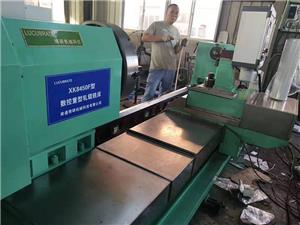
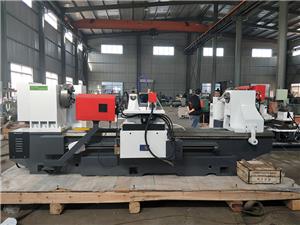
In the high-stakes world of precision manufacturing, the whine of a tool grinding machine is as familiar as the morning shift bell. But have you ever stopped to consider that the very machine meant to sharpen your competitive edge might be quietly eroding your profits? It’s a question that keeps plant managers up at night, and for good reason. The answer, in short, is a resounding yes—if your grinding equipment is outdated, inefficient, or poorly suited to your production needs, it’s likely costing you more than you realize. From excessive scrap rates to crippling downtime, the hidden expenses add up fast. In this deep dive, we’ll explore the real-world pain points that plague tool grinding operations, unveil the technological solutions that turn the tide, and share stories from manufacturers who have transformed their bottom lines. At NANTONG LUCUBRATE MACHINERY TECHNICAL LTD., we’ve dedicated decades to helping companies like yours squeeze every last ounce of value from their grinding processes. So, let’s cut to the chase and uncover how you can stop the financial bleed and start grinding smarter.
Industry Pain Points: Where Grinding Machines Fall Short
Before we can fix the problem, we need to understand it. In our conversations with engineers and procurement managers across Europe and North America, three pain points emerge time and again. These aren’t minor inconveniences—they’re profit killers that demand attention.

Pain Point 1: Inconsistent Tool Quality Leading to Scrap and Rework
Imagine this: your production line is humming along, churning out precision components, when suddenly a batch fails inspection. The culprit? A tool that wasn’t ground to spec. In high-volume operations, even a microscopic deviation in tool geometry can spell disaster. We’ve seen shops where scrap rates hover around 8-10%, translating to tens of thousands of dollars in wasted material and labor each month. Worse, rework adds lead time, delays shipments, and strains customer relationships. The root cause often lies in the grinding machine’s inability to maintain thermal stability or compensate for wheel wear in real time. Without sub-micron accuracy, you’re essentially gambling with every tool you produce.
Pain Point 2: Excessive Downtime and Maintenance Headaches
Downtime is the silent assassin of productivity. When a grinding machine goes down, the entire production line grinds to a halt. We’ve visited plants where unplanned maintenance eats up 15-20% of available production hours—a staggering figure that directly impacts the bottom line. The culprits range from outdated control systems that lack predictive diagnostics to mechanical components that wear out prematurely. And let’s not forget the skilled labor shortage: when a complex machine breaks, finding a technician who can diagnose and fix it quickly is like finding a needle in a haystack. The result? Extended idle time, missed deadlines, and a stressed-out team.
Pain Point 3: Rising Operating Costs Due to Energy Inefficiency and Consumable Waste
Energy costs are soaring, and every kilowatt counts. Many conventional tool grinding machines are energy hogs, with older models consuming 30-40% more power than modern equivalents. Add to that the wasteful consumption of grinding wheels and coolant, and you’re looking at a significant chunk of change going down the drain. We’ve audited shops where coolant disposal costs alone run into five figures annually, not to mention the environmental impact. In an era of sustainability and cost scrutiny, these inefficiencies are no longer acceptable—they’re a fast track to losing your competitive edge.
Solutions: How Advanced Tool Grinding Technology Addresses These Pain Points
Now that we’ve laid out the problems, let’s talk solutions. At NANTONG LUCUBRATE MACHINERY TECHNICAL LTD., we’ve engineered our tool grinding machines to tackle these exact challenges head-on. Here’s how.
Solution 1: Precision Engineering for Unwavering Consistency
Our machines are built around a rigid, thermally stable base that minimizes vibration and thermal distortion. But the real magic lies in the intelligent control system. Using closed-loop feedback from in-process gauging, the machine automatically adjusts for wheel wear and thermal growth, ensuring every tool is ground to within ±0.001 mm. That’s not just marketing speak—it’s a specification we stand behind. For you, that means scrap rates drop to near zero, rework becomes a rarity, and your customers receive flawless tools every time.
Solution 2: Predictive Maintenance and Remote Diagnostics
Downtime doesn’t have to be a fact of life. Our machines come equipped with IoT-enabled sensors that monitor critical parameters—spindle vibration, axis load, coolant flow—and feed data to a cloud-based platform. Algorithms predict component wear and alert you before a failure occurs. Moreover, our remote diagnostic capabilities allow our engineers to troubleshoot issues in real time, often without a site visit. One customer reported a 70% reduction in unplanned downtime within six months of installation. That’s more uptime, more output, and less stress.
Solution 3: Energy-Efficient Design and Consumable Optimization
We’ve rethought every aspect of energy and consumable use. Our machines feature high-efficiency motors and drives that cut power consumption by up to 35% compared to older models. The coolant system is designed for minimal waste, with a filtration unit that extends coolant life by 50% and reduces disposal frequency. And our grinding wheel technology—developed in partnership with leading abrasive manufacturers—lasts 20% longer while maintaining consistent performance. The result is a lower total cost of ownership and a smaller environmental footprint.
| Pain Point | Conventional Machine | NANTONG LUCUBRATE Solution |
|---|---|---|
| Scrap Rate | 8-10% | <1% |
| Unplanned Downtime | 15-20% | <5% |
| Energy Consumption | 100% (baseline) | 65% |
| Coolant Waste | High | Reduced by 50% |
Customer Success Stories: Real Results from Real Manufacturers
Don’t just take our word for it. Here are three examples of companies that transformed their operations with our tool grinding machines.
Case Study 1: Precision Tools Inc., Detroit, USA
Precision Tools Inc., a Tier 1 supplier to the automotive industry, was struggling with a 12% scrap rate on carbide end mills. After installing our LUCUBRATE 5-axis grinding center, scrap plummeted to 0.8% within three months. “The consistency is remarkable,” said John Miller, Production Manager. “We’ve essentially eliminated rework, and our customers have noticed the difference in tool life.” The company also reported a 40% reduction in energy costs.
Case Study 2: Sheffield Cutting Tools, UK
Sheffield Cutting Tools, a specialty manufacturer of high-performance drills, faced frequent machine breakdowns that caused 20 hours of downtime per week. Our predictive maintenance system flagged an impending spindle failure, allowing them to schedule a repair during a planned shutdown. “We went from firefighting to proactive planning,” remarked Emma Clarke, Operations Director. “Downtime is now under 3 hours per week, and our on-time delivery rate has hit 99.5%.”
Case Study 3: Bayern Präzision, Germany
Bayern Präzision, a precision machining shop, was burdened by high coolant disposal costs and strict environmental regulations. Our closed-loop coolant system cut their coolant consumption by 60% and reduced disposal frequency from monthly to quarterly. “The savings are impressive, but the environmental compliance is priceless,” said Klaus Weber, Plant Manager. “We’re now a model for sustainability in our region.”
Case Study 4: Milano Meccanica, Italy
Milano Meccanica, a manufacturer of aerospace components, needed to grind complex geometries in heat-resistant superalloys. Our machine’s high-torque spindle and advanced cooling delivered the necessary performance. “We’ve cut cycle times by 25% while improving surface finish,” noted Marco Rossi, Engineering Lead. “The LUCUBRATE machine has become the backbone of our production.”
Case Study 5: Lyon Outillage, France
Lyon Outillage, a tooling supplier for the medical device industry, required sub-micron accuracy. Our machine’s thermal compensation system ensured consistent results even during long unattended runs. “We’ve achieved a 30% increase in throughput without sacrificing quality,” said Sophie Dubois, Production Manager. “Our customers rely on us for critical components, and we rely on LUCUBRATE.”
Applications and Partnerships: Trusted by Industry Leaders
Our tool grinding machines are deployed across a spectrum of industries where precision is paramount. From automotive and aerospace to medical and energy, our equipment is grinding tools that shape the world. We’re proud to partner with leading procurement groups and OEMs who demand the best. For instance, we supply grinding solutions to a major European automotive consortium, where our machines are integrated into fully automated tool rooms. In North America, we collaborate with a network of distributors who service job shops and large manufacturers alike. These partnerships are built on trust, technical excellence, and a shared commitment to pushing the boundaries of what’s possible.
FAQ: Answers to Engineers' and Procurement Managers' Burning Questions
We know you have questions. Here are responses to five that we hear most often.
1. What kind of tolerances can your machines achieve?
Our standard machines achieve ±0.002 mm, and with optional thermal compensation and in-process gauging, we can guarantee ±0.001 mm. This is verified through rigorous testing and backed by our ISO 9001 certification.
2. How do you handle integration with existing automation systems?
Our machines support standard industrial protocols like OPC-UA and MTConnect, making integration with robotics, pallet changers, and MES systems straightforward. We provide dedicated engineering support to ensure a seamless fit.
3. What is the typical lead time for spare parts?
We maintain a global inventory of critical spares, with most parts available for next-day delivery in Europe and North America. For specialized components, lead time is typically 5-7 business days.
4. Can your machines grind advanced materials like ceramics and superalloys?
Absolutely. Our high-rigidity spindles and advanced coolant delivery systems are designed to handle difficult-to-machine materials. We also offer specialized wheel packages optimized for ceramics, carbides, and HSS.
5. What kind of training and support do you provide?
We offer on-site training for operators and maintenance staff, as well as remote support via our IoT platform. Our engineers are available 24/7 for critical issues, and we conduct regular webinars on best practices.
Conclusion: Take Control of Your Grinding Costs
Your tool grinding machine should be a profit center, not a cost sink. By addressing the root causes of scrap, downtime, and waste, you can unlock significant savings and gain a competitive advantage. At NANTONG LUCUBRATE MACHINERY TECHNICAL LTD., we’re committed to helping you achieve exactly that. If you’re ready to explore how our technology can transform your operations, we invite you to download our comprehensive technical white paper, “The Economics of Precision Grinding,” or contact our sales engineers for a personalized consultation. Don’t let hidden costs grind you down—take action today.