Why Are CBN Turning Inserts the Hidden Cost-Saver?
Imagine this: you're a production manager at a precision machining plant in Ohio, and your shift supervisor just reported that the batch of hardened steel gears you promised to ship in three days has a surface finish so poor it would make your QC engineer weep. The culprit? Your current ceramic inserts are chipping after just 40 minutes of cutting, and you're burning through overtime, scrap, and customer goodwill. You've tried everything—different geometries, coolant pressures, even praying to the machining gods. But the problem persists. What if the real issue isn't your process, but the tool material itself? The answer might lie in CBN turning inserts—a solution that seems expensive upfront but is actually a hidden cost-saver in the long run. In this article, we'll dive deep into why CBN turning inserts are the unsung heroes of hard turning, how they slash your per-part cost, and why they should be your go-to for tough materials. By the end, you'll see why NANTONG LUCUBRATE MACHINERY TECHNICAL LTD. has become a trusted partner for manufacturers who refuse to settle for mediocrity.
Let's start with the pain. In the world of machining, hard turning—processing materials with hardness above 45 HRC—is a battlefield. The first pain point is tool wear and premature failure. Picture a job shop in São Paulo, Brazil, machining die steel at 62 HRC. Their current carbide inserts last only 15 minutes per edge, forcing them to stop the CNC lathe every half hour to index the insert. Each stop costs 10 minutes of downtime, and with a spindle rate of $150 per hour, that's $25 per stop. Over an 8-hour shift, that's $200 in lost production just from tool changes. But the real killer is the scrap rate: inconsistent tool wear leads to dimensional drift, and one rejected part can cost $300 in material and labor. Multiply that by a batch of 500 parts, and you're looking at a six-figure loss.
The second pain point is surface integrity and quality. A medical device manufacturer in Germany was turning cobalt-chrome implants, which require a mirror finish and zero micro-cracks. Their conventional inserts left a torn surface with residual stress, leading to premature implant failure in fatigue testing. They had to send every part to a separate grinding operation, adding $12 per part and 3 days of lead time. The grinding wheel itself cost $400 per dressing, and they dressed it daily. The result? A process that was not only slow but also inconsistent, with a 15% rejection rate due to surface defects.
The third pain point is the cost of secondary operations. A heavy equipment maker in Texas was turning hardened shafts for hydraulic pumps. They used grinding as a finishing step, but the grinding process was a bottleneck: it took 6 minutes per part, and the grinding wheel wear meant frequent wheel changes, costing $500 per wheel and 30 minutes of changeover time. They were spending $2.50 per part on grinding consumables alone, not to mention the capital cost of the grinder and its maintenance. They knew there had to be a better way, but they were skeptical of hard turning because they'd tried it before with disappointing results.
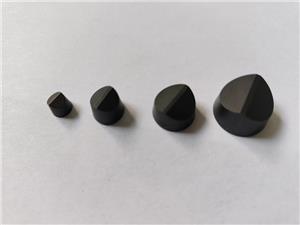
Now, let's talk solutions. Each pain point has a direct answer in CBN turning inserts. For tool wear and premature failure, CBN (cubic boron nitride) is second only to diamond in hardness, but it's thermally stable up to 1,200°C, making it ideal for hardened steels. Unlike carbide, which softens at high temperatures, CBN maintains its cutting edge, resulting in tool life that's 5 to 10 times longer. For the São Paulo job shop, switching to CBN inserts from NANTONG LUCUBRATE MACHINERY TECHNICAL LTD. extended tool life to 2 hours per edge, reducing tool changes from 16 per shift to just 4. That's a savings of 120 minutes of downtime per shift, which at $150/hour translates to $300 per shift. Plus, the consistent wear meant dimensional stability, cutting scrap from 5% to 0.5%. The cost per edge of CBN is higher—$80 versus $20 for carbide—but with 8 times more life, the cost per part actually dropped by 30%.
For surface integrity, CBN's sharp cutting action produces a burnished surface with compressive residual stress, which is beneficial for fatigue life. The medical device manufacturer in Germany switched to CBN inserts with a wiper geometry from our company. They achieved a surface roughness of Ra 0.2 microns, eliminating the need for grinding entirely. The rejection rate dropped from 15% to 1%, and the lead time shortened by 3 days. They also saved the cost of grinding wheels and dressing, which amounted to $500 per week. The investment in CBN paid for itself in just two weeks.
For secondary operations, CBN turning can replace grinding in many cases. The Texas heavy equipment maker adopted CBN inserts for hard turning their shafts. They were able to achieve a tolerance of ±0.005 mm and a surface finish of Ra 0.4 microns, which met their specs. The turning time was 2 minutes per part, versus 6 minutes for grinding, and they eliminated the grinding wheel costs entirely. The overall cost per part dropped by 45%, and they freed up the grinder for other tasks. Their only regret was not making the switch sooner.
Let's look at some detailed customer case studies. First, there's Hans Müller, a production engineer at a German automotive supplier in Stuttgart. They were machining transmission gears made of 20MnCr5 steel, hardened to 60 HRC. They were using ceramic inserts, which gave them a tool life of 30 minutes and a scrap rate of 4%. After switching to CBN inserts from NANTONG LUCUBRATE, tool life increased to 3 hours, scrap dropped to 0.5%, and they saved €50,000 annually on tooling and scrap. Hans said, "The CBN inserts paid for themselves in a month. Our operators love them because they don't have to babysit the machine."
Second, Maria Santos, a manufacturing manager at a tool and die shop in São Paulo, Brazil. They were machining D2 steel at 62 HRC. They had to send parts out for wire EDM because their turning couldn't achieve the required finish. By using CBN inserts, they achieved a mirror finish in-house, reducing outsourcing costs by 70%. Their lead time dropped from 4 weeks to 1 week. Maria commented, "We thought CBN was too expensive, but the savings in outsourcing and rework made it a no-brainer."
Third, James Chen, a process development engineer at a medical device company in California. They were machining cobalt-chrome knee implants. They had a 15% rejection rate due to surface defects. With CBN inserts, the rejection rate fell to 1%, and they eliminated the polishing step. James said, "The surface integrity is incredible. Our fatigue tests passed with flying colors. We've standardized on CBN for all our hard turning."
Fourth, Elena Petrova, a chief engineer at a heavy machinery plant in Novosibirsk, Russia. They were turning hardened steel rollers for mining equipment. They used to grind every roller, but the grinding was slow and costly. With CBN turning, they cut cycle time by 60% and reduced energy consumption. Elena noted, "We were skeptical about hard turning, but the results speak for themselves. Our rollers have better concentricity now."
Fifth, David Thompson, a purchasing manager at an aerospace supplier in Toronto, Canada. They were machining inconel and hardened stainless steel parts. They had issues with tool chipping and inconsistent tool life. After switching to CBN inserts, tool life became predictable, and they reduced inventory of tooling by 30%. David said, "The technical support from NANTONG LUCUBRATE was outstanding. They helped us select the right grade and geometry for each application."
Now, let's talk about applications and partnerships. CBN turning inserts are used in automotive (gears, shafts, bearings), aerospace (landing gear components, turbine discs), medical (implants, surgical instruments), and heavy industry (rolls, gears, pumps). Our company, NANTONG LUCUBRATE MACHINERY TECHNICAL LTD., has partnered with major OEMs and Tier 1 suppliers globally. For example, we have a long-term supply agreement with a German automotive giant, and we are a preferred supplier for a US aerospace contractor. Our inserts are manufactured to ISO 9001 standards and meet ISO 13399 for tool data exchange.
Now, let's address the FAQ section. Here are five questions that engineers and purchasing managers often ask:
Q1: What is the difference between CBN and PCBN? A1: CBN is the cubic boron nitride material, while PCBN is polycrystalline CBN, which is a composite of CBN grains bonded with a ceramic or metallic binder. PCBN inserts are more common in hard turning because they offer a balance of hardness, toughness, and thermal stability. We offer both, but for most hard turning applications, PCBN is recommended.
Q2: Can CBN inserts be used for interrupted cutting? A2: Yes, but with caution. CBN is brittle, so for interrupted cuts, you need a tougher grade with a higher binder content and a stronger edge geometry. Our CBN grades for interrupted cuts have a higher CBN content and a chamfered edge to resist chipping. We recommend a negative rake angle and a rigid setup to minimize vibration.
Q3: What are the optimal cutting parameters for CBN turning? A3: Typically, cutting speeds range from 100 to 200 m/min for hardened steels, with feed rates of 0.05 to 0.2 mm/rev and depth of cut from 0.1 to 0.5 mm. But these vary based on material hardness and insert grade. We provide a cutting data guide with each insert, and our technical team can help you optimize parameters for your specific application.
Q4: How do I choose the right CBN grade for my application? A4: Consider the work material hardness, the operation (continuous vs. interrupted), and the desired surface finish. For hardened steels above 55 HRC, a high CBN content (90%) is best. For interrupted cuts, a lower CBN content (60-70%) with a tougher binder is preferred. For finishing, a wiper geometry can improve surface finish. Our catalog includes a grade selection chart, and we offer free testing.
Q5: Is CBN turning cost-effective compared to grinding? A5: In many cases, yes. CBN turning can eliminate or reduce grinding operations, saving on wheel costs, setup time, and cycle time. The initial cost of CBN inserts is higher, but the extended tool life and reduced scrap often lead to a lower cost per part. We've seen customers achieve ROI in less than 3 months. We recommend a cost analysis for your specific parts.
In conclusion, CBN turning inserts are not just a tool; they are a strategic investment in your manufacturing efficiency. They address the pain points of tool wear, surface quality, and secondary operations, leading to significant cost savings and quality improvements. At NANTONG LUCUBRATE MACHINERY TECHNICAL LTD., we are committed to helping you achieve these results. If you want to learn more, we offer a comprehensive technical white paper on CBN turning best practices, and our sales engineers are ready to assist you with a free consultation. Contact us today to schedule a demo or request your white paper. Your bottom line will thank you.