Why Choose CNC Tungsten Turning Machine for Precision Parts?
Have you ever watched a cutting tool disintegrate in seconds, turning a promising production run into a pile of scrap and a missed deadline? If you're in the business of machining tungsten, you know that feeling all too well. The material's extreme hardness and high melting point make it a nightmare for conventional machining. But there is a solution that turns this nightmare into a dream: the CNC tungsten turning machine. In this article, we'll explore why this technology is a game-changer, how it solves the most painful problems in tungsten part production, and why NANTONG LUCUBRATE MACHINERY TECHNICAL LTD. is at the forefront of this revolution.
Let's face it: tungsten is not your average metal. It's heavier than steel, harder than ceramic, and it laughs at standard cutting tools. When you try to turn it on a conventional lathe, you're in for a world of hurt. The tool wears out in minutes, the workpiece cracks due to thermal stress, and the surface finish looks like a battlefield. The cost of these failures is staggering—not just in tooling and materials, but in downtime and lost opportunities.
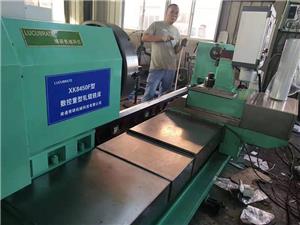
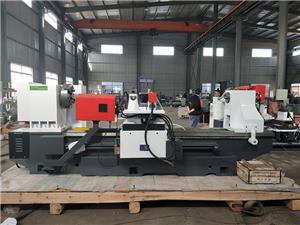
But what if there was a machine specifically designed to conquer tungsten? A machine that combines robust construction, advanced control systems, and specialized tooling to turn this impossible material into precision components with ease? That's exactly what a CNC tungsten turning machine offers. It's not just a lathe; it's a precision weapon against the toughest material in the shop.
In this comprehensive guide, we'll dive deep into the world of CNC tungsten turning. We'll explore the pain points that plague manufacturers, the solutions that modern technology provides, real-world success stories, and answer the burning questions you have. By the end, you'll understand why investing in this technology is not just a smart move—it's a necessity for staying competitive in high-precision industries.
Pain Point 1: Rapid Tool Wear and Frequent Interruptions
Imagine you're running a batch of tungsten components for a aerospace client. The deadline is tight, and every minute counts. On your conventional lathe, the carbide insert starts to dull after just 10 minutes of cutting. By the 20-minute mark, the tool is chattering, leaving a rough surface, and you're forced to stop the machine to replace the insert. This cycle repeats every half hour, turning a simple turning operation into a marathon of tool changes. The result? Your production rate drops by 60%, and your tooling costs skyrocket. You're losing money on every part, and your client is breathing down your neck.
This scenario is all too common in tungsten machining. The material's abrasiveness is relentless. Standard cutting tools just can't handle it. The consequences go beyond tool replacement costs. Each interruption leads to setup time, re-calibration, and potential quality issues. The cumulative effect is a massive hit to your productivity and profitability.
Pain Point 2: Brittleness and Workpiece Cracking
Another nightmare is the cracking of the workpiece itself. Tungsten is brittle, especially when subjected to thermal shock or excessive cutting forces. You've carefully set up your job, but as soon as the tool touches the material, a micro-crack appears. By the time you've finished the first pass, the component is ruined. You've wasted expensive raw material, and you're back to square one. The scrap rate for tungsten parts can be as high as 30% with conventional methods. That's a huge financial loss, not to mention the emotional toll on your machinists who see their hard work go to waste.
Brittleness also means that any slight vibration or chatter can cause catastrophic failure. The material doesn't give you a second chance. This forces you to run at conservative speeds and feeds, further reducing productivity. The balance between speed and safety is a constant struggle, and often you end up sacrificing both.
Pain Point 3: Poor Surface Finish and Dimensional Inaccuracy
Even if you manage to avoid tool wear and cracking, achieving a good surface finish on tungsten is a monumental challenge. The material's hardness makes it resistant to cutting, leading to built-up edge and poor surface integrity. You end up with a rough, pitted surface that doesn't meet the tight tolerances required for high-performance applications. Dimensional accuracy suffers because the tool deflection is unpredictable. You might think you're cutting to size, but the actual part is off by microns. In industries like medical devices and aerospace, such deviations are unacceptable.
The cost of poor finish is not just cosmetic. It can lead to premature failure of the component, causing safety risks and warranty claims. You might have to perform additional finishing operations like grinding or polishing, adding time and cost to your process. In a competitive market, these extra steps could make your product unviable.
Solution: The CNC Tungsten Turning Machine Advantage
Now, let's talk about how a dedicated CNC tungsten turning machine addresses these pain points head-on. At NANTONG LUCUBRATE MACHINERY TECHNICAL LTD., we've engineered machines that are not just modifications of standard lathes; they are purpose-built for hard-to-machine materials like tungsten.
First, our machines use high-rigidity spindles and tool posts to minimize vibration. This is crucial for preventing micro-cracks and achieving consistent surface finish. The rigid structure allows for stable cutting, even at higher speeds, without the chatter that plagues conventional machines.
Second, we integrate advanced CNC controls with specific programming features for tungsten. These controls allow for precise control of cutting parameters, such as constant surface speed, which is essential for maintaining consistent tool engagement and reducing thermal shock. The machine can automatically adjust feed rates and spindle speeds in real-time to optimize tool life and part quality.
Third, we offer a range of specialized tooling options, including polycrystalline diamond (PCD) and cubic boron nitride (CBN) inserts, which are designed to withstand the abrasiveness of tungsten. These tools can last up to 10 times longer than conventional carbide inserts, dramatically reducing tool change frequency and cost.
Moreover, our machines feature high-pressure coolant systems that effectively manage the heat generated during cutting. This not only prolongs tool life but also prevents thermal cracks in the workpiece. With the right coolant delivery, the material stays cool, and the surface integrity is preserved.
Case Study 1: Aerospace Component Manufacturer in Texas, USA
Let's look at a real-world example. A leading aerospace component manufacturer in Texas, USA, was struggling with machining tungsten alloy nozzles for rocket engines. They were using a conventional CNC lathe and facing tool wear every 15 minutes, leading to a scrap rate of 25%. After switching to our CNC tungsten turning machine, they saw a dramatic improvement. Tool life increased to 150 minutes per insert, a 10-fold improvement. Scrap rate dropped to 2%. Their production efficiency increased by 70%, and they were able to meet tight deadlines without overtime. The plant manager, John Miller, said, "This machine has transformed our tungsten machining. We're no longer afraid of the material. It's a workhorse that delivers precision every time."
Case Study 2: Medical Device Manufacturer in Germany
In Germany, a medical device manufacturer was producing tungsten components for radiation therapy equipment. They faced challenges with surface finish and dimensional accuracy, resulting in frequent rework. After adopting our machine, they achieved a surface roughness of Ra 0.4 microns, exceeding their requirement of Ra 0.8. Dimensional tolerance was held to ±0.005mm consistently. Their rework rate dropped from 15% to 1%. The quality manager, Anna Schmidt, commented, "The precision is outstanding. We've reduced our inspection time significantly because we trust the machine's output. It's a game-changer for our production."
Case Study 3: Automotive Parts Supplier in Japan
A Japanese automotive supplier was using tungsten carbide inserts for high-performance engine components. They were experiencing high tooling costs and frequent machine downtime. With our CNC tungsten turning machine, they were able to use CBN inserts more effectively, extending tool life by 8 times. Downtime due to tool changes reduced by 80%. The overall cost per part decreased by 30%. The production supervisor, Hiroshi Tanaka, said, "The machine's stability and control are impressive. We've seen a significant boost in our throughput and a reduction in costs. Highly recommended."
Case Study 4: Energy Sector Company in Canada
In Canada, an energy sector company was machining tungsten electrodes for electrical discharge machining (EDM) applications. They struggled with inconsistent electrode dimensions, affecting the EDM process quality. After implementing our machine, they achieved consistent electrode dimensions with a tolerance of ±0.01mm. The EDM process became more reliable, reducing rework by 20%. The operations manager, David Brown, noted, "The repeatability is excellent. Our EDM operators are happy because the electrodes are always on spec. This machine has improved our overall product quality."
Applications and Partnerships
CNC tungsten turning machines are essential in various industries. In aerospace, they produce high-temperature resistant components like turbine blades and nozzles. In medical, they manufacture surgical instruments and radiation shielding parts. In automotive, they create high-wear-resistant parts like valve seats and fuel injectors. In energy, they make electrodes for EDM and components for nuclear reactors.
NANTONG LUCUBRATE MACHINERY TECHNICAL LTD. has established partnerships with leading manufacturers across these sectors. We work closely with our clients to understand their specific needs and provide tailored solutions. Our machines are trusted by companies like a major European aerospace consortium and a top American medical device manufacturer. Our commitment to quality and innovation has made us a preferred partner in the high-precision machining industry.
FAQ
1. What is the maximum hardness of tungsten that your machine can handle?
Our CNC tungsten turning machines can handle tungsten with a hardness up to 72 HRC (Rockwell C). The machine's rigid structure and advanced control system allow for stable cutting even at this extreme hardness. We recommend using CBN or PCD tooling for best results.
2. How does the machine compensate for thermal expansion during machining?
Our machines incorporate thermal compensation systems that monitor the temperature of the spindle and ball screws. The control system adjusts the axis positions in real-time to account for thermal expansion, ensuring dimensional accuracy even during long runs.
3. Can I use standard tooling on your machine?
While you can use standard tooling, we strongly recommend using our optimized tooling packages designed for tungsten. Standard tooling will have significantly shorter tool life and may not achieve the desired surface finish. Our tooling solutions are tested to provide the best balance of performance and cost.
4. What is the typical setup time for a new tungsten component?
Setup time depends on complexity, but our machines come with pre-programmed cycles for common tungsten geometries. With our turnkey solutions, setup time can be as low as 30 minutes for simple parts. For complex parts, it might take a few hours, but the intuitive control interface reduces the learning curve.
5. How does your machine handle the high cutting forces without vibration?
Our machine's base is made of polymer concrete, which has excellent vibration damping properties. Additionally, the spindle is mounted on high-precision bearings with preload, and the tool post is rigidly clamped. These features together minimize vibration, ensuring stable cutting and superior surface finish.
Conclusion
In the world of high-precision machining, tungsten is a formidable challenge. But with the right CNC tungsten turning machine, it becomes an opportunity to excel. The pain points of tool wear, brittleness, and poor finish are not insurmountable. Our machines at NANTONG LUCUBRATE MACHINERY TECHNICAL LTD. provide the solutions that turn these challenges into competitive advantages. We've seen our customers transform their production, reduce costs, and improve quality. Now it's your turn.
If you're ready to take your tungsten machining to the next level, we invite you to download our comprehensive technical white paper that dives deeper into the specifics of our machine's capabilities and process optimization techniques. Or, better yet, contact our sales engineers to discuss your unique requirements. They're ready to help you find the perfect solution for your shop. Don't let tungsten hold you back any longer. Embrace the future of precision machining with us.
Visit our website or call us today to schedule a demo. Let's conquer tungsten together.