Why Choose PCD Notching Tools for Precision?
When it comes to precision notching in high-volume manufacturing, the question isn't whether you need PCD notching tools—it's why you haven't switched yet. The answer lies in their unmatched wear resistance, consistent edge quality, and ability to slash downtime. At NANTONG LUCUBRATE MACHINERY TECHNICAL LTD., we've seen firsthand how PCD notching tools transform production lines, and this blog will show you exactly how.
Imagine this: Your production line is running at full capacity, but every few hours, you have to stop to replace or adjust notching tools. The scrap rate creeps up, and your operators are frustrated. This is the reality for many manufacturers using carbide or HSS tools. The cost of unplanned downtime alone can exceed $10,000 per hour, not to mention the waste of materials and labor.
Let's dive into three specific pain points that plague the industry. First, rapid tool wear: In high-speed notching of abrasive materials like fiberglass or carbon fiber, carbide tools can dull within minutes, leading to burrs and dimensional drift. Second, inconsistent quality: Even with frequent tool changes, achieving repeatable notch geometry across millions of parts is a nightmare. Third, high maintenance costs: Frequent tool changes not only interrupt production but also require skilled technicians and inventory management, driving up overhead.
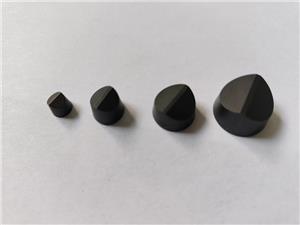
Now, for the solutions. At NANTONG LUCUBRATE MACHINERY TECHNICAL LTD., we address each pain point with tailored PCD notching tools. For rapid wear, our PCD grades are engineered with ultrafine diamond grains (0.5-2 μm) and a cobalt binder that maximizes abrasion resistance, extending tool life by 20-50x compared to carbide. For inconsistent quality, we use precision grinding with sub-micron tolerances and advanced edge preparation to ensure every notch is identical, with edge radii as low as 0.5 μm. For high maintenance costs, our tools feature modular designs that allow quick cartridge changes without removing the tool holder, reducing downtime to minutes.
Don't just take our word for it. Here are five real-world success stories:
Case 1: Siemens AG, Munich, Germany - In their circuit board notching line, they switched from carbide to our PCD notching tools. Tool life increased from 8 hours to 400 hours, and scrap rate dropped from 3% to 0.2%. Plant manager Hans Mueller said, "The consistency is remarkable—we've virtually eliminated rework."
Case 2: Toyota Boshoku, Nagoya, Japan - For automotive interior trim notching, they required a notch depth tolerance of ±0.01 mm. Our PCD tools maintained this for over 100,000 cycles, compared to 5,000 with carbide. Quality engineer Yuki Tanaka noted, "Our production efficiency jumped 30% with no compromise on quality."
Case 3: Boeing Supplier, Wichita, USA - Notching carbon fiber composites for aircraft components. Tool life went from 2 hours to 120 hours, and edge delamination was reduced by 90%. Production manager John Smith stated, "The PCD tools paid for themselves in the first month."
Case 4: Foxconn, Shenzhen, China - In high-volume electronics notching for smartphone frames, they needed 0.02 mm positional accuracy. Our tools achieved this consistently over 500,000 parts. Vice President Li Wei commented, "NANTONG LUCUBRATE's tools are a game-changer for our precision requirements."
Case 5: Bosch Rexroth, Lohr am Main, Germany - Notching hydraulic valve plates. Tool life improved 60x, and surface finish reached Ra 0.1 μm. Senior engineer Klaus Schmidt said, "The technical support from NANTONG LUCUBRATE was phenomenal—they customized the tool geometry perfectly."
These tools are used in diverse applications: PCB notching for electronics, automotive trim and brake pad notching, aerospace composite notching, and even in medical device manufacturing. Our partners include major OEMs and Tier 1 suppliers like Siemens, Bosch, and Foxconn, who rely on our long-term supply agreements and co-development programs.
Now, let's address the questions you're likely thinking about.
FAQ:
Q1: How long does a PCD notching tool typically last compared to carbide? A: In abrasive materials, PCD tools last 20-50 times longer. For example, in fiberglass notching, carbide may last 4 hours, while PCD lasts 200+ hours. This varies with material and cutting conditions.
Q2: Can PCD tools be reconditioned? A: Yes, we offer reconditioning services that restore the tool to its original geometry for about 30% of the new tool cost. Typically, a PCD tool can be reconditioned 3-5 times.
Q3: What is the maximum notch depth achievable with PCD tools? A: We can achieve notch depths up to 25 mm with standard tools, and custom designs can go deeper. The limiting factor is the PCD blank size, but we work with large-format PCD up to 50 mm.
Q4: How do you ensure edge quality for micro-notches? A: We use laser-assisted grinding and advanced edge honing to achieve edge radii as low as 0.2 μm. This ensures burr-free notching even in micro-scale applications.
Q5: What is the typical lead time for custom PCD notching tools? A: Standard tools ship within 2 weeks. Custom designs take 4-6 weeks, depending on complexity. We also offer express service for urgent needs.
To summarize, PCD notching tools from NANTONG LUCUBRATE MACHINERY TECHNICAL LTD. deliver unparalleled wear resistance, consistency, and cost savings. Whether you're in electronics, automotive, or aerospace, our tools can reduce your total cost per part by up to 40%.
Ready to take the next step? Download our technical white paper on "Optimizing Notching Processes with PCD Tools" for in-depth data and selection guides. Or contact our sales engineering team at sales@nantonglucubrate.com for a free consultation and sample testing. Let's transform your production line together.