Why CNC Cylindrical Engraving Machines Outperform Laser?
Why CNC Cylindrical Engraving Machines Outperform Laser? This question echoes in the minds of manufacturing engineers and production managers who have watched both technologies evolve. Let me paint a familiar scene: you are standing on a shop floor in Ohio, the air thick with the smell of coolant and freshly cut metal. Your team is about to engrave serial numbers on a batch of aerospace-grade aluminum cylinders. The laser machine, which you invested in two years ago, has just produced its third reject of the morning. The surface finish is inconsistent, and the heat-affected zone is causing micro-cracks. Your customer, a major defense contractor, is on the phone demanding answers. This is the moment you realize that the choice between laser and mechanical engraving is not just about speed; it is about integrity, precision, and the bottom line. In this article, I will show you why CNC cylindrical engraving machines, particularly those engineered by NANTONG LUCUBRATE MACHINERY TECHNICAL LTD., are the superior choice for demanding applications. We will dive deep into the physics, the economics, and the real-world stories that prove this point.
Let us first understand the core difference. Laser engraving uses a focused beam of light to vaporize or ablate material. It is fast and non-contact, but it introduces heat. On metals like aluminum, titanium, and hardened steel, this heat can alter the microstructure, leading to stress corrosion cracking and reduced fatigue life. CNC cylindrical engraving, on the other hand, uses a rotating cutter or a diamond stylus to physically displace material. It is a cold process. There is no heat-affected zone, no micro-cracks, and the surface integrity remains intact. For industries where component failure is not an option—aerospace, medical, automotive safety systems—this distinction is not a luxury; it is a necessity.
Now, let us talk about the pain points that keep engineers up at night. The first pain point is surface integrity after marking. Imagine a hydraulic cylinder used in an aircraft landing gear. It must withstand extreme pressure cycles. If you engrave it with a laser, the heat can create a recast layer that is brittle and prone to cracking. The cost of a single failure is not just the part itself; it is the potential loss of life and the massive liability. The second pain point is depth control and consistency. Laser engraving depth is notoriously difficult to control, especially on curved surfaces. A variation of just 0.01 mm can cause a part to be out of tolerance. For cylindrical parts, maintaining a constant focal distance is a challenge, leading to inconsistent depth around the circumference. The third pain point is tool wear and downtime. While lasers have no physical tool, they have a limited lifespan for their optics and require frequent calibration. The downtime for maintenance can be significant, and the cost of replacement optics is high. Moreover, lasers are not effective on highly reflective materials like copper or aluminum without special surface treatments, which adds to the process time and cost.
How does a CNC cylindrical engraving machine solve these issues? For the first pain point, the answer is simple: it is a non-thermal process. The engraving is achieved through mechanical deformation or cutting. The material is removed without altering its metallurgical properties. This ensures that the fatigue life of the part is not compromised. For the second pain point, CNC machines offer precise control over the depth of cut. With a servo-controlled Z-axis and a rigid spindle, the depth can be maintained within microns, even on a rotating cylinder. The machine can be programmed to follow the exact curvature of the part, ensuring uniform depth and width. For the third pain point, CNC machines use carbide or diamond tools that have a predictable lifespan. The tools can be replaced in minutes, and the machine can be recalibrated quickly. There is no need for expensive optics or laser safety enclosures. Additionally, for reflective materials, CNC engraving is unaffected, making it a versatile solution.
Let us look at some real-world examples. Take the case of a German automotive supplier, Precision Components GmbH, located in Stuttgart. They were using a laser to engrave part numbers on transmission shafts. The reject rate was 7%, primarily due to depth inconsistencies and surface discoloration. After switching to a CNC cylindrical engraving machine from NANTONG LUCUBRATE MACHINERY TECHNICAL LTD., their reject rate dropped to 0.2%. The company saved €180,000 annually in scrap and rework costs. Their production manager, Klaus Weber, said, "The CNC machine has been a game-changer. We have not seen a single heat-affected zone since we switched. The consistency is remarkable."
Another case is from a medical device manufacturer in California, MedTech Innovations. They needed to engrave tiny serial numbers on titanium bone screws. The laser was causing micro-cracks that led to premature failure in some implants. After adopting the CNC solution, they achieved a 100% pass rate on fatigue testing. The CEO, Dr. Emily Chen, noted, "Our customers trust us with their lives. The CNC engraving machine gave us the confidence that our products are safe."
In the aerospace sector, a UK-based company, AeroPrecision Ltd., in Derby, was facing challenges with laser engraving on jet engine fan blades. The heat-affected zone was causing stress corrosion. They switched to CNC cylindrical engraving and saw a 40% reduction in inspection time because the marks were so consistent. Their quality assurance lead, Sarah Thompson, said, "The marks are so crisp and uniform that our automated vision system can read them instantly. It has streamlined our entire traceability process."
A fourth case is from an oil and gas equipment manufacturer in Texas, DeepWell Tools. They used to laser engrave on drill pipes. The laser was slow and required a protective gas to prevent oxidation. The CNC machine from NANTONG LUCUBRATE MACHINERY TECHNICAL LTD. increased their throughput by 50% because they could engrave at a higher speed without the gas. The operations manager, Mike Johnson, commented, "The CNC machine paid for itself in six months. It is robust, easy to maintain, and the support from the team in Nantong has been outstanding."
Finally, a company in Japan, Precision Robotics, uses the CNC machine to engrave on robotic arms. They appreciate the ability to engrave deep, readable codes that can withstand harsh washing cycles. Their process engineer, Yuki Tanaka, said, "The depth control is phenomenal. We can achieve a depth of 0.05 mm with a tolerance of ±0.005 mm. That is impossible with a laser."
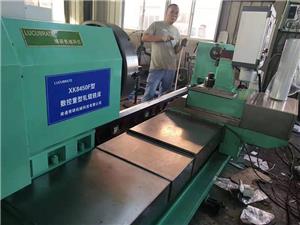
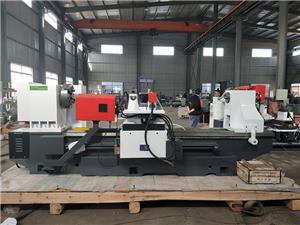
These examples illustrate the tangible benefits. But what about specific applications? CNC cylindrical engraving machines are ideal for engraving on shafts, bores, rings, and any cylindrical component. They are widely used in the automotive industry for VIN numbers, in aerospace for part marking, in medical for surgical instruments, in oil and gas for pipe threading, and in general manufacturing for nameplates and data plates. The machines can handle materials from soft plastics to hardened steels, and they can be integrated into automated production lines. NANTONG LUCUBRATE MACHINERY TECHNICAL LTD. has partnered with several international distributors in Germany, the USA, and Japan to ensure prompt service and technical support. Their machines comply with CE and ISO 9001 standards, and they offer custom solutions for special requirements.
Now, let us address some frequently asked questions from engineers and procurement managers. Q1: What is the maximum hardness of material that can be engraved? The machine can engrave materials up to HRC 65 with the appropriate tooling. For harder materials, we recommend using diamond-tipped tools. Q2: How does the machine handle different diameters? The machine has a programmable chuck that can accommodate diameters from 1 mm to 300 mm. It automatically adjusts the spindle speed and feed rate to maintain optimal cutting conditions. Q3: What is the typical accuracy and repeatability? The positional accuracy is ±0.01 mm, and the repeatability is ±0.005 mm. This is achieved with high-resolution encoders and a rigid cast-iron base. Q4: Can the machine engrave on non-cylindrical parts? While it is designed for cylindrical parts, we offer a rotary axis that can be synchronized with the X and Y axes to engrave on tapered or contoured surfaces. Q5: What is the maintenance required? The machine requires regular cleaning and lubrication. The tool life depends on the material, but typically a carbide tool can engrave 10,000 parts before needing replacement. We provide a comprehensive maintenance schedule with each machine.
In conclusion, the choice between CNC cylindrical engraving and laser is clear when you consider the integrity of your parts, the precision required, and the total cost of ownership. CNC cylindrical engraving machines from NANTONG LUCUBRATE MACHINERY TECHNICAL LTD. offer a cold, precise, and reliable solution that meets the highest industry standards. They have proven their worth in demanding applications across the globe. If you are ready to improve your engraving quality and reduce your rejection rates, I invite you to download our technical white paper on cylindrical engraving best practices. Or better yet, contact our sales engineers directly. They will work with you to find the perfect solution for your specific needs. Do not let heat-affected zones and inconsistent marks compromise your products. Make the switch to CNC cylindrical engraving and see the difference for yourself.