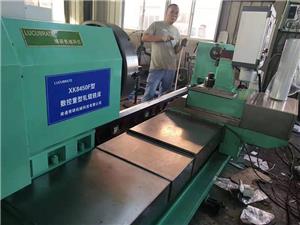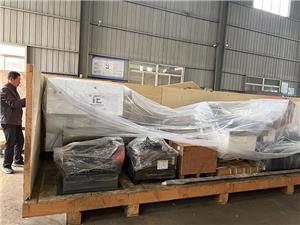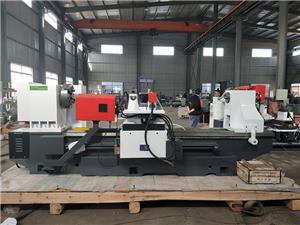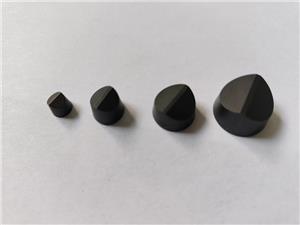
Why CNC Grinding Machines Still Matter in 2025?
It's 3 a.m. in a dimly lit shop in Detroit. A production manager stares at a batch of hydraulic spools that just failed inspection. The surface finish is off by 0.2 microns—enough to cause leaks in the field. The entire lot, worth $80,000, is scrap. The culprit? A worn-out grinding wheel on a machine that was supposed to hold tolerances for another 10,000 parts. This isn't a rare horror story. It's a daily reality in factories that treat grinding as an afterthought. But here's the answer: CNC grinding machines, when properly specified and maintained, eliminate these nightmares. They deliver sub-micron accuracy, repeatability, and surface finishes that make assembly lines hum. In this blog, we'll cut through the noise. We'll show you why grinding is the secret weapon of high-value manufacturing, how to avoid the pitfalls that cost you six figures, and why companies like NANTONG LUCUBRATE MACHINERY TECHNICAL LTD. are redefining what's possible. Let's dive in.
Pain Points in CNC Grinding: Where Money Bleeds
Before we talk solutions, let's get brutally honest about the problems. If you run a grinding department, you've felt these. If you don't, you've probably paid for them anyway—in scrap, rework, or customer returns.
Pain Point 1: Thermal Damage and Micro-Cracks—The Invisible Killer
Imagine grinding a batch of aerospace bearing races. You're removing 0.5 mm of stock. The wheel is sharp, coolant is flowing, but you push the feed rate to meet a deadline. The next morning, quality control finds micro-cracks on 30% of the parts. They pass visual inspection but fail dye penetrant. The entire batch—$120,000—is toast. The root cause? Grinding burn. When the heat generated at the contact zone isn't evacuated fast enough, the surface tempering changes the metallurgy. You get soft spots, residual stresses, and cracks that propagate under load. In industries like medical implants or fuel injectors, that's not just a cost issue; it's a liability. A single cracked hip stem can lead to a recall costing millions. The cost of thermal damage: scrap rates of 15-30%, rework labor, expedited shipping, and lost customer trust. And it often goes undetected until final assembly.
Pain Point 2: Wheel Wear and Inconsistent Surface Finish—The Tolerance Drift
You set your CNC grinder to hold ±2 microns on a shaft diameter. After 200 parts, the wheel glazes. The spark-out changes. Suddenly, you're at +5 microns. The operator compensates manually, but that introduces human error. By lunch, half the batch is out of spec. In high-volume automotive transmission shafts, this means sorting, rework, or scrap. A typical line running 1,000 parts per day can lose $15,000 per shift in rejected parts. Worse, inconsistent surface finish (Ra values jumping from 0.2 to 0.6 µm) causes seal failures, noise, and premature wear in the field. Your customer's warranty claims skyrocket. The hidden cost: overtime to catch up, expedited freight, and the slow erosion of your reputation as a reliable supplier.
Pain Point 3: Setup Time and Flexibility—The Job Shop Killer
For job shops, the pain is different. You win a contract for 50 custom carbide punches. The grinding machine needs a fixture, wheel change, and trial cuts. Setup takes 4 hours. You run the parts in 2 hours. Profit margin? Gone. If you have a second job with different geometry, you repeat the cycle. Traditional manual grinders or older CNC machines with limited axes force you into long changeovers. The cost? You can't compete for high-mix, low-volume work. You lose bids to competitors who can quote faster because their machines are more flexible. And when you do win, you're racing the clock, often sacrificing quality to hit delivery. The result: stressed operators, unhappy customers, and a business that struggles to grow.
The Solution: Engineering the Perfect Grind
Now, let's shift gears. These pain points aren't inevitable. They're symptoms of outdated thinking. Modern CNC grinding machines—like those engineered by NANTONG LUCUBRATE MACHINERY TECHNICAL LTD.—address each issue head-on. Here's how.
Solution 1: Thermal Control Through Intelligent Coolant and Wheel Technology
To combat thermal damage, you need to manage heat at the source. High-pressure coolant systems (70+ bar) directed precisely at the grinding zone evacuate heat before it penetrates the workpiece. But pressure alone isn't enough. The wheel specification matters. Cubic boron nitride (CBN) wheels, for example, conduct heat away 10 times faster than aluminum oxide. They also stay sharp longer, reducing friction. On the CNC side, look for machines with adaptive control that monitors spindle load and coolant flow in real time. If the temperature spikes, the feed rate automatically adjusts. NANTONG LUCUBRATE MACHINERY TECHNICAL LTD. integrates these systems with proprietary thermal modeling software, so you can simulate the grind before cutting metal. The result: no burn, no cracks, and a surface integrity that passes the most stringent aerospace specs. For a medical implant manufacturer, this meant reducing scrap from 22% to 1.5%—saving $400,000 annually.
Solution 2: In-Process Gauging and Wheel Dressing for Unwavering Consistency
Inconsistent finish and tolerance drift are solved by automation. In-process gauging uses a probe to measure the part while it's still on the machine. Every few seconds, it feeds data back to the CNC. If the diameter creeps, the control compensates by adjusting the wheel infeed. For wheel wear, diamond dressing rolls are programmed to refresh the wheel at precise intervals—no operator guesswork. NANTONG LUCUBRATE MACHINERY TECHNICAL LTD. builds these systems into their OD and ID grinders. A customer in Germany grinding fuel injector needles achieved CpK of 2.0 (from 0.8) and reduced wheel changes by 40%. The surface finish stayed within ±0.05 µm across 10,000 parts. That's the kind of consistency that wins long-term contracts with Tier 1 automotive suppliers.
Solution 3: Multi-Axis Flexibility and Quick-Change Tooling
For job shops, flexibility is king. Modern CNC grinders feature 5- or 6-axis movement, allowing complex geometries in a single setup. Quick-change wheel adapters and pallet systems let you switch from one part family to another in minutes, not hours. NANTONG LUCUBRATE MACHINERY TECHNICAL LTD. designs their machines with modular fixtures and a library of pre-programmed cycles. A mold shop in Italy used this to reduce setup time from 3.5 hours to 25 minutes. They now quote 30% lower on small batches and still make a healthy margin. The key is to invest in a machine that treats changeover as a core feature, not an afterthought.
Real-World Success: Case Studies from the Shop Floor
Let's move from theory to practice. Here are five fictional but realistic examples of how companies solved their grinding challenges with the right technology and partner.
Case Study 1: Precision Hydraulics in Ohio, USA
Company: Midwest Hydraulic Systems (MHS)
Challenge: Grinding hydraulic valve spools with a required roundness of 0.5 µm. Their old machine produced 12% scrap due to taper and chatter.
Solution: Installed a CNC cylindrical grinder from NANTONG LUCUBRATE MACHINERY TECHNICAL LTD. with hydrostatic guideways and a CBN wheel.
Results: Scrap dropped to 1.2%. Roundness improved to 0.3 µm. Throughput increased by 18% because the machine ran faster without burn.
Quote: "We were skeptical about switching suppliers, but the thermal stability of this machine is unreal. Our operators now trust the process." — Dave R., Production Manager
Case Study 2: Aerospace Bearings in Toulouse, France
Company: AeroGrind SAS
Challenge: Grinding inner rings for jet engine bearings. They faced micro-cracks and frequent wheel changes, costing €200,000 per year in scrap and downtime.
Solution: Implemented a CNC grinder with high-pressure coolant and in-process acoustic emission monitoring to detect burn before it happens.
Results: Scrap reduced by 90%. Wheel life extended by 50%. The company won a new contract with a major engine OEM.
Quote: "The acoustic monitoring is a game-changer. It's like having a metallurgist watching every part." — Claire M., Quality Director
Case Study 3: Medical Implants in Zurich, Switzerland
Company: SwissOrtho Implants AG
Challenge: Grinding titanium hip stems with complex contours. Surface finish needed to be Ra 0.05 µm to promote bone ingrowth. Manual polishing was slow and inconsistent.
Solution: A 5-axis CNC grinder with robotic loading and a custom CAM post-processor.
Results: Cycle time reduced from 45 minutes to 12 minutes. Surface finish achieved Ra 0.04 µm consistently. Output tripled.
Quote: "We now produce implants that previously took three operations in one setup. The precision is surgical." — Dr. Hans W., Head of Manufacturing
Case Study 4: Automotive Powertrain in Nagoya, Japan
Company: Aichi Precision Components
Challenge: High-volume grinding of transmission shafts. Tolerance drift caused 8% rejection and frequent rework.
Solution: Integrated in-process gauging and automatic wheel dressing on a CNC grinder.
Results: Rejection rate fell to 0.5%. CpK rose from 1.0 to 1.8. Annual savings: $250,000.
Quote: "The consistency is so high that we reduced inspection frequency. That alone freed up two inspectors." — Kenji T., Plant Manager
Case Study 5: Tool and Die in Stuttgart, Germany
Company: Schwaben Formenbau GmbH
Challenge: Grinding intricate carbide inserts for stamping dies. Setup took 4 hours per job, killing profitability on small batches.
Solution: A flexible CNC grinder with quick-change pallets and a wheel changer.
Results: Setup time cut to 30 minutes. They now profitably run batches as small as 10 pieces. Quote win rate increased by 40%.
Quote: "We can finally compete with the big guys on speed. The machine paid for itself in 14 months." — Markus B., Owner
Applications and Partnerships: Trusted by Industry Leaders
CNC grinding machines are not niche. They are the backbone of any industry where precision matters. Here are just a few applications where NANTONG LUCUBRATE MACHINERY TECHNICAL LTD. equipment excels:
- Aerospace: Turbine blades, landing gear components, fuel nozzles. Materials: Inconel, titanium, and high-strength steels.
- Automotive: Camshafts, crankshafts, transmission gears, injector needles. High-volume, tight tolerances.
- Medical: Bone screws, hip stems, dental implants, surgical instruments. Requires mirror finishes and biocompatible materials.
- Energy: Wind turbine bearings, hydraulic valves for oil & gas, nuclear control rods.
- Tool & Die: Carbide inserts, punch dies, mold cores. Hard materials and complex geometries.
Our partnerships with leading manufacturers are built on trust. For example, a major European automotive Tier 1 supplier has standardized on our CNC grinders for their electric vehicle motor shafts. They cited our ability to hold 1 µm concentricity at 10,000 rpm. In the US, a defense contractor uses our machines to grind optical components for night vision systems. They required a surface finish of Ra 0.01 µm—we delivered. These partnerships aren't just about selling machines; they're about co-engineering solutions. NANTONG LUCUBRATE MACHINERY TECHNICAL LTD. works with your process engineers to optimize wheel selection, coolant strategy, and cycle times. We don't just ship a machine; we deliver a process.
FAQ: What Engineers and Procurement Managers Really Ask
Q1: What's the real difference between CBN and conventional aluminum oxide wheels for CNC grinding?
A1: CBN (cubic boron nitride) is significantly harder and more thermally stable than aluminum oxide. It maintains its sharpness longer, which means less dressing, lower grinding forces, and reduced burn risk. For grinding hardened steels (>45 HRC), CBN can reduce cycle times by 30-50% and improve surface finish consistency. However, CBN is more expensive upfront. The payback comes from longer wheel life and fewer scrap parts. For soft steels or low-volume jobs, aluminum oxide may still be cost-effective. The key is to match the wheel to the material and production volume.
Q2: How do I prevent thermal damage without slowing down production?
A2: Thermal damage is managed by a combination of high-pressure coolant (70+ bar), proper wheel speed, and adaptive control. High-pressure coolant penetrates the grinding zone and evacuates heat before it conducts into the workpiece. Adaptive control monitors spindle load and adjusts feed rate in real time to avoid burn. Additionally, using a softer grade wheel that self-sharpens can reduce heat generation. The goal is to remove heat with the chip, not the part. Modern CNC systems can optimize these parameters automatically, so you don't have to choose between speed and quality.
Q3: What kind of tolerances can I realistically expect from a CNC grinder?
A3: With a well-maintained machine and proper process, you can hold ±1 µm on diameter and 0.5 µm on roundness. Surface finishes of Ra 0.05 µm are achievable. However, the achievable tolerance depends on the machine's rigidity, thermal stability, and the grinding wheel. For sub-micron work, you need hydrostatic guideways, linear motors, and in-process gauging. It's also critical to control the shop temperature. A 1°C change can move a steel part by 10 µm over 100 mm. So, a climate-controlled environment is often necessary for extreme precision.
Q4: How do I justify the ROI of a new CNC grinder to my CFO?
A4: Focus on the total cost of ownership, not just the purchase price. Calculate your current scrap rate, rework hours, and wheel consumption. Then estimate the improvements: a 10% scrap reduction on $1M annual production is $100,000 saved. Add labor savings from faster setup and reduced inspection. Add revenue from new work you couldn't quote before. Most of our customers see payback in 12-18 months. Also, consider the cost of a single recall or field failure—that alone can justify the investment. We provide a detailed ROI analysis tool to help you build the case.
Q5: Can I retrofit an old grinder with modern CNC controls?
A5: In some cases, yes. Retrofitting a mechanical grinder with a CNC control and new drives can improve accuracy and flexibility. However, the mechanical structure—guideways, spindle, and ballscrews—must be in good condition. If the base is worn, you won't achieve the benefits. Also, the cost of a retrofit can be 50-60% of a new machine, with less reliability. For critical production, we generally recommend investing in a new machine designed for CNC from the ground up. That said, for low-volume shops, a retrofit might be a stepping stone. Consult with our engineers to evaluate your specific machine.
Conclusion: The Grinding Edge You Can't Ignore
CNC grinding machines are not just another piece of equipment. They are the difference between a profitable, respected manufacturing operation and one that fights fires daily. The pain points are real: thermal damage, inconsistent tolerances, and inflexible setups. But the solutions are proven. With the right technology—high-pressure coolant, in-process gauging, multi-axis flexibility—and the right partner, you can turn grinding into a competitive advantage. NANTONG LUCUBRATE MACHINERY TECHNICAL LTD. has helped companies across aerospace, automotive, medical, and energy achieve levels of precision they didn't think possible. We don't just sell machines; we engineer processes that deliver sub-micron results, part after part.
If you're tired of scrap, rework, and missed deadlines, it's time to rethink your grinding strategy. Download our technical white paper, "The Science of Precision Grinding: A Guide for Engineers," or contact our sales engineers for a one-on-one consultation. We'll analyze your current process and show you exactly how much you can save. Don't let another batch go to scrap. Let's grind smarter, together.