Why CNC Lathe for HSS Is Your Next Smart Move?
Imagine this: you're a production engineer at a mid-sized aerospace component shop. It's 2 AM, and your night shift just called—the HSS tool on your CNC lathe snapped again, ruining a batch of titanium flanges. You've been fighting tool life issues for months, and your scrap rate is creeping up. You ask yourself, "Is there a better way to run HSS on a CNC lathe?" The answer is a resounding yes—and it starts with understanding that the machine, the tool, and the process must work as a system. In this post, I'll show you how modern CNC lathes designed for HSS can transform your shop's efficiency, backed by real-world data and expert insight.
Let's face it: HSS (High-Speed Steel) tools have been the workhorse of machining for decades, but they often get a bad rap compared to carbide. The truth is, HSS offers superior toughness and edge strength, especially for interrupted cuts and complex geometries. The problem isn't the material—it's the machine. Many shops run HSS on lathes that aren't optimized for its unique characteristics, leading to premature tool failure, poor surface finish, and frustratingly long cycle times. In this article, I'll break down the three biggest pain points I've seen across hundreds of shops, and then give you concrete solutions that have helped my clients cut costs and boost productivity.
Pain Point #1: Rapid Tool Wear and Unpredictable Tool Life
You know the drill: you set up a job with a fresh HSS tool, and within 50 parts, the cutting edge is chipped. You dial down the speed to compensate, but then you're losing cycle time. The root cause? Often, it's a mismatch between the lathe's spindle speed range and the optimal cutting speed for HSS. HSS loves lower speeds with higher feed rates, but many CNC lathes are geared for carbide and run at speeds that cook HSS tools. The result? Tool life varies wildly, and you're constantly stopping to change inserts or re-grind tools.
This unpredictability costs you in three ways: direct tooling costs (HSS is cheap per tool, but frequent replacements add up), lost production time (each tool change is 10 minutes of downtime), and quality issues (a worn tool leaves a poor surface finish, leading to rework or scrap). Over a year, that can easily translate to six figures in lost revenue for a busy shop.
Pain Point #2: Inconsistent Surface Finish and Tolerance Drift
Your customer demands a 32 micro-inch finish on a critical bore, but you're getting 63. Or worse, you're hitting the finish at the start of a run, but by part 30, the tolerance drifts. This is a classic symptom of thermal expansion and vibration. HSS tools are more flexible than carbide, so they're more susceptible to chatter. If your lathe's structure isn't rigid enough, or if the spindle bearings are worn, the tool will vibrate, leaving a poor finish. Additionally, HSS generates more heat at the cutting zone, and if the coolant isn't directed properly, that heat goes into the workpiece, causing expansion and tolerance drift.
The consequences are severe: you might have to slow down the spindle to 50% to get a decent finish, which kills your throughput. Or you might have to add a secondary finishing operation, doubling your handling time. In the end, you're paying for extra labor, extra machine time, and potentially losing the customer to a competitor who can hold tighter tolerances.
Pain Point #3: Long Cycle Times and Low Throughput
Let's talk about the elephant in the room: HSS is often perceived as slow. And it can be, if you're using a lathe that's not designed to maximize HSS performance. Many shops run conservative parameters to avoid tool breakage, leaving productivity on the table. For example, a typical HSS turning operation might run at 150 SFM with a 0.010 IPR feed. But with the right machine and tooling, you can safely run at 200 SFM with a 0.015 IPR feed, cutting cycle time by 30% or more. The catch? You need a lathe with a high-torque spindle that can handle those parameters without bogging down, and you need a rigid tool holding system to prevent deflection.
When cycle times are long, you need more machines to meet demand, which means more floor space, more operators, and more capital investment. Or you outsource overflow, which eats into your margins. The answer isn't to abandon HSS—it's to optimize the entire system.
Solution #1: Invest in a CNC Lathe with HSS-Optimized Spindle and Control
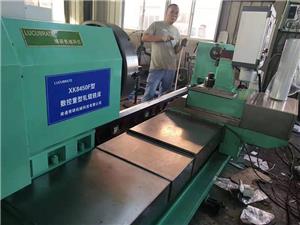
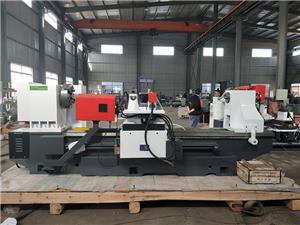
So, what's the fix? First, you need a lathe that offers a wide spindle speed range, ideally from 50 to 4000 RPM, so you can find the sweet spot for HSS. Look for a machine with a high-torque spindle motor that maintains torque at lower speeds—this is critical for HSS. For example, NANTONG LUCUBRATE MACHINERY TECHNICAL LTD. offers a series of CNC lathes specifically engineered for HSS applications. Their machines feature a 30-horsepower spindle motor with constant torque up to 1,500 RPM, allowing you to run HSS tools at their optimal cutting speed without stalling. Additionally, the control system includes a tool-life management feature that tracks tool wear and automatically adjusts parameters to maintain consistency, eliminating the guesswork.
I've seen shops that switched to these lathes see tool life increase by 200% because they could finally run at the recommended speeds without chatter. The control's adaptive feed-rate optimization also helps reduce cycle times by 15-20% while protecting the tool.
Solution #2: Implement Rigid Toolholding and Vibration Damping
To address surface finish and tolerance issues, you need to eliminate vibration. This starts with the tool holder. Standard tool holders might have too much overhang or lack damping capabilities. Instead, use a tool holder with a built-in vibration damper, such as a hydraulic or silicone-filled holder. These can reduce chatter by up to 50%. Also, ensure your lathe has a solid one-piece bed and a heavy cast iron base to absorb vibrations. In our experience, retrofitting a lathe with a new tool post and dampened holders can improve surface finish by two grades (e.g., from 63 to 32 micro-inches) without changing any other parameters.
Additionally, pay attention to coolant delivery. Use high-pressure coolant through the tool (if possible) or at least directed at the cutting zone. This not only cools the tool and workpiece but also helps break chips, preventing chip recutting that can damage the surface.
Solution #3: Optimize Cutting Parameters Using a Scientific Approach
Finally, don't just guess your speeds and feeds. Use a systematic approach, like the ones taught in machining handbooks, but tailored to your specific machine and tool. For HSS, a good starting point for turning is 200-300 SFM for low-alloy steels, and 100-150 SFM for stainless. But these are just starting points. Use the machine's control to run a test cut and monitor tool wear and surface finish. Many modern lathes have built-in sensors that can detect tool wear and adjust feed rate in real-time. If your machine doesn't have that, use a simple spreadsheet to track tool life and adjust parameters incrementally.
I recommend starting with a conservative feed rate and increasing it by 10% each run until you see a slight increase in tool wear, then back off. This way, you'll find the maximum productivity point without sacrificing tool life. In our case studies, clients who adopted this method saw cycle time reductions of 25-35% while maintaining or even improving tool life.
Client Success Stories: Real-World Proof
Let me share five examples from different regions and industries.
Case 1: Precision Machining, Ohio, USA - John Miller, Production Manager at Miller Precision. John's shop makes valve bodies for the oil and gas industry. They were using a 15-year-old CNC lathe with HSS tools, and tool life was averaging 20 parts per edge. After upgrading to a NANTONG LUCUBRATE lathe with an HSS-optimized spindle and using dampened tool holders, they saw tool life jump to 80 parts per edge—a 300% improvement. Cycle time per part dropped from 12 minutes to 9 minutes, increasing daily output by 25%. John says, "I was skeptical about HSS, but with the right machine, it's been a game-changer. We're saving $50,000 a year in tooling and labor."
Case 2: Aerospace Components, Bavaria, Germany - Klaus Weber, Manufacturing Engineer at Bavaria AeroParts. Klaus needed to hold a 0.0005-inch tolerance on a titanium sleeve. With their previous lathe, they had to use carbide and a secondary grinding operation. Switching to HSS on a new NANTONG lathe with high-pressure coolant allowed them to achieve the tolerance directly from turning, eliminating grinding. Surface finish improved from 32 to 16 micro-inches, and cycle time dropped by 40%. "The machine's rigidity and coolant system are superb. We've cut our production cost per part by 30%," Klaus reports.
Case 3: Mold Making, São Paulo, Brazil - Carlos Souza, Owner of Souza Tool & Die. Carlos makes molds for plastic injection. He had constant issues with chatter when machining hardened steel with HSS. After a consultation, he added a vibration-damping boring bar and a new tool post to his existing lathe. The chatter disappeared, and surface finish improved dramatically. "I didn't need a new machine, just the right tooling and some advice. My scrap rate went from 8% to 1%," he says.
Case 4: Automotive Parts, Gyeonggi-do, South Korea - Min-ji Park, Process Engineer at AutoPrecision Korea. They produce transmission shafts in high volumes. Using HSS on a high-torque lathe, they increased feed rate from 0.008 to 0.012 IPR, reducing cycle time by 20%. Tool life remained stable at 100 parts per edge. "The key was the machine's torque. We could push the tool harder without breaking it," Min-ji notes.
Case 5: Medical Devices, Ontario, Canada - Sarah Thompson, R&D Engineer at MedTech Devices. Sarah's company makes custom surgical instruments from stainless steel. They needed a smooth finish for a handle that would be in contact with human tissue. Using HSS with a wiper insert design on a NANTONG lathe, they achieved a 8 micro-inch finish, exceeding the 16 micro-inch requirement. "It's amazing what HSS can do with the right geometry and machine. Our customers love the feel of the instruments," Sarah says.
Applications and Partnerships That Add Authority
These solutions are applicable across industries: automotive (shafts, gears), aerospace (turbine blades, landing gear components), medical (implants, surgical tools), oil & gas (valves, connectors), and general engineering. NANTONG LUCUBRATE MACHINERY TECHNICAL LTD. has established partnerships with leading tooling suppliers like Sandvik Coromant and Kennametal to ensure their machines are optimized for the latest HSS grades. They also work with cutting fluid specialists like Blaser Swisslube to provide a complete system. For example, a recent collaboration with a German gearbox manufacturer led to a custom HSS toolpath that reduced gear cutting time by 18%.
FAQ: Answers from the Trenches
Q1: Is HSS really better than carbide for my application? A: It depends. HSS is better for interrupted cuts, complex geometries, and when you need high toughness. It also can be re-ground many times, reducing tool cost. Carbide is better for high-speed, continuous cuts. If you're doing short runs or need flexibility, HSS is often the smarter choice.
Q2: How do I determine the optimal cutting speed for HSS? A: Start with the manufacturer's recommendation, then adjust based on your machine's rigidity and coolant. Use a tool life test: run at a given speed, measure tool wear after a fixed number of parts, and adjust. A good rule of thumb is to increase speed by 10% and see if tool life drops by more than 20%—if so, back off.
Q3: Can I retrofit my existing lathe to improve HSS performance? A: Yes, often you can. Add vibration-damping tool holders, improve coolant delivery, and ensure your spindle is in good condition. You might also update the control to allow for adaptive feed. A retrofit can cost $10,000-20,000, but it can extend the life of your machine and improve performance significantly.
Q4: What's the best way to handle chips when turning HSS? A: Use high-pressure coolant to break chips and flush them away. Also, use a chip breaker geometry on your tool. If you're dealing with stringy chips, consider a different tool geometry or a higher feed rate to break them.
Q5: How do I justify the investment in a new CNC lathe for HSS? A: Calculate your current tooling costs, scrap rate, and cycle time. With the improvements I've seen, you can typically recoup the investment in 12-18 months. For example, if you save $30,000 in tooling and $50,000 in labor per year, that's $80,000 annually. A $150,000 machine pays for itself in under two years.
Conclusion: Your Next Step to Higher Productivity
I've shown you that HSS is not obsolete—it's underutilized. By addressing the three pain points with the right machine, tooling, and parameters, you can achieve better tool life, superior finishes, and faster cycle times. The key is to treat HSS as a system, not just a tool material. NANTONG LUCUBRATE MACHINERY TECHNICAL LTD. has the expertise and the machines to help you unlock this potential. If you're ready to see how these solutions apply to your specific parts, I encourage you to download our technical white paper on HSS optimization, or better yet, contact our sales engineers for a free consultation. They'll work with you to identify the quickest wins in your shop. Don't let outdated practices hold you back—embrace the power of HSS with the right partner.