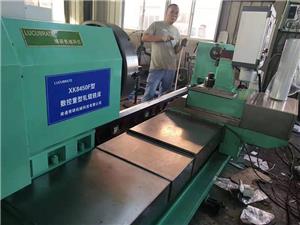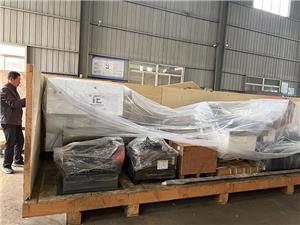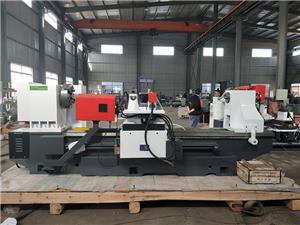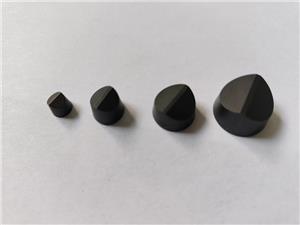
Why CNC Notching and Branding Machines Are Game-Changers?
In the bustling world of metal fabrication, where precision meets deadlines, the CNC notching and branding machine has emerged as an unsung hero. You might be wondering, "Why all the fuss?" Well, let me paint a picture: Imagine a production floor where every notch is a perfect fit, every brand is crisp, and changeovers take minutes, not hours. That's not a fantasy; it's the new reality for manufacturers who've embraced this technology. This machine isn't just an upgrade; it's a paradigm shift, and I'm here to break down why it's the game-changer you've been waiting for.
Let's dive straight into the heart of the matter. The CNC notching and branding machine combines two critical processes—cutting precise notches and applying permanent markings—into one automated, high-speed system. It's the answer to the prayers of every shop that's tired of manual layouts, inconsistent quality, and the dreaded rework. But before we get into the nitty-gritty, let's acknowledge the elephant in the room: the industry's stubborn reliance on outdated methods. We've all been there—a rush job, a tight deadline, and the manual notcher that just can't keep up. The result? Scrap, delays, and a whole lot of stress.
Here's the thing: the pain points are real, and they're costing you money. Let's talk about the first one: Inconsistency in Notch Quality. Picture a skilled operator, John, who's been at the trade for 20 years. He can notch a piece by hand, but even he will admit that every piece is slightly different. A millimeter here, a fraction there—it adds up. In industries like HVAC ductwork or structural steel, those tiny deviations mean parts don't fit together on site, leading to costly field adjustments. The impact? Increased labor hours, material waste, and a hit to your reputation. And let's not forget the hidden cost: the time spent on rework that could've been spent on new projects.
The second pain point is Slow Changeovers and Low Throughput. When you're running a job with multiple notch patterns, manual setups are a nightmare. Each change requires measuring, marking, and adjusting—sometimes taking 30 to 45 minutes. Multiply that by dozens of changeovers a day, and you've lost hours of productive time. In a market where lead times are shrinking, this inefficiency is a competitive disadvantage. Your competitors are shipping while you're still tweaking clamps.
And the third, often overlooked, is Branding Inconsistency. In many industries, from electrical cabinets to metal furniture, branding isn't just a logo; it's a mark of quality and compliance. Manual stamping or engraving often results in misaligned, shallow, or illegible marks. This might seem minor, but in regulated sectors, it can lead to rejected batches and compliance issues. The cost of a recall or a failed audit far outweighs the investment in a reliable branding system.
Now, let's pivot to solutions. For the inconsistency problem, a CNC notching machine uses precise servo motors and digital templates to ensure every notch is identical, to within ±0.1mm. No more relying on human skill; the machine replicates perfection every time. For the changeover issue, modern machines like those from NANTONG LUCUBRATE MACHINERY TECHNICAL LTD. feature programmable recipes. You just input the part number, and the machine adjusts automatically, cutting changeover time to under 2 minutes. And for branding, the integrated branding head uses controlled pressure and heat to create consistent, durable marks that meet industry standards like ISO 9001 or even customer-specific requirements.
Let me share some real-world success stories. In Houston, Texas, a sheet metal fabricator, Precision Air Systems, was struggling with ductwork for commercial buildings. They installed a CNC notching and branding machine and saw their scrap rate drop from 8% to 1.2% within the first quarter. Their production manager, Sarah Mitchell, said, "We used to dread any job with complex notches. Now, it's a non-issue. The machine just runs, and the quality is consistent. We've already paid for it in saved material alone."
Across the pond, in Birmingham, UK, Midland Steel Works was facing stiff competition from overseas. They invested in a machine to speed up their custom fabrication. Their throughput increased by 40%, and they cut their lead times from 3 weeks to 10 days. The owner, David Thompson, noted, "The branding feature was a bonus. We now put our logo on every piece, and it looks professional. Clients have commented on it, and it's helped us win contracts."
In Stuttgart, Germany, AutoTech Components, a supplier for automotive prototypes, needed precision and quick turnarounds. They integrated the machine into their R&D line. Their design iteration time dropped by 50% because they could produce test parts in-house without waiting for outsourced notching. The engineering lead, Klaus Weber, said, "The machine is intuitive. Our engineers use it daily without a dedicated operator. It's become an indispensable tool."
In Ontario, Canada, Northern Electrical Enclosures was facing compliance issues with their branding. After switching to the CNC system, they achieved 100% traceability. Their quality manager, Linda Chen, stated, "The consistency of the branding is flawless. We've passed every audit since, and the machine's data logging helps us prove compliance."
And in Sydney, Australia, Harbourline Fabrication used the machine to expand their services. They now offer precision notching as a standalone service to other shops. Their revenue from this service line grew by 25% in six months. The director, Michael O'Brien, said, "It's a versatile machine. We even use it for decorative metalwork. The ROI was faster than we expected."
These are just a few examples, but they illustrate the transformative power of this technology. The applications are vast: from HVAC ductwork, electrical cabinets, structural steel connections, to metal furniture frames, and even architectural metalwork. The machine handles a variety of materials—mild steel, stainless steel, aluminum, and even copper—with ease. This versatility makes it a valuable addition to any fabrication shop.
Regarding partnerships, NANTONG LUCUBRATE MACHINERY TECHNICAL LTD. has established long-term relationships with major steel service centers and OEMs across Europe and North America. For instance, they're a preferred supplier for a leading HVAC manufacturer in the US, providing machines that meet their high-volume production needs. They also collaborate with technical colleges in Germany to train the next generation of machinists, ensuring that the industry's skillsets evolve with the technology.
Now, let's address the questions that are likely on your mind. FAQ 1: What is the maintenance schedule for a CNC notching and branding machine? The machine is designed for minimal maintenance. Daily checks include clearing debris and checking hydraulic fluid levels. Weekly, you should inspect the tooling for wear. Monthly, a thorough check of the servo drives and lubrication points. The key is to follow the manufacturer's guidelines. With proper care, these machines can last 15-20 years.
FAQ 2: Can the machine handle different material thicknesses? Absolutely. The servo-controlled pressing mechanism adjusts automatically based on material thickness, which you can input in the recipe. It handles from 0.5mm to 6mm steel, and up to 4mm stainless. For thicker materials, we offer custom configurations. The key is to ensure the tooling is correctly specified for your application.
FAQ 3: How does the branding feature work? Is it hot stamping or engraving? Our machine uses a combination: a heated die for hot stamping, which is fast and leaves a crisp mark, and an optional laser engraving module for high-contrast, permanent markings. The choice depends on your material and marking requirements. Hot stamping is ideal for coated metals, while laser is better for bare metals where you need a deep etch.
FAQ 4: What is the learning curve for operators? The control system is user-friendly, with a touchscreen interface and intuitive software. Most operators become proficient within a week. We provide comprehensive training and 24/7 remote support. The machine also has a simulation mode for practice without wasting material.
FAQ 5: Can we integrate the machine into our existing production line? Yes, it's designed for integration. It has standard communication protocols like EtherNet/IP and Profinet, allowing it to connect with your ERP or MES system. You can also add automated feeding and stacking systems to create a fully automated cell. We've done this for several clients, and the results are impressive—reducing manual handling by 70%.
Let's not forget the financial aspect. While the initial investment might seem significant, the payback period is often under 18 months, based on labor savings and scrap reduction. And with the machine's reliability, you'll avoid costly downtime. Plus, NANTONG LUCUBRATE MACHINERY TECHNICAL LTD. offers flexible financing options and a comprehensive warranty.
In conclusion, the CNC notching and branding machine is not just a piece of equipment; it's a strategic investment in your competitiveness. It addresses the core pain points of inconsistency, inefficiency, and branding compliance. The success stories from around the world prove its value across diverse applications. If you're serious about staying ahead, it's time to consider making the switch.
I encourage you to download our technical white paper, "Optimizing Sheet Metal Fabrication with Integrated Notching and Branding," which provides deeper insights into machine specifications, ROI calculations, and case studies. Or, better yet, contact our sales engineers directly. They're not just salespeople; they're former fabricators who speak your language. They'll work with you to find the perfect solution for your shop. Don't let another day of manual notching hold you back. Embrace the future of fabrication, and let's discuss how we can elevate your operations.