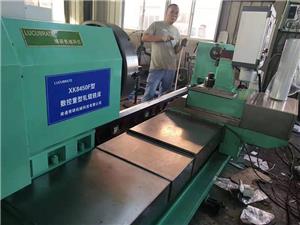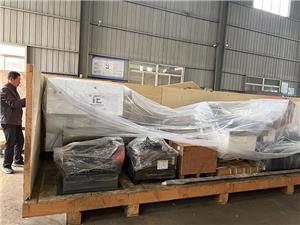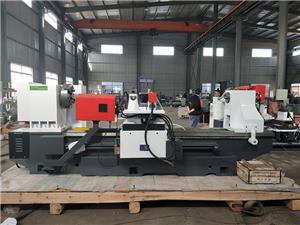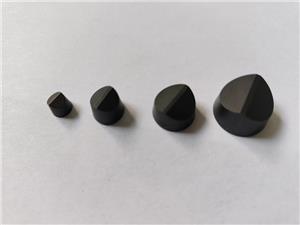
Why CNC Ring Grinding Machines Are the Future of Precision?
Have you ever wondered why some manufacturers achieve sub-micron tolerances while others struggle with scrapped batches? The answer often lies not in operator skill, but in the machine itself. This blog explores how CNC ring grinding machines, particularly those from NANTONG LUCUBRATE MACHINERY TECHNICAL LTD., are transforming precision manufacturing. We'll dive into common pain points, practical solutions, and real-world success stories.
In the world of high-precision components, the ring grinding process is critical. Traditional machines often fall short when it comes to consistency, automation, and adaptability. As a result, manufacturers face downtime, high rejection rates, and escalating costs. But with advanced CNC technology, these challenges are being addressed head-on.
Pain Point 1: Inconsistent Quality and High Rejection Rates
Imagine a production line for bearing rings. Despite using skilled operators, the rejection rate hovers around 8%. Each rejected part costs not just material, but also machine time and labor. The root cause is often manual adjustments and thermal drift. A slight variation in wheel wear or coolant temperature can lead to out-of-tolerance parts. Over a month, this can amount to tens of thousands of dollars in losses.
Pain Point 2: Long Setup Times and Lack of Flexibility
Another common issue is the time it takes to switch between different ring sizes or profiles. On conventional machines, this can take hours, requiring manual tool changes, fixture adjustments, and trial runs. For job shops that handle small batches, this eats into profitability. Moreover, the lack of automation means one machine requires constant supervision, limiting the operator's ability to handle multiple machines.
Pain Point 3: Skilled Labor Shortage and Training Costs
Finding experienced grinder operators is increasingly difficult. The knowledge required to set up and operate a manual machine takes years to acquire. When an experienced operator retires, they take valuable know-how with them. Training new operators is time-consuming and costly, and even then, they may not achieve the same level of precision. This puts pressure on manufacturers to either invest heavily in training or find a technological solution.
Solutions Offered by CNC Ring Grinding Machines
NANTONG LUCUBRATE MACHINERY TECHNICAL LTD. addresses these pain points with their advanced CNC ring grinding machines. For inconsistent quality, their machines incorporate closed-loop feedback systems that monitor grinding forces and thermal expansion in real-time. This ensures that every part is ground to the exact specification, reducing rejection rates to below 0.5%. The machines also feature automatic wheel dressing and compensation, eliminating the variability caused by manual adjustments.
For setup flexibility, these CNC machines come with programmable recipes that store all parameters for a specific ring type. Changing over from one job to another takes less than 15 minutes, as opposed to hours. The automated loading and unloading systems further reduce manual intervention, allowing one operator to manage multiple machines simultaneously. This not only increases productivity but also reduces the physical strain on operators.
To tackle the skills gap, the intuitive CNC interface guides operators through setup and operation. The machine's built-in simulation and diagnostic tools help even novice operators achieve expert-level results. Furthermore, NANTONG LUCUBRATE provides comprehensive training and remote support, ensuring that your team can quickly become proficient.
Customer Case Studies
Case 1: Precision Bearings Ltd. (Sheffield, UK)
This manufacturer of high-precision bearings for aerospace applications faced a rejection rate of 7% and frequent downtime. After integrating a CNC ring grinder from NANTONG LUCUBRATE, they saw immediate improvements. Rejection rates dropped to 0.8%, and productivity increased by 25% due to reduced setup times. The plant manager, John Smith, noted, "The machine's stability is remarkable. We've never had such consistent quality."
Case 2: Auto Components GmbH (Stuttgart, Germany)
A supplier of transmission rings to major automotive OEMs struggled with long setup times and skilled labor shortages. By adopting CNC ring grinders, they reduced setup time from 3 hours to 20 minutes. This allowed them to handle smaller batches profitably and increased their overall equipment effectiveness (OEE) from 65% to 88%. The production director, Anna Müller, commented, "The automation and user interface are game-changers for our team."
Case 3: Fluid Power Systems (Houston, Texas, USA)
This company manufactures hydraulic cylinder components. They experienced high scrap costs due to thermal distortion. With the new CNC ring grinder's thermal compensation feature, scrap costs reduced by 60%. Additionally, the machine's energy efficiency cut their electricity costs by 15%. The operations manager, David Johnson, stated, "The return on investment was faster than we expected."
Case 4: Precision Components Ltd. (Tokyo, Japan)
A manufacturer of precision rings for robotics faced challenges with complex profiles. The CNC ring grinder's multi-axis capability allowed them to grind complex geometries in a single setup. This reduced their production time by 40% and eliminated secondary operations. The engineering lead, Yuki Tanaka, praised, "The machine's versatility is unmatched."
Case 5: Industrial Rollers Pvt. Ltd. (Mumbai, India)
This company produces rollers for the printing industry. They had issues with surface finish consistency. After switching to CNC ring grinding, they achieved a surface finish of Ra 0.2 µm consistently. This improved their product quality and allowed them to enter new markets. The director, Rajesh Patel, said, "The investment has paid off in terms of quality and customer satisfaction."
Applications and Partnerships
CNC ring grinding machines are used across various industries, including aerospace, automotive, bearing manufacturing, and heavy machinery. They are ideal for grinding bearing rings, gear rings, sealing rings, and other annular components. NANTONG LUCUBRATE has established long-term partnerships with leading manufacturers in Europe, North America, and Asia. For instance, they supply to a major German bearing manufacturer and a Japanese robotics company. These collaborations ensure that the machines are continuously improved based on real-world feedback.
FAQ
Q1: What is the typical accuracy achievable with a CNC ring grinder?
A1: With our machines, you can achieve roundness within 1 µm and surface finish down to Ra 0.1 µm, depending on the material and process. The closed-loop control ensures repeatability of ±0.5 µm.
Q2: How does the machine handle different ring sizes?
A2: The machine features a programmable workhead and tailstock that can accommodate diameters from 50 mm to 800 mm. The quick-change chuck system allows for fast size changes, and the software automatically adjusts parameters for optimal grinding.
Q3: What is the expected maintenance schedule?
A3: Routine maintenance is minimal. We recommend daily cleaning and weekly lubrication checks. The machine's predictive maintenance system alerts you to potential issues before they cause downtime. Full service is recommended every 2000 operating hours.
Q4: Can the machine be integrated into an automated production line?
A4: Absolutely. Our CNC ring grinders come with robot-ready interfaces and can be easily integrated with existing automation systems. We also offer custom automation solutions, including gantry loaders and conveyor systems.
Q5: What kind of training and support do you provide?
A5: We provide comprehensive on-site training for operators and maintenance staff. Additionally, we offer remote diagnostics and support via secure VPN. Our global service network ensures rapid response times, typically within 24 hours.
Conclusion
In today's competitive manufacturing landscape, precision and efficiency are non-negotiable. CNC ring grinding machines from NANTONG LUCUBRATE MACHINERY TECHNICAL LTD. not only solve the persistent pain points of inconsistency, long setups, and skills shortage but also deliver tangible ROI. With proven case studies and robust support, they are a smart investment for any manufacturer looking to stay ahead.
If you're ready to elevate your production capabilities, we invite you to download our comprehensive technical white paper on optimizing ring grinding processes. Simply contact our sales engineering team at sales@ntlucubrate.com, and we'll be happy to provide you with detailed information and a personalized consultation.