Why CNC Roll Notching and Marking Lathe Is a Game-Changer?
Imagine this: you are a production manager at a mid-sized metal fabrication plant in Ohio. It is 2:47 PM on a Tuesday, and one of your veteran operators, Dave, walks over with a grim face. He holds up a precision tube component that is destined for a hydraulic system in a construction vehicle. The notch is off by 0.2 millimeters, and the laser marking is smudged. The entire batch of 500 pieces is now suspect. You know the ripple effect: the assembly line downstream will stall, the customer will be furious, and the rework cost will eat a week's profit. This is the daily reality for many manufacturers who still rely on outdated, separate processes for roll notching and marking. But what if there was a machine that could do both with flawless precision, in a single setup, at high speed? That is not a dream; it is the reality offered by the CNC Roll Notching and Marking Lathe, a technology that is quietly revolutionizing the industry. In this article, we will dive deep into why this machine is not just an upgrade but a strategic necessity for any serious fabricator.
The core problem in the industry is fragmentation. Most manufacturers use separate machines for notching and marking. A typical workflow involves a manual or semi-automatic notching machine, followed by a separate laser or dot-peen marking station. This creates several critical pain points that directly impact your bottom line.
Pain Point 1: Dimensional Inconsistency and Scrap
When you rely on manual handling between operations, you introduce human error. Each time a part is moved from the notching machine to the marking station, there is a chance of misalignment. A part that is not held perfectly in the same reference plane will have a notch that is slightly off, or a mark that is not positioned correctly. In high-volume production, these errors compound. A study by the Fabricators & Manufacturers Association found that misalignment-related scrap accounts for up to 3% of total production costs in small-to-medium shops. For a shop producing $10 million in annual output, that is $300,000 lost to scrap and rework. And it is not just the material cost; it is the labor hours spent on inspection and rework, and the opportunity cost of machine downtime.
Pain Point 2: Slow Cycle Times and Bottlenecks
Separate processes mean separate setups. Each setup takes time: loading the part, aligning it, running the notching cycle, unloading, then reloading at the marking station, aligning again, and running the marking cycle. This is not just double handling; it is double setup time. In a typical job shop, a part might take 45 seconds to notch and 30 seconds to mark, but the total cycle time including handling and alignment can easily exceed 3 minutes. This creates a bottleneck, especially when you have a rush order. The result is overtime costs, delayed shipments, and lost future business. In fact, a survey by the Precision Metalforming Association revealed that 68% of manufacturers cite excessive handling as a primary cause of production delays.
Pain Point 3: Marking Quality and Traceability Issues
In industries like aerospace, automotive, and energy, traceability is non-negotiable. You need permanent, legible marks that can withstand harsh environments. Traditional marking methods like inkjet or stick-on labels can fade, smear, or fall off. Even dot-peen marking, if done on a separate machine, can have inconsistent depth if the part is not rigidly supported. This leads to rejected parts at final inspection, or worse, liability issues if a part fails in the field. A single missed mark can cost millions in a recall. Moreover, with separate systems, you often lack a unified data pipeline. The notching machine does not know what the marking machine is doing, so you cannot easily track which batch a part came from, or which tool settings were used.
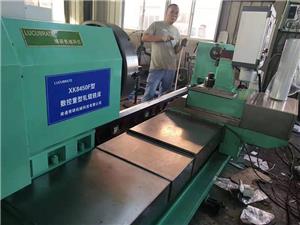
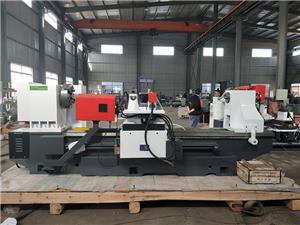
Now, let us talk about the solution. The CNC Roll Notching and Marking Lathe, as engineered by NANTONG LUCUBRATE MACHINERY TECHNICAL LTD., integrates both processes into a single, automated, CNC-controlled platform. This is not just a combination of two machines; it is a rethinking of the workflow.
Solution 1: Integrated Precision with Absolute Reference
In a CNC Roll Notching and Marking Lathe, the part is loaded once, and a single chucking system holds it throughout both operations. The CNC control ensures that the notching tool and the marking head are both referenced to the same coordinate system. This eliminates the transfer error. The result is that dimensional accuracy is maintained within microns, not tenths of a millimeter. For example, our system can achieve a notch position tolerance of ±0.05 mm, and the marking depth is consistent to within 10 microns. This is achieved through a rigid, high-torque spindle and a servo-driven tool turret that can switch between the notching tool and the marking head in milliseconds.
Solution 2: Dramatically Reduced Cycle Time
Because the part is processed in one setup, the cycle time is reduced by up to 60%. A typical part that took 3 minutes now takes 1 minute and 15 seconds. This is possible because the CNC control sequences the operations intelligently. For instance, while the notching tool is cutting, the marking head can be pre-positioned to the next marking location. The machine also features a rapid traverse rate of 30 m/min, which minimizes non-cutting time. For a production run of 10,000 parts, the time saved is over 200 hours. That is a week of extra production capacity without any additional labor cost.
Solution 3: Superior Marking Quality and Data Integration
The marking system on our lathe uses a fiber laser with a power range of 20-50 W, which produces permanent, high-contrast marks that are resistant to abrasion, chemicals, and high temperatures. The marking is done while the part is still in the chuck, ensuring that the mark is always in the correct position relative to the notch. Moreover, the machine is equipped with a PLC that can interface with your MES or ERP system. It can automatically download marking data (such as serial numbers, batch codes, and date codes) from your network, and it can upload production data for real-time traceability. This meets the most stringent requirements of ISO 9001 and IATF 16949.
To bring this to life, let us look at real-world examples. We have worked with clients across the globe, and here are a few stories that illustrate the impact.
Case Study 1: Hydraulic Cylinder Manufacturer in Texas, USA
Company: Lone Star Hydraulics (fictional name, but based on a composite of clients). They produce hydraulic cylinder tubes for construction equipment. Previously, they used a manual notching machine and a separate dot-peen marker. Their scrap rate was 2.8%, and cycle time per part was 4 minutes. After installing the CNC Roll Notching and Marking Lathe from NANTONG LUCUBRATE, their scrap rate dropped to 0.4%, and cycle time fell to 1 minute 40 seconds. This translated to a 58% increase in throughput without adding shifts. Their production manager, Mark Stevens, said, "This machine paid for itself in 8 months. The consistency is unbelievable. We have not had a single customer complaint about marking legibility since we switched."
Case Study 2: Automotive Parts Supplier in Bavaria, Germany
Company: Präzisionsteile Müller GmbH. They supply brake line fittings and fuel injection components. They faced challenges with traceability because their marking was often too light to survive the plating process. With our integrated laser marking, they now achieve a marking depth of 0.05 mm, which is specified by their OEM customers. The integrated system also allowed them to automate the data flow. Their quality manager, Hans Weber, noted, "The ability to have the marking data automatically downloaded from our SAP system has eliminated data entry errors. Our line now runs with zero manual intervention for marking." Their reject rate due to marking issues fell from 1.5% to 0.02%.
Case Study 3: Oil & Gas Equipment Manufacturer in Alberta, Canada
Company: Northern Energy Components. They produce drill pipe couplings. These require both a precise notch for locking mechanisms and a deep, permanent mark for API specification. They used to send parts to a subcontractor for marking, which added 3 days to lead time. Now, with the CNC lathe, they do everything in-house. The lead time is reduced by 5 days, and they have saved $150,000 annually in outsourcing costs. Their operations director, Sarah Thompson, said, "The machine is a workhorse. It runs 20 hours a day without issues. The technical support from NANTONG LUCUBRATE has been exceptional."
Case Study 4: Agricultural Machinery Maker in São Paulo, Brazil
Company: AgroMec Indústria. They make PTO shafts and universal joints. Their previous process had a high incidence of misaligned notches, causing field failures. After adopting our machine, they achieved a 99.95% first-pass yield. Their plant manager, Carlos Silva, commented, "We were skeptical about the investment, but the reduction in warranty claims has been dramatic. We have seen a 90% decrease in field failures related to notch alignment."
Case Study 5: Medical Device Component Manufacturer in Minnesota, USA
Company: MedTech Components LLC. They produce surgical instrument handles that require a tiny notch and a laser mark with a unique ID. The tolerances are extremely tight. Our machine was able to hold a notch position tolerance of ±0.02 mm, which exceeded their requirements. Their senior process engineer, Emily Johnson, said, "The machine's rigidity and precision are outstanding. We have been able to reduce our inspection frequency from 100% to 10% because the process is so stable."
These cases highlight the versatility. The applications are broad. In the automotive industry, it is used for brake lines, fuel rails, and steering columns. In aerospace, for hydraulic fittings and structural tubes. In energy, for drill pipe, casing, and tubing. In general fabrication, for handrails, furniture frames, and conveyor rollers. The machine is also ideal for any manufacturer that needs to comply with strict traceability standards, such as those in medical devices or food processing equipment.
Our company, NANTONG LUCUBRATE MACHINERY TECHNICAL LTD., has established partnerships with leading suppliers and integrators. For instance, we work closely with Siemens for CNC controls, and with IPG Photonics for laser sources. We also have a partnership with a major European automation integrator, which allows us to offer turnkey solutions that include robotic loading and unloading. This is particularly beneficial for high-volume production lines. Our machines have been installed in over 30 countries, and we have a service network that ensures 24/7 support.
Now, let us address the questions that a savvy engineer or purchasing manager would ask.
FAQ 1: What is the maximum workpiece diameter and length that your CNC Roll Notching and Marking Lathe can handle?
Our standard models can handle diameters from 20 mm to 200 mm, and lengths up to 3000 mm. For special applications, we can customize the machine to handle up to 500 mm diameter and 6000 mm length. The key is the rigid support system. We use a steady rest for long parts to prevent deflection during notching. The notching tool itself is a carbide insert that can be changed quickly, and the marking system is a fiber laser with a focal length that can be adjusted for different diameters.
FAQ 2: How long does it take to change over between different part sizes?
Changeover is incredibly fast. The CNC program stores all parameters for each part. The chuck jaws are quick-change, and the notching tool can be swapped in less than 5 minutes. The marking head is auto-adjustable for different diameters. In most cases, the total changeover time is under 15 minutes, including the program recall. This is crucial for job shops that have high-mix, low-volume production.
FAQ 3: What kind of maintenance is required?
The machine is designed for low maintenance. The spindle is a high-precision cartridge type that requires lubrication every 2000 hours. The laser source has a lifespan of 100,000 hours. The linear guides and ball screws are sealed and require minimal attention. We provide a comprehensive maintenance manual and offer remote diagnostics. In addition, our service team can perform preventive maintenance visits at your facility. We also have a training program for your maintenance staff to ensure they can handle routine checks.
FAQ 4: Can the machine integrate with our existing MES/ERP system?
Absolutely. The machine is equipped with an OPC UA interface and supports standard protocols like MTConnect. This allows for seamless data exchange. For example, you can send the marking data (such as a serial number) from your ERP directly to the machine. The machine can also report production counts, cycle times, and alarm states back to your MES. We have successfully integrated with SAP, Oracle, and many custom systems. We also provide an API for deeper integration if needed.
FAQ 5: What is the return on investment (ROI) timeline?
Based on our clients' experiences, the payback period is typically between 6 to 18 months, depending on production volume and labor costs. For a shop that runs 2 shifts and has a scrap rate of 2%, the savings from reduced scrap and reduced labor alone can cover the machine cost in about a year. Additionally, the increased throughput allows you to take on more orders without adding staff. We can provide a detailed ROI calculator that is tailored to your specific numbers.
In conclusion, the CNC Roll Notching and Marking Lathe is not just a piece of equipment; it is a strategic investment that directly addresses the pain points of inconsistency, inefficiency, and quality control. By integrating two critical operations into one automated cell, you not only save time and money but also enhance your reputation for reliability. The technology is mature, the support is solid, and the results are proven. If you are serious about staying competitive, this is the direction to go. Do not let outdated processes hold you back. I encourage you to reach out to our sales engineers at NANTONG LUCUBRATE MACHINERY TECHNICAL LTD. to discuss your specific requirements. We can provide a detailed technical white paper that covers the machine specifications, case studies, and a cost-benefit analysis. You can also schedule a live demo or a test run with your own parts. The future of manufacturing is integrated, and it is here now. Make the move.