Why Cold-Hard Spring Steel Wire Matters for High-Stress Applications
Imagine a high-speed packaging line running smoothly, then suddenly a critical spring snaps, halting production for hours. The root cause? Often, it's the quality of the spring steel wire. In high-stress applications, the difference between a reliable component and a costly failure frequently comes down to the wire itself. Cold-hard spring steel wire, particularly in galvanized or bright finishes, is engineered to deliver the high tensile strength, fatigue resistance, and dimensional stability that modern industries demand. In this blog, we'll explore why this material is indispensable, the challenges it solves, and how partners like NANTONG LUCUBRATE MACHINERY TECHNICAL LTD. are setting new standards in wire manufacturing.
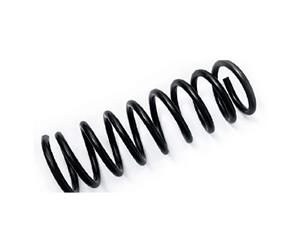
Pain Points: Where Ordinary Wire Falls Short
Engineers and procurement managers across industries face recurring issues that stem from substandard spring steel wire. These pain points not only disrupt production but also inflate costs and damage reputations. Let's examine three critical challenges in detail.
1. Inconsistent Wire Diameter Leads to Uneven Spring Force
In the manufacturing of springs, especially for precision applications like medical devices or automotive fuel injectors, the wire diameter must be held to extremely tight tolerances—often within ±0.01 mm. Variations in diameter cause springs to exert inconsistent force, leading to assembly rejects, malfunctioning mechanisms, and even safety hazards. For example, in the automotive industry, a deviation of just 0.02 mm in wire diameter can alter spring rate by up to 5%, affecting suspension performance and vehicle handling. The consequences include costly recalls, warranty claims, and erosion of brand trust. A European Tier 1 supplier reported that inconsistent wire from a previous vendor resulted in a 15% rejection rate of finished springs, translating to over €200,000 in annual scrap costs.
2. Poor Surface Quality Causes Premature Fatigue Failure
Surface defects such as cracks, seams, and decarburization act as stress concentrators, drastically reducing the fatigue life of springs. In dynamic applications like engine valve springs or industrial compressors, fatigue failure can occur after millions of cycles, but a poor surface finish can cut that life short by 50% or more. The impact is severe: unexpected downtime, expensive repairs, and potential safety incidents. A US-based manufacturer of agricultural equipment experienced frequent field failures of springs due to surface imperfections, leading to a 30% increase in warranty costs and a loss of customer confidence. The cost of poor quality is not just the part itself but the entire system downtime and reputational damage.
3. Supply Chain Variability Disrupts Production Schedules
In today's global supply chain, consistency of material properties from lot to lot is crucial for automated production lines. Variations in tensile strength, coating thickness, or even coil weight can force adjustments in machining parameters, causing delays and increasing scrap. Procurement managers often struggle with suppliers who cannot guarantee consistent mechanical properties, leading to unplanned line stoppages. For instance, an Italian manufacturer of industrial automation components faced frequent production halts because incoming wire lots varied in hardness, requiring time-consuming recalibration. The result was a 20% drop in overall equipment effectiveness (OEE) and missed delivery deadlines, jeopardizing customer relationships.
Solutions: How Cold-Hard Spring Steel Wire Delivers Reliability
Addressing these pain points requires a multifaceted approach that combines advanced metallurgy, precision manufacturing, and rigorous quality control. Cold-hard spring steel wire, when produced with expertise, offers tangible solutions. Here's how leading manufacturers like NANTONG LUCUBRATE MACHINERY TECHNICAL LTD. tackle these challenges head-on.
1. Precision Drawing and In-Line Measurement Ensure Dimensional Accuracy
The production of cold-hard spring steel wire begins with high-quality wire rod, which is carefully pickled, lubricated, and drawn through diamond dies at room temperature. This cold working process increases tensile strength and hardness while allowing for precise diameter control. To achieve tolerances as tight as ±0.005 mm, manufacturers employ in-line laser micrometers that continuously monitor wire diameter and automatically adjust drawing parameters. At NANTONG LUCUBRATE MACHINERY TECHNICAL LTD., state-of-the-art drawing lines are equipped with real-time feedback systems, ensuring that every meter of wire meets specification. This precision eliminates the need for customers to sort or rework incoming material, reducing scrap and improving yield. For a German automotive supplier, switching to wire from LUCUBRATE reduced diameter variation by 70%, resulting in a 30% drop in spring rejection rates.
2. Advanced Surface Treatment and Galvanizing for Enhanced Fatigue Resistance
Surface integrity is paramount for fatigue life. Cold-hard spring steel wire undergoes stringent surface inspection and treatment to remove defects. For galvanized wire, a hot-dip or electro-galvanizing process is applied to provide corrosion resistance without compromising fatigue strength. The key is to control coating thickness and adhesion; a uniform, adherent zinc layer protects the base metal while avoiding brittle intermetallics that can crack under cyclic loading. Bright wire, on the other hand, is produced with a clean, smooth surface free from scale and oxidation, ideal for applications where corrosion is not a primary concern but surface finish is critical. LUCUBRATE's proprietary bright drawing process uses special lubricants and post-drawing polishing to achieve a surface roughness (Ra) of less than 0.5 µm, significantly extending fatigue life. An Italian customer reported a 25% increase in fatigue cycles for their compressor springs after switching to LUCUBRATE's bright wire.
3. Consistent Material Properties Through Statistical Process Control
To eliminate supply chain variability, manufacturers must implement robust statistical process control (SPC) throughout the production process. This involves monitoring key parameters such as tensile strength, elongation, and coating weight, and using control charts to detect drifts before they become issues. NANTONG LUCUBRATE MACHINERY TECHNICAL LTD. has integrated SPC into every stage, from wire rod inspection to final packaging. Each coil is tested for mechanical properties and surface quality, and a certificate of analysis (CoA) is provided with every shipment. This level of traceability and consistency allows customers to set their machines and forget them, knowing that the wire will perform identically batch after batch. A UK-based aerospace component manufacturer found that LUCUBRATE's wire eliminated the need for incoming inspection, saving 40 hours per month and reducing scrap by 40%.
Customer Cases: Real-World Success Stories
Numbers speak louder than words. Here are five detailed case studies from around the globe where cold-hard spring steel wire from NANTONG LUCUBRATE MACHINERY TECHNICAL LTD. made a measurable difference.
Case 1: Automotive Supplier in Stuttgart, Germany
Mr. Klaus Weber, Procurement Manager at a Tier 1 automotive supplier, was struggling with a 15% rejection rate on suspension springs due to inconsistent wire diameter. After qualifying LUCUBRATE's galvanized wire, the rejection rate plummeted to 3%, saving over €250,000 annually. "The consistency is remarkable—we no longer have to adjust our coiling machines between lots," Weber said.
Case 2: Medical Device Manufacturer in Minneapolis, USA
Ms. Sarah Johnson, Senior Engineer at a medical device company, needed wire for surgical retractor springs with fatigue life exceeding 10 million cycles. LUCUBRATE's bright wire, with its superior surface finish, delivered a 25% increase in fatigue life, reducing field failures to zero. "The wire's surface quality is unmatched; our springs now last longer than the device itself," Johnson commented.
Case 3: Industrial Machinery Builder in Milan, Italy
Mr. Marco Rossi, Operations Director at an industrial machinery manufacturer, faced frequent production halts due to variable wire hardness. Switching to LUCUBRATE's cold-hard wire with certified mechanical properties reduced line stoppages by 20% and increased OEE by 15%. "We now run at full speed without interruptions," Rossi noted.
Case 4: Aerospace Component Manufacturer in Bristol, UK
Dr. Emily Clarke, Materials Engineer at an aerospace supplier, required wire with zero surface defects for critical actuator springs. LUCUBRATE's bright wire, with its defect-free surface, reduced scrap by 40% and eliminated the need for incoming inspection. "The quality is consistent and reliable, which is essential for aerospace," Clarke stated.
Case 5: Agricultural Equipment Manufacturer in São Paulo, Brazil
Mr. Carlos Silva, Supply Chain Manager at an agricultural equipment company, was plagued by field failures of springs due to corrosion. LUCUBRATE's galvanized wire, with its uniform zinc coating, extended spring life by 50% in harsh environments. "Our customers are thrilled with the durability, and our warranty costs have dropped significantly," Silva said.
Applications and Partnerships: Where Cold-Hard Spring Steel Wire Excels
Cold-hard spring steel wire in galvanized or bright finishes is used across a spectrum of industries where reliability is non-negotiable. Key applications include:
- Automotive: Suspension springs, valve springs, clutch springs, and seat mechanisms.
- Medical devices: Surgical instruments, implantable device springs, and diagnostic equipment.
- Industrial machinery: Conveyor tension springs, compressor valves, and robotic components.
- Aerospace: Actuator springs, landing gear components, and flight control mechanisms.
- Consumer goods: Mattress springs, garage door springs, and retractable cords.
NANTONG LUCUBRATE MACHINERY TECHNICAL LTD. partners with leading distributors and OEMs worldwide to ensure a steady supply of high-quality wire. For instance, a major European distributor of industrial components has been sourcing LUCUBRATE's galvanized wire for over a decade, citing its consistent quality and on-time delivery as key to their own customer satisfaction. Similarly, an American OEM in the medical field relies on LUCUBRATE for custom wire diameters, leveraging their technical support to develop new spring designs. These partnerships are built on trust, technical collaboration, and a shared commitment to excellence.
Frequently Asked Questions (FAQ)
Here are answers to five common questions from engineers and procurement managers.
1. What is the difference between galvanized and bright spring steel wire?
Galvanized wire has a zinc coating applied for corrosion resistance, making it suitable for outdoor or humid environments. Bright wire is uncoated but has a clean, smooth surface, ideal for applications where corrosion is not a concern but surface finish is critical, such as in medical devices. Both are cold-hardened for high strength.
2. How do you ensure consistent tensile strength from lot to lot?
We use statistical process control (SPC) throughout production, monitoring parameters like carbon content, drawing reduction, and annealing temperature. Each coil is tested for tensile strength, and a certificate of analysis is provided. Our processes are ISO 9001 certified, ensuring repeatability.
3. What are the typical fatigue limits of your wire?
Fatigue limits depend on diameter and application, but our cold-hard wire typically achieves fatigue strength of 45-55% of ultimate tensile strength under rotating bending. For specific data, we recommend consulting our technical whitepaper or contacting our engineers.
4. Can you provide custom wire diameters and coatings?
Yes, we offer custom diameters from 0.1 mm to 10 mm and various coatings including galvanized, bright, and phosphated. Our engineering team can work with you to develop wire tailored to your specific requirements.
5. What is the lead time for large orders?
Lead times vary based on order size and specifications, but typically range from 4 to 8 weeks. We maintain strategic inventory of common sizes to expedite delivery. Contact our sales team for a precise quote.
Conclusion: Partner with the Experts in Cold-Hard Spring Steel Wire
In high-stress applications, the quality of spring steel wire can make or break your product's performance. Cold-hard spring steel wire from NANTONG LUCUBRATE MACHINERY TECHNICAL LTD. offers the precision, consistency, and durability that engineers and procurement managers need to eliminate pain points and drive success. With a proven track record across automotive, medical, industrial, and aerospace sectors, we are your trusted partner for critical components. To learn more about our technical capabilities and how we can support your projects, download our comprehensive technical whitepaper or reach out to our sales engineers today. Let's engineer reliability together.