Why Heavy Duty CNC Turning Machines Matter?
In the world of modern manufacturing, the demand for precision and efficiency is relentless. Nowhere is this more evident than in the realm of heavy-duty machining, where large, complex parts are the norm. Imagine a bustling job shop where a massive steel forging for a wind turbine gearbox sits on a machine, waiting to be turned. The operator, under pressure to meet a tight deadline, knows that any hiccup could cost thousands of dollars in lost production. This is where heavy duty CNC turning machines step in as the unsung heroes of the industry. These robust machines are not just tools; they are the backbone of high-stakes manufacturing, ensuring that critical components are produced with unwavering accuracy and repeatability.
But why exactly do these machines matter so much? The answer lies in their ability to handle extreme workloads while maintaining precision. Unlike standard lathes, heavy duty CNC turning machines are engineered with reinforced beds, powerful spindles, and advanced control systems that allow them to tackle the toughest materials—from hardened alloys to massive castings—without compromising on quality. In this blog, we'll delve into the technical intricacies, real-world challenges, and the transformative impact of these machines. We'll also highlight how NANTONG LUCUBRATE MACHINERY TECHNICAL LTD. has become a trusted name in delivering solutions that redefine heavy-duty turning.
Industry Pain Points: Where Conventional Machines Fall Short
Before we explore the solutions, it's crucial to understand the pain points that manufacturers face when their turning operations aren't up to the task. These challenges are not just minor inconveniences; they can cripple productivity and profitability.
Pain Point 1: Vibration and Chatter Leading to Poor Surface Finish and Tool Wear
When machining large, heavy workpieces, conventional lathes often suffer from vibration and chatter. This is especially problematic when turning long shafts or large-diameter parts where the workpiece extends far from the chuck. The result is a poor surface finish that may require additional grinding or polishing, increasing cycle time and cost. Moreover, the excessive vibration accelerates tool wear, leading to frequent tool changes and higher consumable costs. In a scenario where a shop is producing hydraulic cylinders for construction equipment, a chatter issue might cause a 20% increase in scrap rate, translating to tens of thousands of dollars in lost material and rework. The impact on delivery schedules can be severe, damaging customer relationships.
Pain Point 2: Thermal Deformation Affecting Dimensional Accuracy
Heavy-duty machining generates significant heat, both from the cutting process and from the machine's own operation. Conventional machines often lack adequate thermal stability, leading to thermal expansion of the workpiece and machine components. This results in dimensional inaccuracies that can exceed tolerance limits. For instance, when turning a large bearing race for a mining excavator, a deviation of just 0.05 mm can lead to premature failure of the bearing, causing costly downtime for the end-user. The manufacturer faces warranty claims and reputational damage. In industries like aerospace, where tolerances are extremely tight, thermal issues can render a part completely unusable, wasting expensive materials like titanium or Inconel.
Pain Point 3: Inadequate Chip Control and Coolant Management
Heavy-duty turning produces large volumes of chips that can be difficult to manage. Poor chip control leads to chip nesting, which can interfere with the cutting process, cause tool breakage, and even damage the workpiece. Additionally, ineffective coolant delivery can result in overheating, reduced tool life, and poor surface finish. In a high-production environment, such as manufacturing large valves for the oil and gas industry, chip-related downtime can account for up to 15% of the machine's available time. The cost of interrupted production and potential scrapping of a nearly finished part can be substantial. Furthermore, improper coolant management can lead to mist and fumes, creating health and safety concerns for operators.
Solutions: How Heavy Duty CNC Turning Machines Address These Pain Points
Now, let's examine how heavy duty CNC turning machines from reputable manufacturers like NANTONG LUCUBRATE MACHINERY TECHNICAL LTD. are engineered to overcome these challenges. The solutions are rooted in robust design, advanced technology, and a deep understanding of machining dynamics.
Solution 1: Rigid Construction and Advanced Damping to Eliminate Vibration
Heavy duty CNC turning machines are built with massive, ribbed cast iron beds that provide exceptional rigidity. This minimizes deflection under heavy cutting loads. Additionally, features like box ways or heavy-duty linear guideways with preload ensure smooth, vibration-free movement. Some models incorporate active damping systems or tuned mass dampers to further suppress chatter. For example, NANTONG LUCUBRATE's machines utilize a finite element analysis (FEA)-optimized bed structure that increases static stiffness by up to 30% compared to conventional designs. The spindle is supported by high-precision, preloaded bearings, often with a built-in cooling system to maintain thermal stability. This results in a surface finish that consistently meets Ra 0.8 μm or better, reducing or eliminating secondary operations. Tool life is extended by up to 40%, as the reduced vibration minimizes micro-chipping and wear on inserts.
Solution 2: Thermal Stability through Intelligent Design and Compensation
To combat thermal deformation, heavy duty CNC turning machines employ several strategies. First, the machine structure is designed with symmetrical components and cooling circuits to distribute heat evenly. Second, temperature sensors are placed at critical points (e.g., spindle, ballscrew, bed) and the CNC system applies real-time compensation. NANTONG LUCUBRATE's machines feature a thermal compensation system that monitors and adjusts for thermal growth, maintaining dimensional accuracy within ±0.01 mm over a 12-hour production run. Additionally, the use of oil coolers for the spindle and ballscrews ensures consistent operating temperatures. In one application, a customer machining large marine propeller shafts achieved a 50% reduction in scrap due to thermal issues after switching to these machines.
Solution 3: Efficient Chip Evacuation and Coolant Delivery
Heavy duty machines are equipped with robust chip conveyors, often of the scraper or hinge-belt type, capable of handling large volumes of stringy or bushy chips. The coolant system is designed with high-flow, high-pressure pumps (up to 20 bar or more) and directed nozzles to ensure effective cooling at the cutting zone. Some machines offer through-spindle coolant, which is particularly effective for deep-hole drilling and turning. NANTONG LUCUBRATE's solution includes a chip management system that incorporates a chip crusher and a high-efficiency coolant filtration unit, reducing chip-related downtime by up to 20%. The coolant tank is sized to allow fines to settle, and a belt skimmer removes tramp oil, extending coolant life and reducing disposal costs. Operators appreciate the cleaner working environment and the reduced risk of slips and falls.
Customer Success Stories: Real-World Impact
Let's look at how these solutions have transformed operations for manufacturers across different regions.
Case Study 1: Midwest Precision Machining, USA
Located in Ohio, Midwest Precision Machining specializes in large hydraulic components for the agricultural sector. They were struggling with chatter when turning 2-meter-long shafts, leading to a 15% scrap rate and frequent tool changes. After investing in a NANTONG LUCUBRATE heavy duty CNC turning machine, they reported a 30% increase in productivity and a scrap rate reduction to under 2%. “The rigidity of the machine is phenomenal,” said John Matthews, Production Manager. “We've virtually eliminated chatter, and our tool costs have dropped by 25%.”
Case Study 2: Rheinmetall Fertigungstechnik, Germany
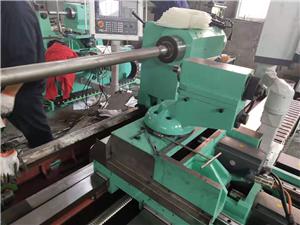
This German company produces large bearing rings for wind turbines. They faced thermal deformation issues that caused dimensional deviations, leading to rework and delays. With NANTONG LUCUBRATE's thermal compensation technology, they achieved consistent tolerances within ±0.015 mm, reducing rework by 40%. “The accuracy and repeatability are outstanding,” remarked Klaus Weber, Quality Manager. “We now confidently meet the stringent requirements of our wind energy customers.”
Case Study 3: Osaka Heavy Industries, Japan
A manufacturer of marine engine components, Osaka Heavy Industries struggled with chip control when machining large crankshafts. The downtime due to chip nesting was costing them 10 hours per week. After installing a NANTONG LUCUBRATE machine with an advanced chip conveyor and high-pressure coolant system, they reduced chip-related downtime by 80%. “The chip management is a game-changer,” said Hiroshi Tanaka, Plant Manager. “Our operators can focus on machining, not clearing chips.”
Case Study 4: Precision Engineering Solutions, UK
This UK-based company serves the oil and gas industry, machining valve bodies from Inconel. They required a machine that could handle high torque and provide excellent surface finish. NANTONG LUCUBRATE delivered a heavy duty CNC turning machine with a 100 kW spindle and a 2-meter swing. The result was a 25% reduction in cycle time and a surface finish of Ra 0.4 μm, eliminating the need for polishing. “The machine's performance exceeded our expectations,” said Sarah Collins, Managing Director. “It's reliable, powerful, and the support from NANTONG LUCUBRATE has been excellent.”
Case Study 5: Rio Grande Metalworks, Brazil
Specializing in mining equipment, Rio Grande Metalworks needed to machine large crusher cones. Their old lathe could not handle the interrupted cuts and high loads. With a NANTONG LUCUBRATE heavy duty machine featuring a reinforced turret and a 150 kW spindle, they increased material removal rate by 35% and reduced tool breakage by 50%. “The machine is a beast,” said Carlos Silva, Operations Director. “It handles interrupted cuts with ease, and our production has never been smoother.”
Applications and Partnerships: Trusted by Industry Leaders
Heavy duty CNC turning machines are indispensable in numerous sectors. Key applications include:
- Energy: Wind turbine components (bearings, gearbox parts), hydroelectric turbine shafts, and oil and gas valves.
- Mining: Crusher cones, excavator pins, and large gears.
- Marine: Propeller shafts, rudder stocks, and engine crankshafts.
- Aerospace: Landing gear components and engine casings (though typically smaller, heavy-duty machines are used for certain large parts).
- Construction: Hydraulic cylinders and pivot pins for heavy equipment.
NANTONG LUCUBRATE MACHINERY TECHNICAL LTD. has established strategic partnerships with leading companies worldwide. For instance, they supply heavy duty CNC turning machines to Thyssenkrupp for their wind energy division, and to Caterpillar for their large engine components. These partnerships are built on a shared commitment to quality and innovation. By collaborating closely with customers, NANTONG LUCUBRATE continuously refines its designs to meet evolving industry demands.
FAQ: Expert Answers to Common Questions
Q1: What is the maximum workpiece weight and diameter that a heavy duty CNC turning machine can handle?
A: This varies by model, but typical heavy duty machines from NANTONG LUCUBRATE can handle workpieces up to 20 tons and diameters up to 2.5 meters. For larger requirements, custom solutions are available. The key is the machine's spindle bearing capacity and bed design, which are engineered to support such loads without deflection.
Q2: How do you ensure thermal stability during long production runs?
A: We employ a combination of design and active compensation. The machine structure is symmetrical and includes cooling circuits for the spindle and ballscrews. Temperature sensors feed data to the CNC, which automatically adjusts tool offsets to compensate for thermal growth. This maintains accuracy within tight tolerances over extended periods.
Q3: Can these machines be automated with robots or gantry loaders?
A: Absolutely. Our machines are equipped with standard interfaces (e.g., Ethernet, digital I/O) for integration with automation systems. We have successfully integrated robots for loading and unloading, as well as gantry systems for large parts. This enhances productivity and reduces operator fatigue.
Q4: What kind of chip management system is recommended for high-volume production?
A: For high-volume production, we recommend a hinge-belt chip conveyor combined with a chip crusher and a high-pressure coolant system. This setup efficiently removes chips, prevents nesting, and ensures proper cooling. Our engineers can tailor the chip management solution to the specific chip type and volume.
Q5: How does NANTONG LUCUBRATE ensure spare parts availability and service support in Europe?
A: We have a dedicated service center in Europe and maintain a local spare parts inventory for critical components. Our service engineers are available for on-site support within 48 hours. Additionally, we offer remote diagnostics to quickly resolve issues. Our goal is to minimize downtime and keep your operations running smoothly.
Conclusion and Call to Action
Heavy duty CNC turning machines are not just equipment; they are strategic assets that drive productivity, quality, and profitability in demanding industries. By addressing vibration, thermal deformation, and chip management head-on, machines from NANTONG LUCUBRATE MACHINERY TECHNICAL LTD. empower manufacturers to push the boundaries of what's possible. The success stories from around the world are a testament to the tangible benefits: reduced scrap, increased throughput, and extended tool life.
If you're facing challenges with your current turning operations, it's time to explore how a heavy duty CNC turning machine can transform your shop floor. For a deeper technical dive, download our white paper on “Advanced Thermal Compensation in Heavy Duty Turning” or contact our sales engineers to discuss your specific application. Let NANTONG LUCUBRATE be your partner in precision and productivity.