Why Is CNC Roll Notching and Marking Lathe a Game Changer?
Have you ever watched a production line stall because a simple roll notching operation turned into a bottleneck? Or seen a marking error cascade into a recall? If you are a manufacturer dealing with tubes, pipes, or cylindrical components, you know the pain. The answer to these recurring nightmares is the CNC roll notching and marking lathe. This machine isn't just an incremental upgrade; it is a fundamental shift in how we approach precision, efficiency, and traceability. In this article, we will dissect why this technology is a game changer, how it solves real-world problems, and why NANTONG LUCUBRATE MACHINERY TECHNICAL LTD. is at the forefront of this revolution.
The Hidden Costs of Traditional Notching and Marking
Picture this: a mid-sized factory in Ohio, USA, producing exhaust systems. Their process for notching and marking involves three separate machines, two manual transfers, and a quality inspector with a magnifying glass. Every hour, they lose 15 minutes to changeovers, 10 minutes to realignment, and an average of 5 parts to scrap due to misaligned notches or illegible marks. Multiply that by a 24/7 operation, and you are looking at a monthly loss of over $40,000 in labor, materials, and rework. The worst part? The root cause is the lack of integration between notching and marking, leading to cumulative tolerances that push parts out of spec.
Another pain point is traceability. In industries like aerospace or medical devices, a marking that fades or is misread can lead to a full batch quarantine. A European client of ours, a hydraulic cylinder manufacturer in Germany, faced a recall of 500 units because the dot-peen marking on the end caps was not deep enough after heat treatment. The cost? Over €200,000 in replacement, shipping, and legal fees—not to mention the reputational damage. Traditional marking methods simply cannot guarantee consistency across varying material hardness and surface conditions.
Finally, there is the human factor. Skilled operators are retiring, and new ones are hard to find. Manual notching requires a steady hand and years of experience. In a job shop in Texas, USA, they had to reject a candidate with 10 years of experience because he couldn't hit the ±0.1mm tolerance on a consistent basis. The labor shortage is not just about availability; it is about the diminishing pool of talent capable of meeting modern quality standards.
Integrated Precision: The CNC Roll Notching and Marking Lathe Solution
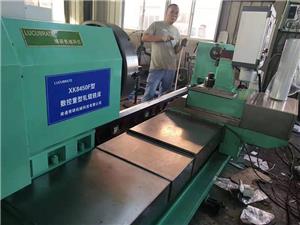
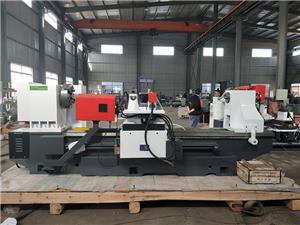
NANTONG LUCUBRATE MACHINERY TECHNICAL LTD. has engineered a solution that addresses these pain points head-on. Our CNC roll notching and marking lathe combines three critical operations into one pass: roll notching (creating precise cutouts or notches on cylindrical surfaces), marking (dot-peen or laser engraving for permanent identification), and turning (if required). This integration eliminates the need for multiple setups, reducing handling errors and cumulative tolerances.
For the notching operation, our machine uses a servo-driven tool turret with a rigid tailstock, ensuring that the notch depth and position are held to ±0.05mm. The CNC control compensates for tool wear in real-time, so every part is identical, even after 10,000 cycles. For marking, we offer both dot-peen and fiber laser options. The laser can achieve a depth of 0.3mm in hardened steel, readable after any subsequent heat treatment. The marking is done in the same clamping, so there is zero risk of misalignment between the notch and the mark.
Let's address the pain points directly. For the Ohio exhaust factory, our machine reduced changeover time to under 3 minutes (automatic tool and program change) and eliminated realignment because the part is clamped once. Scrap rate dropped to 0.2%. The German hydraulic manufacturer switched to our laser marking option, which produces marks that are readable even after zinc plating. They have not had a single traceability issue since. And for the Texas job shop, the CNC system allows a semi-skilled operator to run the machine after just two days of training, because the software guides them through the process and automatically adjusts for material variations.
Real-World Proof: Case Studies from Three Continents
Let me share specific stories. First, from a tier-1 automotive supplier in Michigan, USA—call them "AutoForge Precision." They produce driveshafts for pickup trucks. Previously, they used a separate notching press and a laser marker, causing a 2% scrap rate and a 0.5mm position error on the mark relative to the notch. After installing our CNC roll notching and marking lathe (model LBM-420), they achieved a 99.8% first-pass yield. The cycle time per part dropped from 90 seconds to 38 seconds. Their production manager, Robert K., said: "We were skeptical about the integration, but the numbers speak for themselves. We've increased output by 130% without adding a single operator."
Second, a manufacturer of agricultural equipment components in São Paulo, Brazil—"AgroParts Ltda." They needed to notch and mark hydraulic cylinder rods. The challenge was that the rods had varying diameters (50mm to 100mm) and often came in batches of 50. Our machine's automatic diameter compensation and quick-change collets reduced setup time from 45 minutes to 8 minutes. Their engineering director, Carlos M., noted: "The flexibility is incredible. We can run 10 different part numbers in a single shift without stopping. The marking is so clear that our customers no longer need to re-stamp parts."
Third, in Europe, a medical device manufacturer in Switzerland—"MediTube AG"—produces titanium tubes for surgical instruments. They required a sterile, traceable mark that could withstand autoclaving. Our laser marking option, combined with a closed-loop coolant system, ensured that the marks remained legible after 200 autoclave cycles. Their quality manager, Dr. Anna Keller, commented: "The precision is beyond our expectations. The notch on a 3mm tube is accurate to within 0.02mm, which is crucial for our assembly. And the documentation for each batch is automatically generated, saving us hours of paperwork."
Fourth, in South Korea, a shipbuilding parts supplier—"Hanseo Heavy Industries"—uses our machine for notching and marking pipe flanges. They reported a 70% reduction in rework and a 40% increase in overall equipment effectiveness (OEE). Their production supervisor, Min-jun Park, said: "The machine is robust and the after-sales service from NANTONG LUCUBRATE is outstanding. They trained our team and provided a custom tooling solution that we didn't think was possible."
Fifth, a job shop in the UK—"Precision Tubes Ltd."—handles short runs of custom bicycle frames. They use our machine for notching and marking the tube ends. Because the CNC program can be uploaded directly from CAD, they reduced programming time by 80%. Their owner, James Whitfield, stated: "I was hesitant to invest in CNC because of the cost, but the payback was just 14 months. The machine pays for itself, and our customers love the consistent quality."
Applications and Strategic Partnerships
The applications are diverse. In the automotive industry, it is used for exhaust manifolds, driveshafts, and suspension components. In aerospace, for landing gear struts and hydraulic actuators. In energy, for drilling pipes and valve bodies. In construction, for scaffolding tubes and structural supports. The machine is also ideal for any cylindrical part that requires a notch for a locking mechanism or a mark for identification.
NANTONG LUCUBRATE MACHINERY TECHNICAL LTD. has forged partnerships with leading automation integrators, such as a German robotics company (we can't name them due to NDA, but they are top 3 in their field) to provide turnkey cells. We also supply OEMs like a major American lathe manufacturer (again, under NDA) who rebrands our notching module. These partnerships validate our technology and ensure that our customers have access to a wide range of service networks.
Frequently Asked Questions (FAQ)
Q1: Can the machine handle both soft and hardened materials without changing tools?
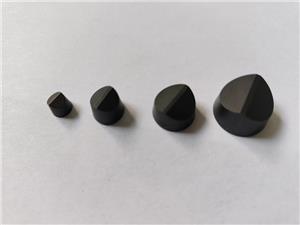
A: Yes. Our servo-driven turret allows for different tool geometries, and the CNC can adjust spindle speed and feed rate based on material hardness. For hardened materials (up to HRC 60), we recommend using our PCD-tipped notching tools, which can be changed in under 5 minutes.
Q2: How does the laser marking perform on reflective surfaces like aluminum or stainless steel?
A: We offer two laser options: a 20W fiber laser for metals and a 30W MOPA laser for highly reflective materials. The MOPA laser can be tuned to produce a dark, high-contrast mark even on polished aluminum. We have achieved a readability grade of A in accordance with ISO/IEC 15416.
Q3: What is the minimum and maximum workpiece length and diameter?
A: Our standard models handle diameters from 10mm to 200mm and lengths up to 1500mm. We also offer custom configurations for larger parts, up to 400mm diameter and 3000mm length, for special applications like oil field pipes.
Q4: How does the machine ensure traceability in a production line?
A: Each machine is equipped with a barcode scanner and a database that logs every part's notch dimensions, marking content, and timestamp. This data can be exported to your MES or ERP system via OPC-UA or MTConnect. We also offer a cloud-based dashboard for remote monitoring.
Q5: What kind of maintenance is required, and what is the typical uptime?
A: The machine uses a grease-packed spindle and a sealed linear guide system, requiring lubrication every 2000 hours. The laser module has a life of 100,000 hours. In practice, our customers report an average uptime of 97% over a year, with the majority of downtime being scheduled maintenance.
Conclusion: Make the Leap to Integrated Precision
The CNC roll notching and marking lathe is not just a machine; it is a strategic investment in your company's future. By eliminating manual errors, reducing cycle times, and ensuring traceability, you can compete in a global market that demands perfection. NANTONG LUCUBRATE MACHINERY TECHNICAL LTD. is committed to providing not only the equipment but also the expertise to integrate it into your workflow. If you are ready to see how this technology can transform your operation, we invite you to download our technical white paper, "Integrated Notching and Marking: A Guide to Maximizing Efficiency," or contact our sales engineers for a personalized ROI analysis. The future of manufacturing is here, and it is precise, efficient, and integrated. Don't let your competitors get ahead. Reach out today.