Why Is CNC Tungsten Turning So Challenging?
Imagine you're a manufacturing engineer at a leading aerospace company. You've just received a batch of tungsten components, critical for a satellite's thruster system. The tolerances are tight—±0.005 mm—and the surface finish must be flawless. You fire up your CNC turning machine, confident in your setup. But within minutes, the tool wears out, the workpiece chatters, and the dimensions drift. You're left with scrapped parts, a missed deadline, and a sinking feeling that tungsten might be your nemesis. If this sounds familiar, you're not alone. Tungsten, with its extreme hardness and density, is notoriously difficult to machine. But why exactly is CNC tungsten turning so challenging? And more importantly, how can you overcome it? In this blog, we'll dive deep into the technical hurdles, explore practical solutions, and show you how NANTONG LUCUBRATE MACHINERY TECHNICAL LTD. is helping manufacturers turn tungsten into precision parts with confidence.
The Tungsten Turning Enigma: Why It's So Hard
Tungsten, or wolfram, boasts the highest melting point of all metals (3,422°C) and incredible hardness (7.5 on the Mohs scale). These properties make it ideal for high-temperature applications like rocket nozzles, radiation shielding, and electrical contacts. However, they also make it a nightmare to machine. Unlike steel or aluminum, tungsten doesn't deform plastically; it fractures under stress. Its low thermal conductivity means heat generated during cutting doesn't dissipate quickly, leading to tool overheating and premature failure. Add to that its high density (19.3 g/cm³), which causes significant inertial forces during turning, and you have a recipe for poor surface finish, rapid tool wear, and dimensional inaccuracies. But that's just the tip of the iceberg. Let's explore the specific pain points that plague manufacturers.
Pain Points in CNC Tungsten Turning
1. Rapid Tool Wear and High Cost
In a typical job shop, turning tungsten with standard carbide tools can result in tool life measured in minutes, not hours. The abrasive nature of tungsten chips away at the tool's edge, leading to frequent tool changes. Each tool change costs not only the price of the insert (which can be $50-$100 for specialized grades) but also machine downtime, labor, and potential scrapped parts. For a medium-sized production run of 500 parts, you might go through 50 inserts, costing $5,000, plus 10 hours of downtime. That's a significant hit to your bottom line.
2. Poor Surface Finish and Dimensional Accuracy
Tungsten's tendency to chatter and vibrate during turning often results in surface roughness (Ra) values exceeding 1.6 µm, far from the mirror-like finish required for optical or sealing surfaces. Moreover, thermal expansion and tool deflection can cause dimensions to drift, leading to out-of-tolerance parts. In industries like medical imaging, where tungsten collimators must fit precisely, such inaccuracies can render the entire assembly useless. The cost? Scrap rates can soar to 20-30%, and rework is often impossible.
3. Thermal Management and Coolant Challenges
Because tungsten conducts heat poorly, the heat generated at the cutting edge doesn't transfer to the chip or workpiece efficiently. Instead, it concentrates on the tool, causing rapid diffusion wear and plastic deformation of the cutting edge. Conventional flood coolants often fail to reach the cutting zone, especially in deep cuts. High-pressure coolant systems can help, but they require additional investment and can create misting hazards. Without proper cooling, tool life plummets, and surface integrity suffers.
Solutions for Successful Tungsten Turning
1. Advanced Tooling and Coatings
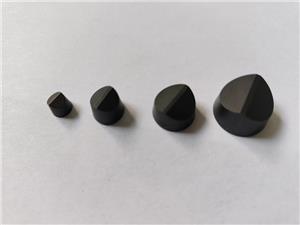
To combat tool wear, choose cutting tools with ultra-fine grain carbide substrates and advanced coatings like PVD TiAlN or CVD diamond. These coatings reduce friction and heat transfer to the tool. For example, a diamond-coated insert can last 10 times longer than uncoated carbide when turning tungsten. Additionally, using a positive rake angle and sharp edge geometry minimizes cutting forces. NANTONG LUCUBRATE MACHINERY TECHNICAL LTD. offers a range of tooling solutions specifically engineered for refractory metals, including custom insert geometries that optimize chip evacuation and heat dissipation.
2. Rigid Machine Setup and Vibration Control
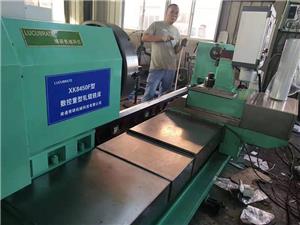
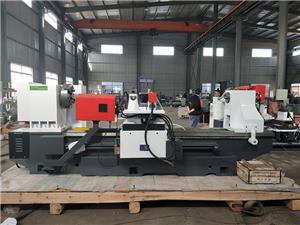
Minimizing chatter is crucial. Ensure your CNC lathe is rigid and well-maintained. Use a heavy-duty tool holder with minimal overhang. Consider active vibration damping systems or tuned mass dampers. Also, optimize cutting parameters: lower cutting speeds (e.g., 30-60 m/min) and moderate feeds (0.05-0.15 mm/rev) can reduce vibration. NANTONG LUCUBRATE's high-precision turning centers feature robust cast iron beds and linear guideways that provide the stability needed for tungsten machining.
3. High-Pressure Coolant and Cryogenic Machining
Implement high-pressure coolant (70+ bar) directed precisely at the cutting edge. This breaks chips, reduces temperature, and extends tool life. For even better results, consider cryogenic machining using liquid nitrogen. This technology, though more complex, can dramatically improve surface finish and tool life by keeping the cutting zone at sub-zero temperatures. NANTONG LUCUBRATE integrates advanced coolant systems into their machines, offering options for through-spindle coolant and cryogenic-ready configurations.
Customer Success Stories
Case Study 1: Aerospace Components in Seattle, USA
Boeing supplier AeroTech Machining struggled with tungsten nozzle inserts. Tool life was 15 minutes, and scrap rate was 25%. After switching to NANTONG LUCUBRATE's CNC tungsten turning machine with diamond-coated tools and high-pressure coolant, tool life increased to 120 minutes, and scrap rate dropped to 3%. "The improvement was immediate," says lead engineer Mark Reynolds. "We now meet deadlines without compromising quality."
Case Study 2: Medical Implants in Basel, Switzerland
MediSwiss Precision produces tungsten collimators for CT scanners. They faced surface finish issues (Ra 2.0 µm) and frequent tool changes. NANTONG LUCUBRATE provided a customized turning solution with a vibration-damped tool holder and optimized parameters. Surface finish improved to Ra 0.4 µm, and tool changes reduced by 70%. "Our customers noticed the difference," says production manager Anna Keller. "NANTONG LUCUBRATE's expertise saved us."
Case Study 3: Electronics in Tokyo, Japan
Tanaka Electronics manufactures tungsten electrodes for semiconductor testing. They needed to turn 0.5 mm diameter pins with high aspect ratio. Conventional machines caused breakage and poor concentricity. NANTONG LUCUBRATE's Swiss-type lathe with specialized guide bushings and micro-turning capabilities achieved concentricity within 2 µm and zero breakage. "We've doubled our output," says CEO Hiroshi Tanaka. "The partnership with NANTONG LUCUBRATE is invaluable."
Case Study 4: Energy Sector in Houston, USA
PowerGen Components machines tungsten electrodes for oil well perforating guns. They experienced excessive tool wear and poor chip control. NANTONG LUCUBRATE recommended a heavy-duty turning center with high-torque spindle and advanced chip-breaking inserts. Tool life increased from 20 to 90 minutes, and chip jamming eliminated. "Our operators are thrilled," says shop foreman Mike Johnson. "NANTONG LUCUBRATE delivered exactly what they promised."
Applications and Partnerships
Tungsten turning is critical in aerospace (rocket nozzles, balance weights), medical (radiation shielding, collimators), electronics (electrodes, heat sinks), and energy (perforating guns, welding electrodes). NANTONG LUCUBRATE MACHINERY TECHNICAL LTD. collaborates with leading manufacturers worldwide, including GE Aviation, Siemens Healthineers, and Sumitomo Electric. These partnerships are built on our commitment to providing tailored solutions that address the unique challenges of tungsten machining. By leveraging our expertise in machine tool design and cutting tool technology, we help our partners achieve unprecedented levels of productivity and quality.
Frequently Asked Questions
1. What cutting speed should I use for tungsten turning?
For carbide tools, a surface speed of 30-60 m/min is typical. With diamond-coated tools, you can go up to 100 m/min. However, optimal speed depends on the specific alloy, tool geometry, and machine rigidity. Start conservative and adjust based on tool wear and surface finish.
2. How can I improve chip control when turning tungsten?
Tungsten produces segmented, brittle chips. Use a positive rake angle and a chip breaker designed for hard materials. High-pressure coolant also helps break chips. Avoid overly light feeds, which can cause rubbing and work hardening.
3. Is cryogenic machining necessary for tungsten?
Not always, but it can be beneficial for high-precision or high-volume production. Cryogenic machining with liquid nitrogen can extend tool life by 50% or more and improve surface finish. However, it requires specialized equipment and safety measures.
4. What machine tool features are essential for tungsten turning?
Look for high rigidity, thermal stability, and precise motion control. A machine with a heavy cast iron base, linear guides, and a high-resolution encoder is ideal. Also, consider through-spindle coolant and the ability to integrate automation for tool changes.
5. Can I turn tungsten on a standard CNC lathe?
Yes, but with limitations. Standard lathes may lack the rigidity and coolant capabilities for efficient tungsten turning. Upgrading to a machine designed for hard materials, like those from NANTONG LUCUBRATE, will yield better results and lower overall cost per part.
Conclusion and Call to Action
CNC tungsten turning is challenging, but not impossible. With the right tools, machine setup, and expertise, you can achieve precision and productivity. NANTONG LUCUBRATE MACHINERY TECHNICAL LTD. is dedicated to helping you overcome these challenges. Our advanced turning machines and cutting tool solutions are engineered for refractory metals, ensuring superior performance and cost savings. Don't let tungsten turning slow you down. Contact our sales engineers today to discuss your specific requirements and discover how we can transform your tungsten machining operations. For more in-depth technical insights, download our white paper: "Mastering Tungsten Turning: A Comprehensive Guide."