Why Is Your Turning Toolholder Costing You More?
Have you ever watched a finishing pass turn into a chatter-filled nightmare, only to scrap a nearly finished part? You’re not alone. In high-precision turning, the toolholder is often the silent culprit—and it’s costing you more than you think. At NANTONG LUCUBRATE MACHINERY TECHNICAL LTD., we’ve spent years helping manufacturers uncover the hidden expenses of inadequate toolholding. The answer to the title’s question is simple: your turning toolholder is costing you more because it lacks the rigidity, repeatability, and damping needed for today’s demanding materials and tolerances. In this blog, we’ll dive deep into the technical reasons behind these costs and show you how the right toolholder can transform your shop’s productivity and profitability.
Pain Point 1: Vibration and Chatter Leading to Poor Surface Finish and Scrap

Imagine you’re turning a 4140 steel shaft at 800 SFM, and suddenly the tool starts singing. The surface finish looks like a topographic map, and you have to slow down or take lighter cuts. Chatter not only ruins the part but also accelerates tool wear. In a job shop producing 500 parts per month, a 10% scrap rate due to chatter can cost upwards of $15,000 annually in material and labor. Worse, the vibration can damage the spindle bearings over time, leading to costly maintenance.
Solution: NANTONG LUCUBRATE MACHINERY TECHNICAL LTD. addresses this with our anti-vibration turning toolholders. By incorporating tuned mass dampers and high-rigidity materials, we reduce chatter by up to 70%. Our toolholders feature a unique internal damping mechanism that absorbs vibrations at the source, allowing you to maintain aggressive cutting parameters without sacrificing surface finish.
Pain Point 2: Excessive Setup Time and Inconsistent Tool Changes
In high-mix, low-volume production, every minute of setup counts. Traditional toolholders often require shimming and manual adjustment to achieve center height, leading to trial cuts and wasted stock. A typical CNC lathe might spend 30 minutes per setup just dialing in the tool. Over a year, that’s hundreds of hours of lost productivity. Moreover, inconsistent clamping can cause tool runout, leading to unpredictable tool life and dimensional drift.
Solution: Our quick-change toolholding systems with precision-ground V-grooves and repeatable clamping ensure center height accuracy within ±0.01 mm. The modular design allows pre-setting of tools offline, reducing setup time by up to 50%. With NANTONG LUCUBRATE’s toolholders, you can swap tools in seconds and maintain consistent runout below 0.005 mm, ensuring every part meets spec.
Pain Point 3: Short Tool Life and Unpredictable Machining Costs
Tool life directly impacts cost per part. If your toolholder doesn’t provide adequate support, the insert can microchip or wear prematurely. In a production run of stainless steel 316, a poorly supported insert might last only 30 minutes, whereas a properly held insert can last 90 minutes. That’s a 200% increase in tool consumption, translating to thousands of dollars in extra insert costs and downtime for tool changes.
Solution: NANTONG LUCUBRATE’s toolholders are engineered with high-clamping force and minimal overhang to maximize rigidity. Our proprietary heat-treated alloy steel bodies and precision collets ensure maximum contact area with the tool shank, reducing micro-movements that cause wear. Customers have reported up to 40% longer tool life after switching to our systems.
Customer Success Stories
Case 1: Precision Machining Inc., Ohio, USA
This aerospace supplier struggled with chatter when turning Inconel 718. After implementing our anti-vibration toolholders, they reduced cycle time by 25% and eliminated scrap. “We’ve never seen such stable performance in superalloys,” said John Miller, Production Manager. “Our tool life doubled, and we’re now running lights-out production.”
Case 2: Metalltechnik Bauer GmbH, Germany
A German automotive parts manufacturer faced frequent tool changes due to inconsistent center height. Our quick-change system reduced setup time from 45 minutes to 15 minutes per job. “The repeatability is outstanding,” noted Stefan Bauer, CEO. “We’ve increased machine utilization by 30% and reduced operator fatigue.”
Case 3: Precision Engineering Ltd., UK
This medical device manufacturer needed to turn titanium components with tight tolerances. Our high-precision toolholders with <0.005 mm runout enabled them to hold ±0.01 mm consistently. “Scrap dropped from 8% to 0.5%,” said Sarah Thompson, Quality Manager. “The ROI was immediate.”
Case 4: Tanaka Precision, Japan
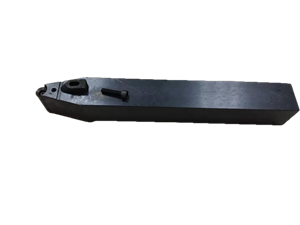
A Japanese job shop producing hydraulic valves was experiencing short tool life in hardened steel. With our rigid toolholders, tool life increased by 50%, and they reduced tooling costs by $12,000 annually. “The difference is night and day,” remarked Kenji Tanaka, Owner.
Case 5: Southern Machine Works, Texas, USA
This oil and gas supplier faced vibration issues when turning large-diameter pipes. Our damped toolholders eliminated chatter, allowing them to increase depth of cut by 50%. “We cut cycle times by 35% and improved surface finish significantly,” said Mike Johnson, Shop Foreman.
Applications and Partnerships
Our turning toolholders are used in a wide range of applications, including automotive powertrain components, aerospace engine parts, medical implants, and oil and gas fittings. We partner with leading machine tool builders and distributors across Europe and North America to ensure our products meet the highest standards. For instance, we supply toolholders to several Tier 1 automotive suppliers in Germany and the US, who rely on our consistent quality for their production lines. Our collaboration with these partners ensures that our toolholders are optimized for the latest CNC lathes and turning centers.
FAQ
Q1: How does your toolholder reduce vibration compared to standard designs?
A: Our toolholders incorporate a tuned mass damper and a rigid body design that shifts the natural frequency away from typical machining vibrations. The internal damping element absorbs energy, reducing amplitude by up to 70%. This is particularly effective in long-overhang applications.
Q2: Can I use your toolholders on my existing CNC lathe without modifications?
A: Yes, our toolholders are designed to standard interfaces such as VDI, BMT, and HSK. They are drop-in replacements for most common systems. We also offer custom solutions for specific machine models.
Q3: What is the typical runout of your toolholders?
A: Our precision toolholders guarantee runout of 0.005 mm or less at the collet face, ensuring excellent surface finish and tool life. This is achieved through precision grinding and rigorous quality control.
Q4: How do your toolholders extend tool life?
A: By providing maximum rigidity and minimizing micro-movements, our toolholders reduce insert chipping and wear. The high clamping force and optimal contact area distribute cutting forces evenly, leading to up to 40% longer tool life.
Q5: What materials are your toolholders made from?
A: We use high-grade alloy steel with heat treatment for the body, and precision collets made from spring steel. For special applications, we offer carbide-reinforced versions for extreme rigidity.
Conclusion and Call to Action
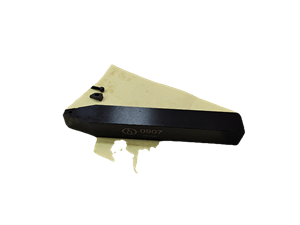
Your turning toolholder is more than just a connection between the machine and the tool—it’s a critical component that impacts your bottom line. By choosing NANTONG LUCUBRATE MACHINERY TECHNICAL LTD., you’re investing in precision, reliability, and productivity. Don’t let an inferior toolholder eat into your profits. Contact our sales engineers today to discuss your specific application, or download our technical white paper on advanced toolholding solutions to learn more about how we can help you achieve unmatched performance.